When Congregations Need to Decide
Religious organizations face unique governance challenges. Congregational churches elect pastors and deacons. Synagogues vote on board members. Mosques approve budgets. Temples select committee leaders.
These decisions are deeply personal and sometimes contentious. When the process isn't transparent, disagreements about outcomes can become disagreements about legitimacy, fracturing communities that are supposed to be unified.
The Challenge of Congregational Voting
Sunday - only voting excludes many. Members who travel, have health issues, or work weekends can't participate in Sunday-morning votes. Show-of-hands elections after services often represent only a fraction of the congregation.
Voice votes are unreliable. "All in favor?" might work for routine business, but for pastor searches, building campaigns, or budget decisions, the stakes demand something more rigorous.
Paper ballots are slow and questionable. Hand - counting ballots after a service leads to long waits, questions about accuracy, and no permanent record.
A Better Way: Verified Digital Voting
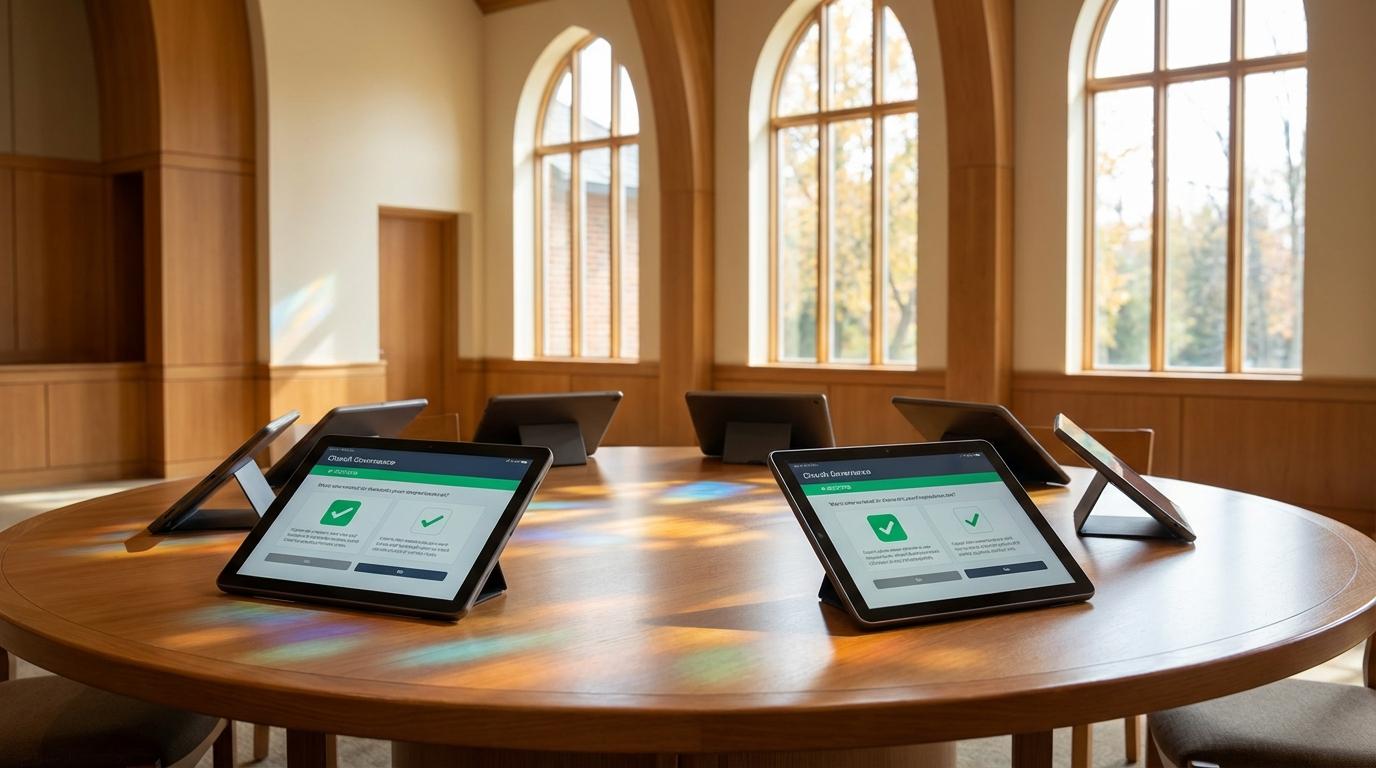
ID-verified voting allows every congregation member to participate in governance decisions regardless of when or where they worship.
How It Works for Religious Organizations
Member Verification
The church supplies the eligible-member roster and chooses a credential method. An optional assisted government-ID check can add evidence about the person presenting an identity document, but it does not decide who is a member or correct a bad roster.
Flexible Voting Windows
Set a voting period of days or weeks. Members vote when it's convenient for them, not just during a single service. This is especially valuable for churches with Saturday and Sunday services, multiple campuses, or online-only members.
Pastoral Sensitivity
Anonymous mode keeps the voter-to-choice link out of organizer views, published results, and exports while the underlying link remains in restricted platform storage; a church whose rules require permanent separation can choose Sealed ballot mode instead, which stores the ballot with no link to the voter at all.
Clear Results
When the voting window closes, results are immediate and auditable. No committee counting ballots. No ambiguous voice votes. No "I think the ayes had it."
Common Church Voting Scenarios
| Decision | Sensitivity | Why Verification Matters |
|---|---|---|
| Pastor / clergy selection | Very high | Match credentials to the church-approved roster |
| Deacon / elder elections | High | Document eligibility and accepted ballots |
| Annual budget approval | Medium | Give eligible members an accessible participation window |
| Building campaigns | High | Retain the authority, notice, threshold, and result record |
| Bylaw changes | Medium | Follow the polity’s exact approval procedure |
| Mission trip funding | Low - Medium | Fair allocation of congregational resources |
Stewardship of Trust
Religious organizations run on trust. Members trust that their tithes are used wisely, that leaders are chosen fairly, and that their voice matters in community decisions.
A documented process can strengthen that trust when the church explains the roster, access method, privacy boundary, threshold, and review process instead of promising that technology settles every question.
Practical Considerations
Multi - campus churches: Each campus can participate in a single verified vote, ensuring unity across locations.
Elderly members: The voting interface is simple and accessible. Many churches designate tech - savvy volunteers to help members who need assistance.
International congregations: Document support varies by country and document type. Confirm which documents the assisted ID check accepts for your members’ countries before promising that workflow in a notice.
Denominational requirements: Bylaws, denominational rules, and local law can impose different authority, notice, quorum, ballot, meeting, and record requirements. Map those requirements before selecting a voting method.
The Cost of Good Governance
For 300 invited voters, the current election fee is $24.99 before optional assisted identity checks or mailed access letters.
That fee buys the platform workflow: roster-controlled credentials, ballot delivery, configured voting settings, receipts, tabulation, and exports. The church still owns membership eligibility, authorization, notices, accessibility accommodations, meeting procedure, and any required certification.
This article is general information, not legal advice. We recommend you do your own research and confirm anything you plan to act on. Where this article states law, the section is cited so you can read the primary source yourself rather than take our word for it. That is what the citations are for. Election requirements also turn on your own governing documents, which we have not seen, and statutes are amended. For advice about your community, consult a qualified attorney licensed in your state.
We work hard to verify every citation against the primary source, but laws change and errors happen. If you spot an inaccuracy, email support@vote.direct and we will correct it. See our editorial standards for how these pages are researched and checked.