The Old $5 Claim Needed an Update
An earlier version of this page described vote.direct as “$5 per verified vote.” That was a simple launch-era slogan, not the current billing model. It also blurred three separate questions: what the election software costs, what an optional government-ID check costs, and what the organization’s full legal process costs.
Current pricing is more precise:
- The election itself is a flat fee based on the number of invited voters.
- Email or SMS verification is included in that election fee.
- An assisted government-ID workflow, when arranged in advance, is $3.00 per checked voter in addition to the election fee.
- Inspectors, tellers, legal review, meeting costs, statutory notice, and a required paper route are not included merely because software was purchased.
Worked ID-Verification Prices
| Invited voters | Election fee | ID checks for every voter | Combined software + ID checks |
|---|---|---|---|
| 50 | $4.99 | 50 × $3.00 | $154.99 |
| 100 | $9.99 | 100 × $3.00 | $309.99 |
| 500 | $69.99 | 500 × $3.00 | $1,569.99 |
Those totals assume every invited voter completes the assisted check. Confirm availability, lead time, and billing before promising ID verification in an election notice. For current tiers, use the pricing page; the functions behind this article read the same tier table as checkout.
What the Identity Check Establishes
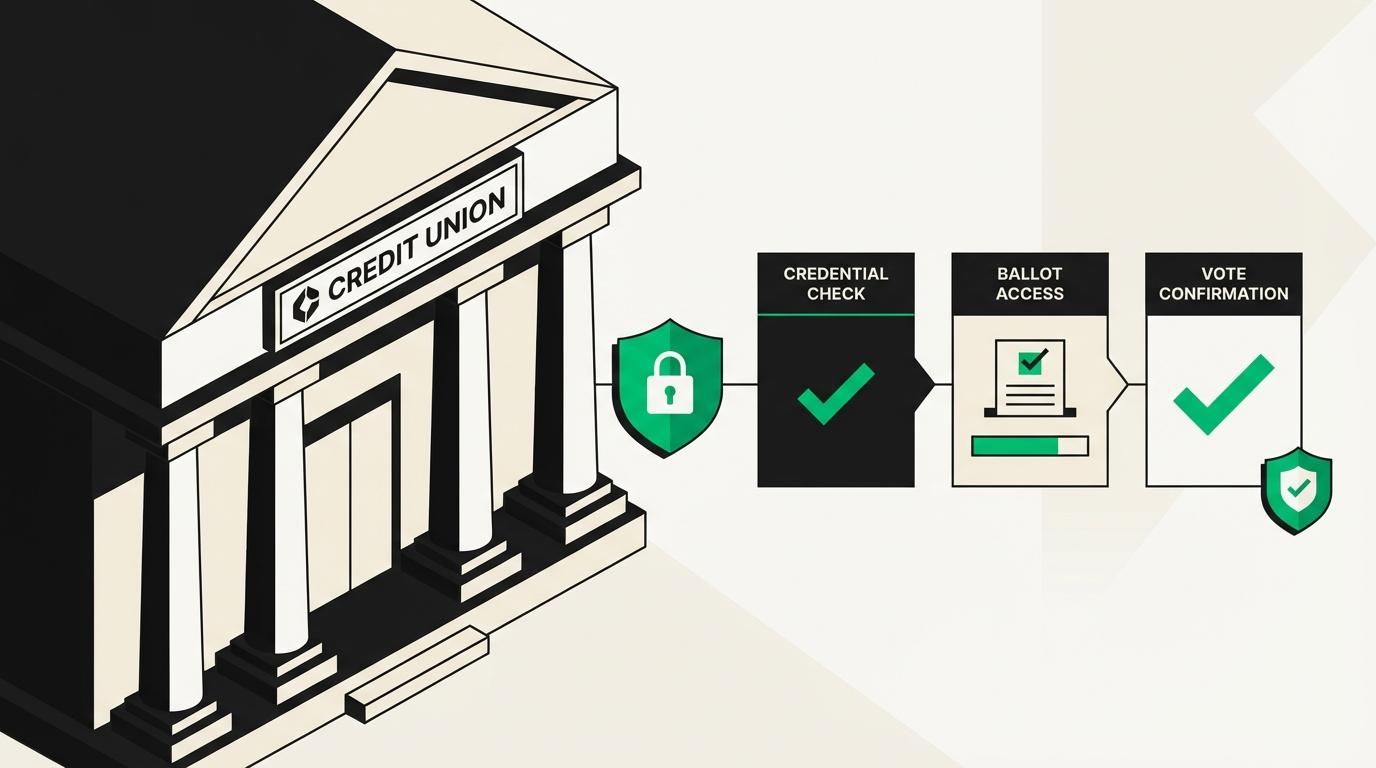
vote.direct’s assisted workflow runs a document check and, when it is configured, a selfie check. The document check evaluates whether a presented government-issued identity document is authentic; the selfie check compares the photo on that document with the person presenting it. The check is performed by a specialist identity-verification provider, and the document images go to that provider rather than to our servers.
That is useful evidence about the person completing the check. It does not establish, by itself, that:
- the association’s roster is accurate;
- the person has the voting weight assigned to that roster entry;
- two eligible co-owners should share or receive separate credentials;
- every notice, consent, observer, inspector, or paper-ballot requirement was completed; or
- the election cannot be challenged.
The organizer still has to choose the eligible-voter list and match the assurance level to the governing rules.
What Email and SMS Verification Establish
For a roster-restricted election, email or SMS verification demonstrates control of the address or phone number attached to an eligible election credential. The platform then accepts one ballot for that credential. This is a narrower, more defensible claim than “one human, one vote”: shared inboxes, recycled phone numbers, roster errors, and eligibility rules remain organizer responsibilities.
What the Audit Record Establishes
Platform events are timestamped and linked with SHA-256 hashes so later changes to the exported sequence can be detected. The result and audit package can support an inspector, teller, board, auditor, or court reviewing what happened inside vote.direct.
It is evidence, not a legal guarantee. A hash-linked log cannot prove that an outside notice was mailed, that a candidate observer received required access, or that the chosen voting method was authorized.
Ballot secrecy has a similarly important choice: in Anonymous mode vote.direct withholds the voter-to-ballot link from organizers, results, and exports, but keeps the link in restricted application storage for vote changes, proxies, and recounts; in Sealed ballot mode the ballot is stored with no link to the voter at all, the design built for any rule requiring permanent separation. The privacy policy explains the design.
Choose the Assurance Level Deliberately
Use the lowest level that satisfies the election’s actual risk and rules:
- 1Unverified poll: informal feedback where repeat responses are acceptable.
- 2Roster + email or SMS: one accepted ballot per eligible credential, with low voter friction.
- 3Roster + assisted government ID: additional evidence about the person presenting the credential, with more cost, lead time, data collection, and completion friction.
No single level makes every election lawful or dispute-proof. The honest value proposition is controlled access, documented verification, automatic tabulation, and exportable evidence at a published price.
This article is general information, not legal advice. We recommend you do your own research and confirm anything you plan to act on. Where this article states law, the section is cited so you can read the primary source yourself rather than take our word for it. That is what the citations are for. Election requirements also turn on your own governing documents, which we have not seen, and statutes are amended. For advice about your community, consult a qualified attorney licensed in your state.
We work hard to verify every citation against the primary source, but laws change and errors happen. If you spot an inaccuracy, email support@vote.direct and we will correct it. See our editorial standards for how these pages are researched and checked.