Quick Answer
vote.direct mails a ballot access letter, not a paper ballot the member marks and sends back. Each letter is addressed to one named voter and carries a QR code and a PIN that works for one election and expires when voting closes. The voter scans or types it in and casts the ballot in a browser. Nothing has to travel back through the mail. Each letter costs $3.00, and its status (Pending, In Transit, Delivered, Returned or Failed) updates on the election dashboard as the postal system scans it.
The Paper Ballot Black Hole
Traditional mail-in voting for an HOA has one structural problem: once the envelopes go into the mail, nobody knows anything until something comes back.
- Did it reach the homeowner at all?
- Was it delivered to the right address?
- Did it bounce because the owner moved two years ago?
- Or did it arrive and simply never get returned?
When the election is questioned afterwards, those turn into expensive questions. "We mailed them" is not a record. "That letter was handed off on March 1 and delivered on March 3, and this one came back undeliverable on March 6" is a record.
What Is Actually in the Envelope
This is the part that generic "mail-in ballot" marketing gets wrong, so it is worth being exact.
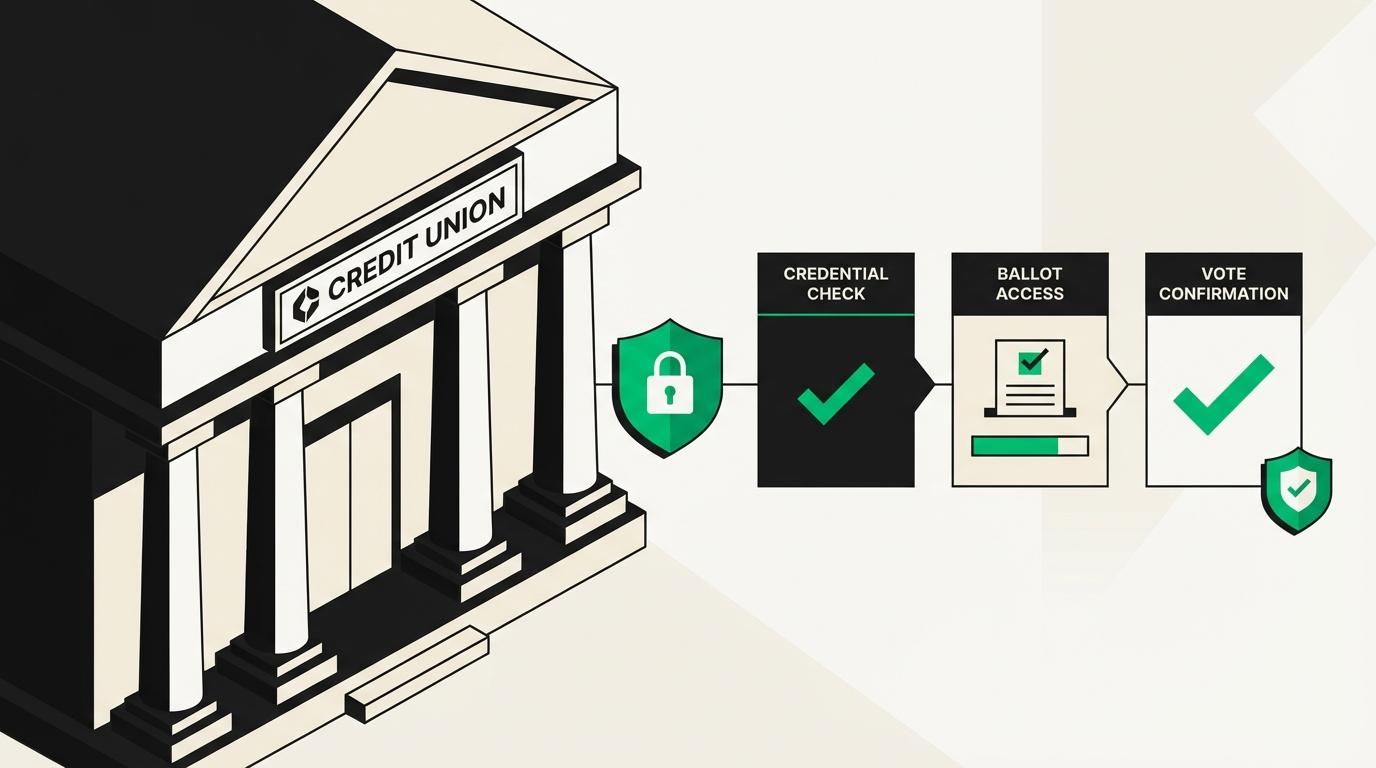
vote.direct does not print a ballot for a homeowner to mark by hand and mail back. It prints and mails a ballot access letter: a letter addressed to a named voter, carrying a QR code and a unique PIN. The homeowner scans the code, or enters the PIN at the address printed on the page, and votes in the browser exactly as an emailed voter would. The PIN is good for that one election and expires when voting closes.
Three consequences follow from that, and all three matter when you plan the timeline:
- 1There is no return trip. Most of the delay and nearly all of the loss in mail voting happens on the way back. Here the ballot arrives the instant the voter submits it.
- 2Your real deadline is the delivery date. The letter has to arrive early enough for the member to act, not early enough to make a round trip.
- 3It is not a hand-marked paper ballot. If your governing documents or your state's statute require a member to be offered a paper ballot they mark and return, an access letter does not satisfy that on its own. Say so in your notice, and ask before you rely on it.
The Delivery Statuses You Actually See
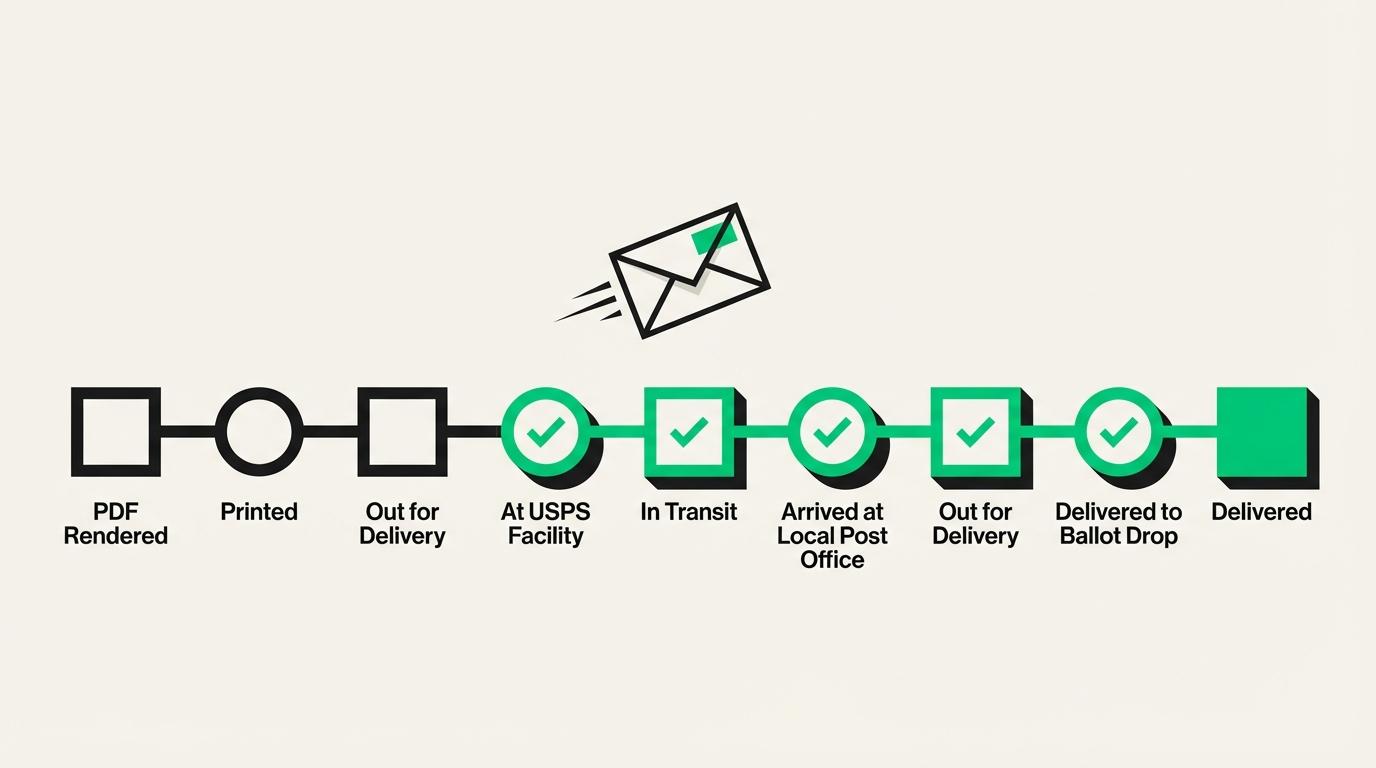
Every letter is followed from the print run to the mailbox. The raw postal scan stream is far more granular than anyone needs, so it is collapsed into the five statuses shown in the mail tracker on your election dashboard:
| Status | What it means |
|---|---|
| Pending | Accepted and queued: being printed, addressed and prepared for the mail stream |
| In Transit | Scanned by the postal system: at a processing facility, at the destination post office, or out for delivery |
| Delivered | Confirmed delivered to the address |
| Returned | Undeliverable and returned to sender, almost always a stale address on the roster |
| Failed | Could not be produced or was rejected before mailing, so nothing went out |
A letter forwarded to a new address keeps moving under In Transit until it is delivered.
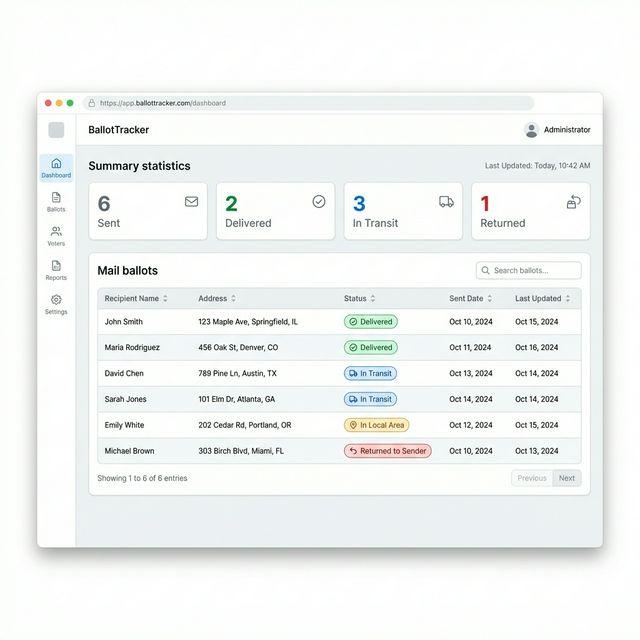
What Is Recorded for Each Letter
- The recipient name and the address it went to
- The timestamp it was handed off, and the timestamp it was delivered or returned
- The current status, and an identifier for that specific letter
- The link back to the voter credential the letter carried
That record sits beside the digital vote records for the same election, so a single export covers both channels.
Why the Delivery Record Matters
1. It answers "I never got anything"
The most common objection to any mailed election is a member who says nothing arrived. A delivery timestamp against the address on your roster answers that member specifically, instead of answering with "we mailed everyone."
2. It shows the attempt
When a letter comes back undeliverable, you have evidence that you tried to reach that member at the address on file. Together with the roster, that is a documented attempt rather than a silent gap, and it is far better to hold it before voting closes than to discover it afterwards.
3. It is written as it happens
Status changes are timestamped when the scan arrives, not reconstructed from memory months later when somebody complains.
None of this decides whether the election met its legal requirements. Notice, consent, quorum, inspectors and secrecy rules live outside the platform. The delivery record is one input to that picture, not a replacement for it.
Handling Returned Letters
When a letter comes back, vote.direct:
- 1Marks it Returned in the tracker, with the date it came back
- 2Offers a Resend action on that letter, and on any letter that failed before mailing
- 3Pre-fills the recipient so you can send a replacement to a corrected address: a new letter, charged as a new letter at $3.00
Catching a bad address in the first week is the whole point. California Civil Code §5115(b) requires ballots to be mailed at least 30 days before the deadline; if three letters bounce, you want to know while those 30 days are still ahead of you, not after the count.
Compared With Mailing It Yourself
| Self-mailed paper | vote.direct ballot access letters | |
|---|---|---|
| Delivery confirmation | None, unless you pay for a tracked service per piece | Per-letter status on the election dashboard |
| Bad addresses | Found when the envelope reappears, if anyone opens the pile | Marked Returned with a date, and resendable |
| The record | "We mailed them" | Timestamped per-letter history, exported with the election |
| Return trip | Required, and the main source of delay and loss | None; the ballot is cast online |
| Cost per piece | Printing, stuffing, postage, staff time, plus a return envelope | $3.00 per letter, printed and mailed for you |
A Worked Example
A 300-unit HOA in Florida has 80 owners with no email address on file, and sends each of them a ballot access letter.
- Day 1: 80 letters accepted, printed and handed to the mail stream
- Days 3-5: the tracker fills with In Transit as the letters are scanned
- Day 5: 45 show Delivered
- Day 6: 73 of the 80 are delivered
- Day 7: 3 come back Returned, all wrong addresses on the roster
- Day 7, board action: phone those three owners, get current addresses, resend
- Day 12: all 80 delivered, and the roster shows which of them have voted
Without a delivery record the board mails 80 envelopes and hopes. With one, it knows exactly which three members need a phone call, and it still has three weeks to make it.
Getting Started
- 1Create an election at vote.direct/create
- 2Upload your roster with mailing addresses
- 3Choose the members who should receive a letter
- 4Watch delivery status in the mail tracker on the election dashboard
- 5Resend to a corrected address as soon as one is returned
Delivery status is included in the $3.00 per-letter price. There is no separate tracking fee.
Ballot access letters are printed and mailed on our behalf by a mail house and travel as ordinary first-class mail, not as a tracked or certified service. Status changes generally appear within 24-48 hours of each postal scan.
This article is general information, not legal advice. We recommend you do your own research and confirm anything you plan to act on. Where this article states law, the section is cited so you can read the primary source yourself rather than take our word for it. That is what the citations are for. Election requirements also turn on your own governing documents, which we have not seen, and statutes are amended. For advice about your community, consult a qualified attorney licensed in your state.
We work hard to verify every citation against the primary source, but laws change and errors happen. If you spot an inaccuracy, email support@vote.direct and we will correct it. See our editorial standards for how these pages are researched and checked.