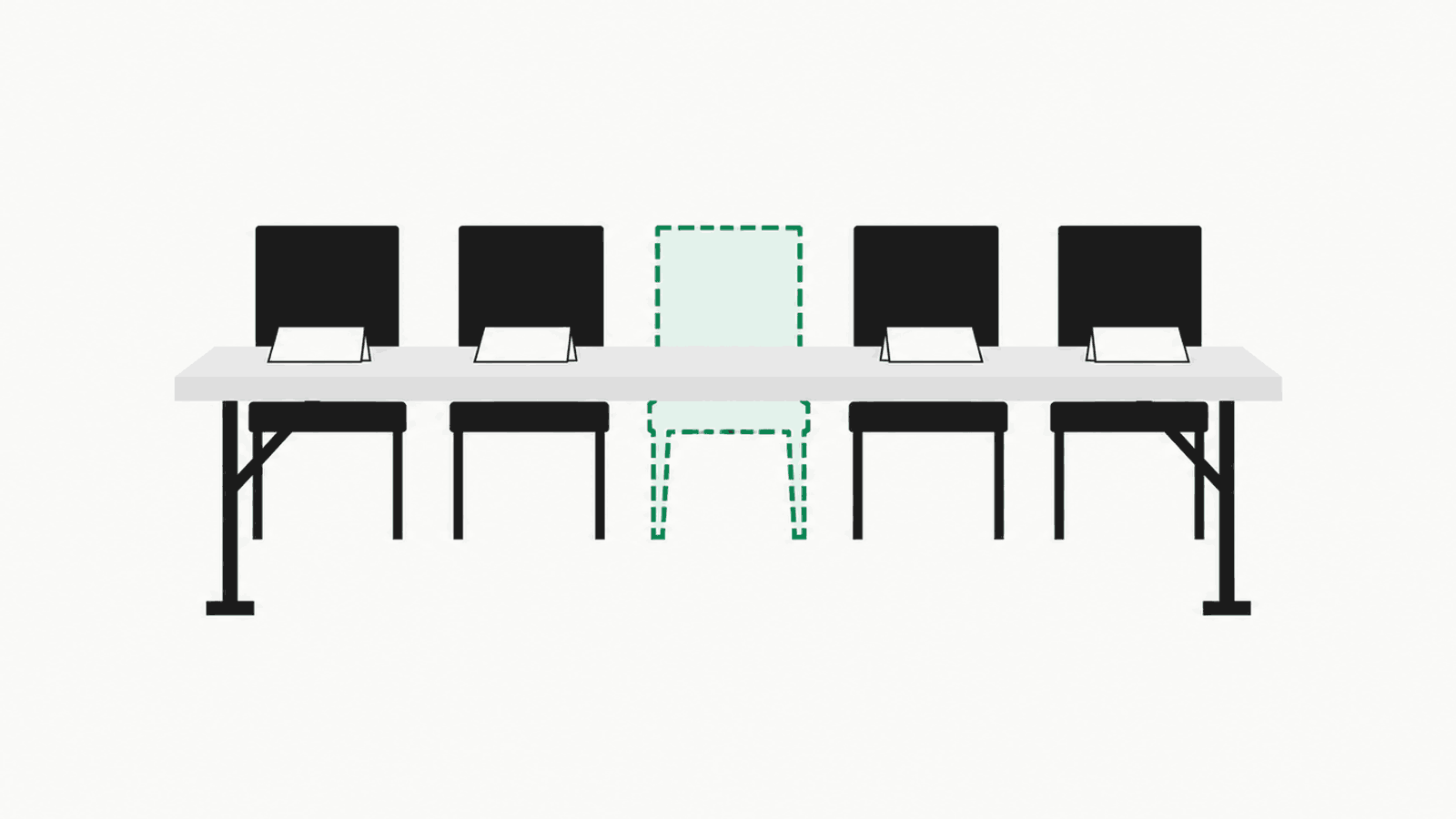
The Seat Nobody Wants
Across the United States, 52% of community associations report difficulty finding homeowners willing to serve on their boards. In larger communities, those with 500+ units, the figure climbs to 62%. The problem is so pervasive that the Community Associations Institute (CAI) now identifies board recruitment as the single largest governance challenge facing the industry.
This isn't a new trend. It's a crisis that's been building for years, and it's accelerating. The 77 million Americans who live in HOA-governed communities depend on volunteer boards to manage shared property, enforce rules, collect assessments, and oversee budgets that can exceed $10 million annually for large communities. When those boards can't fill seats, governance breaks down.
The question isn't whether the problem exists. It's whether we understand what's actually causing it.
The Real Reasons Board Members Quit
Ask a departing board member why they're stepping down, and you'll hear the predictable answers: time commitment, thankless work, difficult neighbors. But dig deeper and a more specific pattern emerges.
1. Election Administration Is the Breaking Point
Running an HOA election with paper ballots is a 20-to-40-hour commitment for the volunteer managing it. That includes:
- Printing and distributing ballots (often 2-3 mailings to reach quorum)
- Managing proxy forms and verifying signatures
- Coordinating the annual meeting logistics
- Counting ballots by hand, sometimes past midnight
- Fielding challenges and complaints for days afterward
- Storing records and defending results if challenged
For a volunteer with a full-time job and a family, this is an enormous burden. And it repeats every single year.
| Election Task | Hours Required (200-unit community) |
|---|---|
| Ballot design and printing | 3-5 hours |
| Distribution and follow-up mailings | 8-12 hours |
| Proxy form management | 3-5 hours |
| Meeting logistics and setup | 4-6 hours |
| Ballot counting and verification | 3-8 hours |
| Post-election dispute handling | 2-10 hours |
| Total | 23-46 hours |
2. Personal Legal Liability
Board members are increasingly aware that they can be personally sued for election irregularities. When D&O insurance excludes election disputes, as most policies now do, the individual board members face out-of-pocket exposure that can reach tens of thousands of dollars.
A 2025 CAI survey found that 34% of board members cited fear of personal lawsuits as a reason they considered resigning. In Florida and California, states with the most aggressive HOA litigation environments, that figure was 47%.
3. The Thanklessness Multiplier
Every community has residents who treat the annual meeting as an opportunity to vent frustrations. When those frustrations are directed at the people running the election, claiming bias, demanding recounts, accusing the board of manipulation, the emotional toll compounds the time burden.
Board members aren't paid. They're not trained election administrators. And they're being asked to defend processes they barely understand against accusations that can feel deeply personal.
The Domino Effect of Empty Board Seats
When boards can't fill vacancies, the consequences cascade:
Management companies gain unchecked power. With fewer board members to provide oversight, property management companies make more unilateral decisions. In extreme cases, management companies have been found directing community spending with little to no board review.
Assessment increases go unchallenged. Budget reviews that should involve robust debate happen with three people instead of seven. Special assessments, which can run $5,000 to $25,000 per homeowner, may pass with minimal scrutiny.
Insurance premiums increase. Insurers view undermanned boards as higher risk. Communities with persistent vacancies have reported D&O premium increases of 15-30% at renewal.
Property values decline. Research from the Foundation for Community Association Research indicates that well-governed HOAs add 4-6% to property values compared to poorly governed ones. When governance gaps become visible, deferred maintenance, inconsistent rule enforcement, financial irregularities, property values feel the impact.
The States Where the Crisis Is Most Acute
Florida
With 2.5 million condo units and the nation's most aggressive election litigation environment, Florida boards face unique pressure. The state's 60-day election challenge window (Statute 720.306(9)(a)) means boards live in constant uncertainty after every vote. Combined with an aging population that has the time and resources to pursue challenges, Florida board seats are among the hardest to fill.
California
California's Davis-Stirling Act requires an independent Inspector of Elections for every vote, adding cost and complexity to every election cycle. The state's 50,000+ HOAs must navigate some of the most detailed election requirements in the nation. Board members who make procedural errors face personal exposure under Civil Code § 5145, which allows members to recover $500 per violation plus attorney fees.
Texas
Texas has experienced explosive HOA growth, with new communities forming at a rate that far outpaces the supply of willing volunteers. The state's 70,000+ HOAs represent the largest count in the nation, yet Texas provides less regulatory oversight than Florida or California, leaving boards more exposed when disputes arise.
How Digital Voting Directly Addresses Burnout
The connection between election administration burden and board member burnout is direct and measurable. When you eliminate the manual work of running an election, you remove the single largest time commitment and the primary source of legal exposure for volunteer board members.
Here's what changes when a community switches to verified digital voting:
| Board Member Burden | Paper Elections | Digital Verified Elections |
|---|---|---|
| Hours spent on election admin | 23-46 hours/year | 2-3 hours/year |
| Personal legal exposure | $50,000-$300,000 | Near zero (audit trail) |
| Quorum achievement rate | 30-50% (in-person) | 60-85% (remote + accessible) |
| Post-election disputes | Common | Rare (cryptographic proof) |
| Emotional toll | High (public confrontation) | Low (automated, objective) |
At [vote.direct](https://vote.direct), setting up a community-wide election takes under 30 minutes. Voters verify their identity with a government-issued ID and cast their ballot from any device. Results are instant, auditable, and cryptographically sealed. The board member who used to spend 40 hours managing paper ballots now spends less time than it takes to watch a movie.
The Recruitment Pitch That Actually Works
Community associations that have adopted digital voting report a measurable improvement in board recruitment. The reason is simple: when you tell potential volunteers that elections are handled by software, no ballot counting, no proxy management, no legal exposure, the #1 objection disappears.
Some communities have started including their digital voting platform as a specific bullet point in board recruitment materials:
> "Board members do not manage election logistics. All community votes are conducted through our verified digital voting platform, which handles voter identity verification, ballot security, counting, and compliance documentation automatically."
This isn't a trivial detail. It's the difference between telling a prospective volunteer they'll spend 40 hours per year running an error-prone paper election, and telling them that elections run themselves.
The Bottom Line
The HOA board burnout crisis isn't about apathetic homeowners. It's about a governance model that asks unpaid volunteers to perform complex, high-liability tasks that should have been automated years ago.
Election administration is the single most time-consuming, legally risky, and emotionally draining responsibility a board member faces. Eliminating that burden doesn't just make existing board members happier. It makes the next generation of volunteers possible.
The math is simple: a $1,000 per year investment in verified digital voting saves 40+ hours of volunteer time, eliminates six-figure legal exposure, and makes it possible to actually recruit the people your community needs to function.
The communities that thrive in the next decade will be the ones that stopped asking volunteers to count ballots and started asking them to lead.
This article is general information, not legal advice. We recommend you do your own research and confirm anything you plan to act on. Where this article states law, the section is cited so you can read the primary source yourself rather than take our word for it. That is what the citations are for. Election requirements also turn on your own governing documents, which we have not seen, and statutes are amended. For advice about your community, consult a qualified attorney licensed in your state.
We work hard to verify every citation against the primary source, but laws change and errors happen. If you spot an inaccuracy, email support@vote.direct and we will correct it. See our editorial standards for how these pages are researched and checked.