You Can See Why Digital Voting Makes Sense. Now You Have to Convince Everyone Else.
Most board members who push for online voting hit the same wall. You can see the upside: real participation, quorum you can actually reach, an instant and defensible count, and your weekends back. But a few people on the board are hesitant, and a couple of long-time owners are attached to the way things have always been done.
This toolkit is built for that exact moment. It gives you the honest case for switching, the real drawbacks and how to handle them, a step-by-step transition plan, and word-for-word answers to the objections you will hear in the room. Read it, then download the PDF and bring it to your next board meeting.
This article is general information, not legal advice. Electronic voting rules vary by state and by your governing documents. Confirm your specific requirements before you make the switch.
Why Most HOAs Are Still on Paper
It usually is not because paper works better. It is because nobody wants to be the person who changes a 20-year-old process, and three myths keep boards frozen:
- "It is probably not legal for us." In most states it is, with conditions. More on that below.
- "It will be expensive." Paper is the expensive option once you count printing, postage, and an inspector of elections.
- "Our older owners will be left out." Only if you go online-only. The fix is hybrid, and it is easier than it sounds.
Knock down those three and the real conversation can start.
The Honest Case for Switching
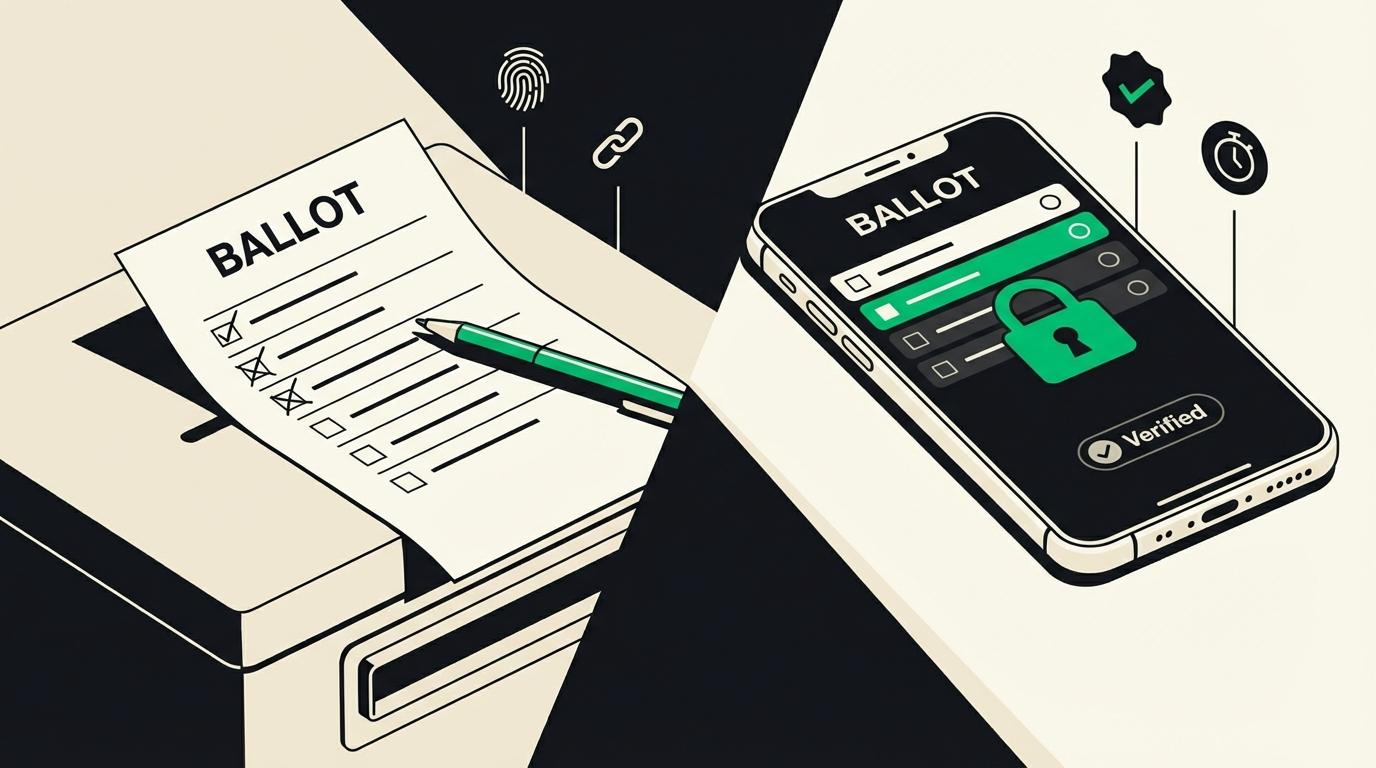
| What changes | Paper | Online (verified) |
|---|---|---|
| Turnout | Often single digits | Higher, with one-click reminders |
| Reaching quorum | A yearly gamble | Far more reliable |
| Counting | Volunteers, by hand, at night | Instant and automatic |
| Proof it was fair | A box of envelopes | Timestamped audit trail |
| Board workload | Days of stuffing and counting | Set it up once |
| Cost per election | Printing, postage, inspector | A flat fee |
The headline benefit is participation. Paper ballots and in-person meetings ask owners to mail something back or give up an evening, and most simply will not. A verified online election with automatic reminders meets owners where they already are, on their phone, which is why turnout and quorum stop being a yearly crisis. For a side-by-side on price, see our paper vs digital cost breakdown.
The Honest Drawbacks, and How to Handle Each
Do not pretend there are no trade-offs. Naming them first is exactly what wins skeptics over.
| The concern | The reality | What to do about it |
|---|---|---|
| Not every owner is online | A real share of owners still want paper | Run hybrid: online plus a lawful paper or assisted route, with one documented tally |
| "Is digital actually secure?" | A fair question owners deserve a real answer to | Use identity verification, a secret ballot, and an audit trail, then explain it plainly |
| Change meets resistance | People trust what they have seen work | Start with one low-stakes pilot vote before the annual election |
| Cleaning up the roster | A one-time data task | Do it once, reuse it every election after |
The honest takeaway for year one: go hybrid, not online-only. You keep paper for the owners who want it, prove the new process on a small vote, and remove the single biggest objection before it is even raised.
Is Online Voting Even Legal for Your HOA?
Usually yes, but the details matter. Most states permit electronic voting for community associations when you meet conditions like verified voter identity, a secret ballot, and proper notice. Some, like California and Florida, authorize it explicitly. A few require the board to adopt a resolution or give specific advance notice first.
Two things to check before you propose anything:
- 1Your state law. Look up your state in our HOA voting rules by state guide.
- 2Your governing documents. If your bylaws are silent on electronic voting, you can usually adopt it by board resolution, but confirm whether yours require a specific method.
Walking into the meeting already knowing your state allows it removes the "we probably cannot do this" objection on the spot.
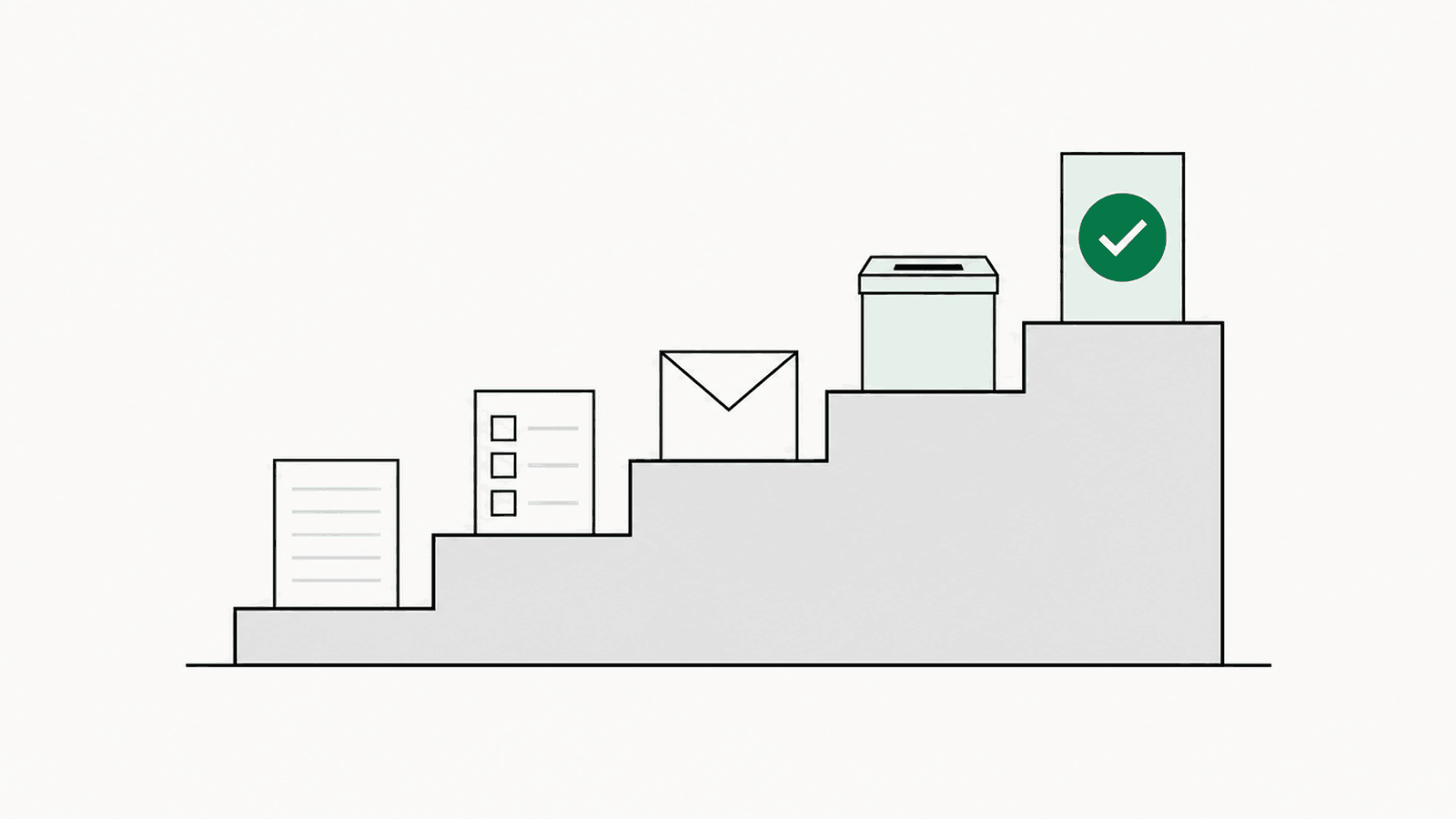
How to Switch: A 6-Step Transition Plan
Step 1: Confirm it is allowed
Check your state law and governing documents, as above. Write down the exact statute and bylaw section. You will want them when someone asks.
Step 2: Get the board on board
Bring this toolkit to a meeting. Propose something small and reversible: a single pilot vote, hybrid, with paper still available. It is far easier to get a yes on "let us try one low-stakes vote" than on "let us change everything."
Honest question
Would you trust an online vote to decide your community's annual budget?
Step 3: Choose a platform a volunteer can actually run
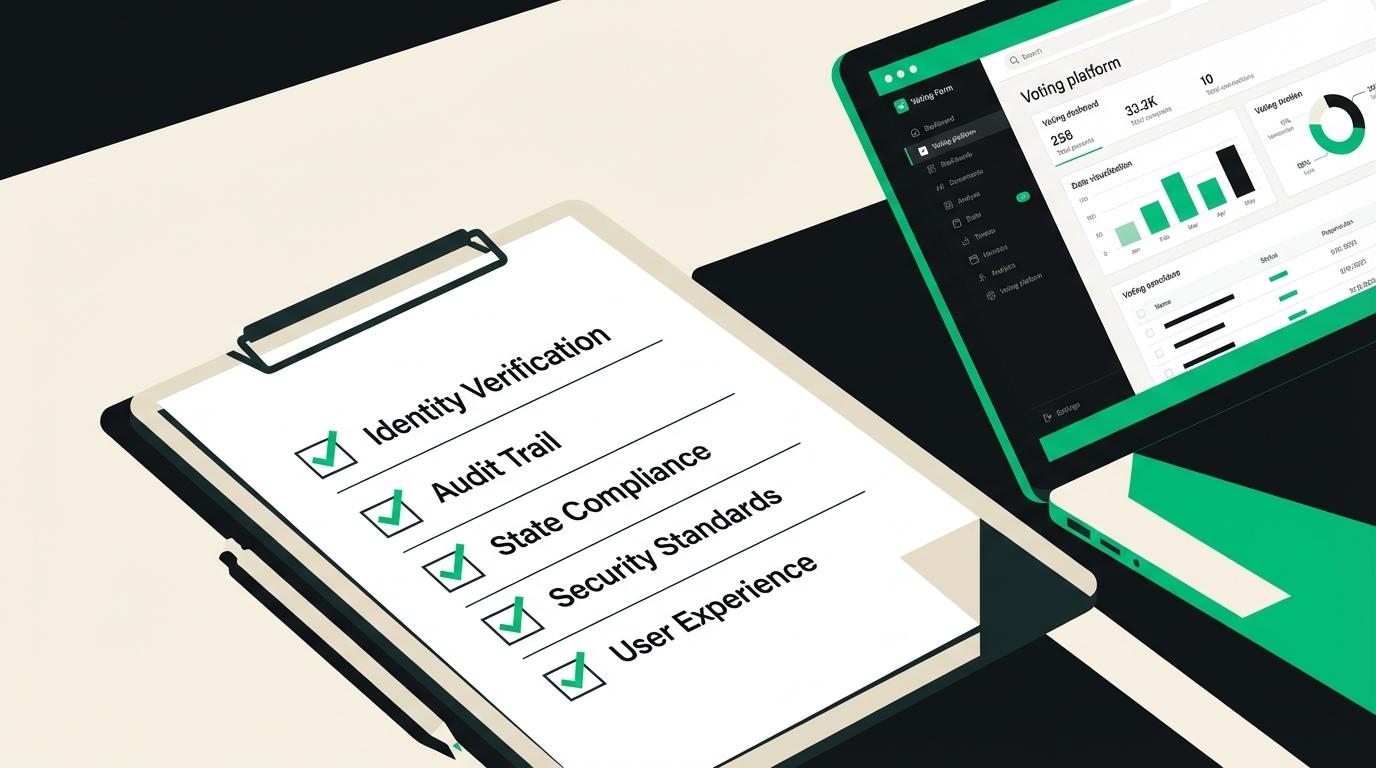
You are not an IT department. Look for verified voter eligibility, real-time quorum tracking, a secret ballot with an audit trail, and a compliance certificate at the end. Flat per-election pricing usually beats per-voter pricing for a community. See how the main options compare in our HOA voting software cost comparison.
Step 4: Build and verify your voter roster
Export your owner list with names and emails, plus ownership share if you do weighted voting. Clean it up once. This is the only real setup work, and you reuse it for every future election.
Step 5: Run a low-stakes pilot
Pick something minor: a landscaping choice, a meeting date, an amenity question. The goal is not the result, it is to let owners and board members feel how easy it is, with zero pressure.
Step 6: Run your annual election, hybrid
For your first real election, offer online and paper together. Send reminders to anyone who has not voted. Watch quorum climb in real time. Export the certificate for your records. Next year, the conversation about going further runs itself.
Make Your Case: Answers to Every Objection
Here is the part to keep handy. These are the objections you will hear, and language you can use word for word.
"Our older residents will never use it."
We are not taking paper away. We are adding online and phone options on top of it. Owners who want a paper ballot still get one. We just stop forcing everyone to use the slowest method.
"Is online voting actually secure? Could someone cheat?"
Every voter is identity-verified before they can cast a ballot, so one owner equals one vote. Ballots are secret, and the system keeps a timestamped, tamper-evident record. That is more security than a box of paper envelopes counted by hand.
"What does it cost? Dues are already tight."
Paper is the expensive option once you add up printing, postage, and an inspector of elections, which often runs hundreds to a few thousand dollars per election. A verified online election is a flat fee that is usually a fraction of that. Let us run the numbers for our community.
"What if the result gets challenged?"
That is the strongest reason to switch. A challenge usually comes down to evidence, and right now our evidence is a box of envelopes. Online voting gives us verified identities, a secret ballot, and a full audit trail, which is exactly what holds up if anyone disputes the outcome.
"We have always done it on paper. Why change now?"
Because we keep struggling to reach quorum, and every adjourned meeting costs us time and momentum. Let us try one small pilot vote, keep paper as an option, and decide based on what actually happens.
A Message You Can Send to Homeowners
Adapt this when you are ready to announce the change:
Dear neighbors, to make voting easier and to help us reach quorum, our community is adding secure online voting for our upcoming election. You will receive a private, verified ballot link by email. Prefer paper? You can still request a paper ballot, nothing is being taken away. Voting opens [date] and closes [date]. Questions? Reply to this message or contact the board. Thank you for being part of the decisions that shape our community.
Your Switch-to-Digital Checklist
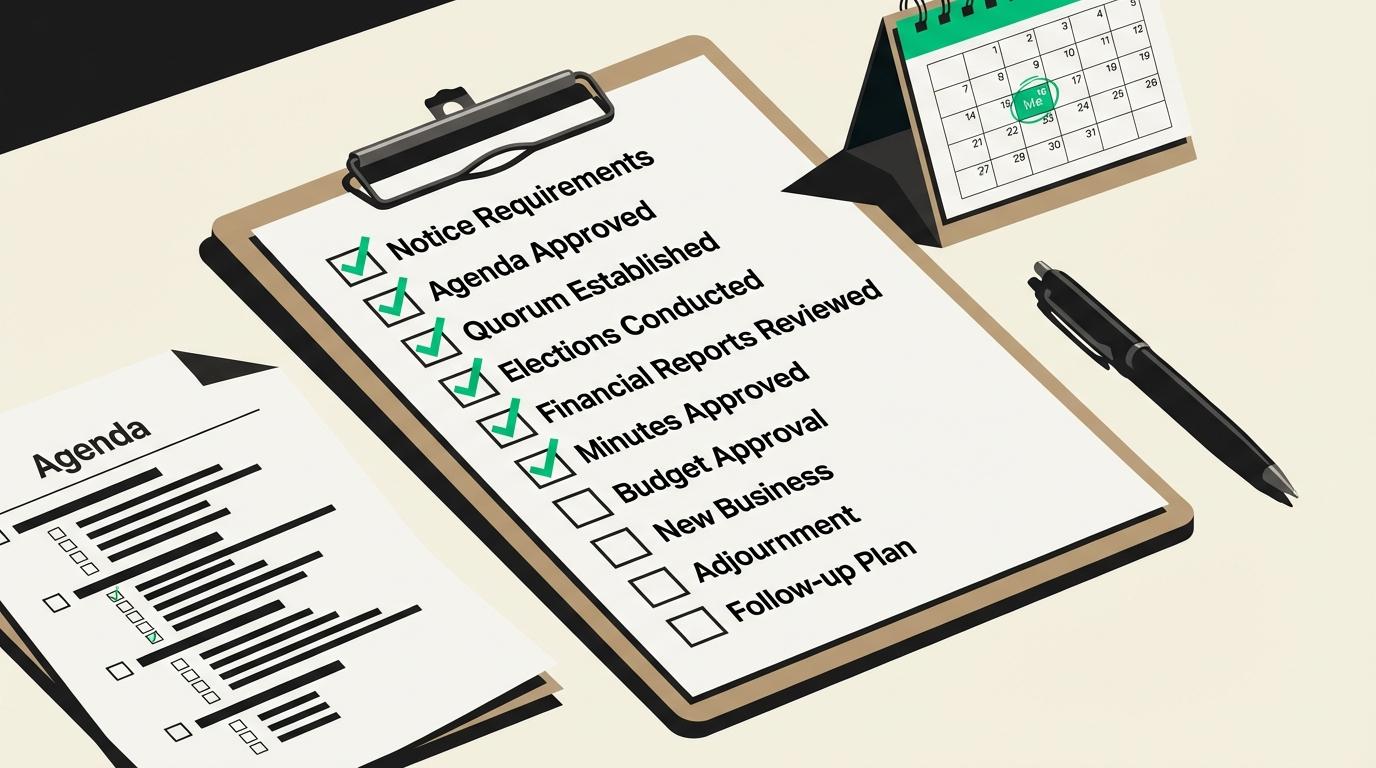
- ✅Confirm your state law allows electronic voting
- ✅Check your bylaws, and adopt a resolution if needed
- ✅Bring this toolkit to a board meeting and propose a pilot
- ✅Choose a platform with verified eligibility, quorum tracking, and an audit trail
- ✅Export and clean your owner roster once
- ✅Run a low-stakes pilot vote
- ✅Run your annual election as a hybrid, online plus paper
- ✅Send reminders and watch quorum in real time
- ✅Export the compliance certificate for your records
FAQ
Q: Do we have to stop offering paper ballots?
No. Most associations run hybrid, especially the first year. Owners who want a paper or mailed ballot still get one, and everyone else gets a faster option. You are adding choices, not removing them.
Q: How long does it take to set up?
The only real work is preparing your owner roster, usually an hour or two of cleanup. After that, creating an election takes minutes, and you reuse the roster every time.
Q: What if our bylaws do not mention electronic voting?
In most states a board can adopt electronic voting by resolution when the bylaws are silent. Confirm your state rules and your governing documents first, and record the decision in your minutes.
Q: How much does it cost?
Far less than paper once you include printing, postage, and inspector fees. Verified online elections are typically a flat fee per election. Use our cost comparison to estimate your savings.
Q: Will more people actually vote?
Almost always, yes. The biggest reason owners skip HOA elections is friction. Remove the friction and add reminders, and participation climbs, which is what makes quorum reliable.
This article is general information, not legal advice. We recommend you do your own research and confirm anything you plan to act on. Where this article states law, the section is cited so you can read the primary source yourself rather than take our word for it. That is what the citations are for. Election requirements also turn on your own governing documents, which we have not seen, and statutes are amended. For advice about your community, consult a qualified attorney licensed in your state.
We work hard to verify every citation against the primary source, but laws change and errors happen. If you spot an inaccuracy, email support@vote.direct and we will correct it. See our editorial standards for how these pages are researched and checked.