Quick Answer
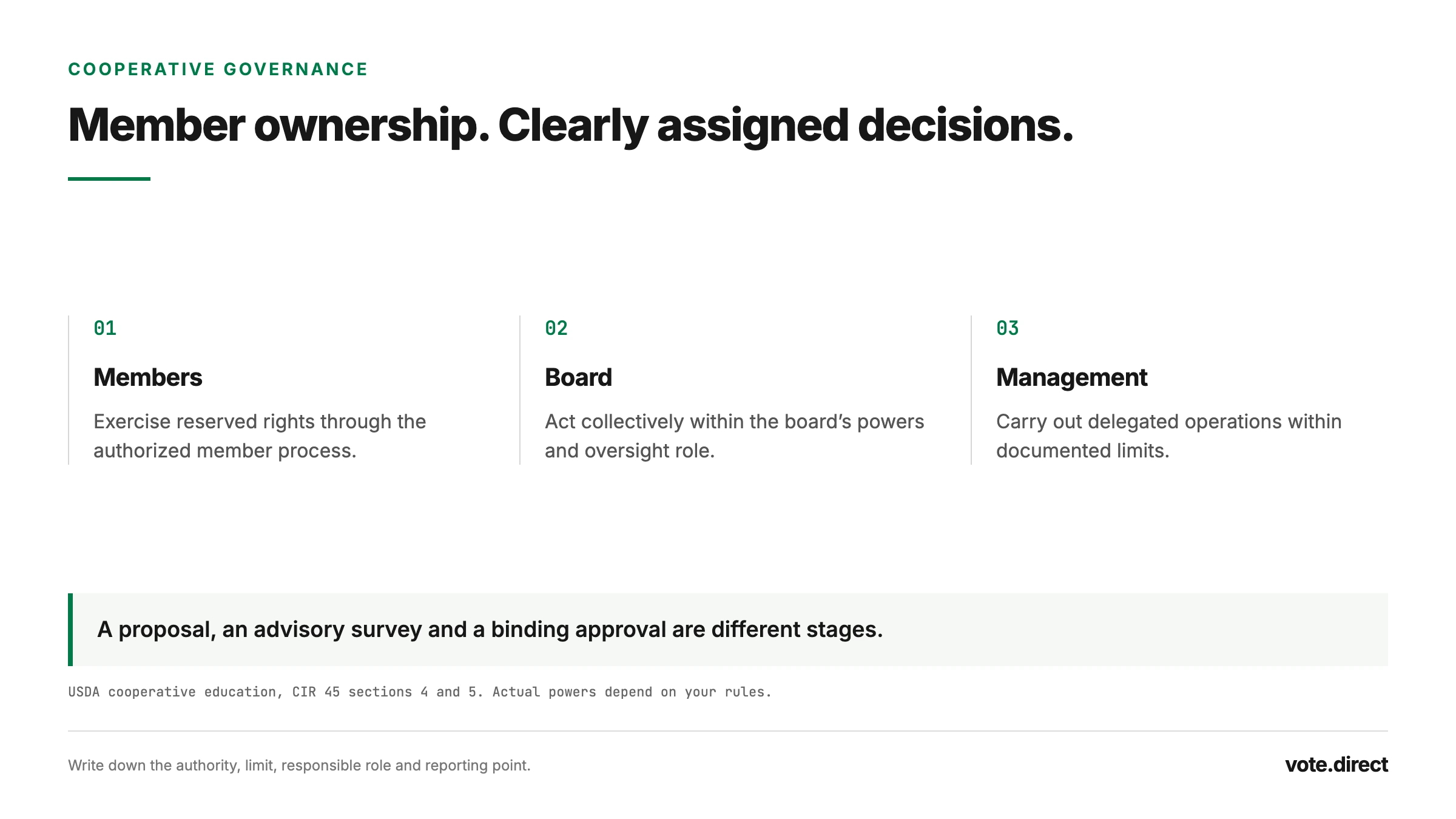
An association using delegates should establish who selects each delegate, how credentials are approved, which voting rights attach to the seat, and how alternates become authorized replacements. Count quorum and approval under the actual delegate rules. Conference attendance, a chapter officer title or an unverified registration does not automatically create a voting credential.
This U.S. planning guide concerns membership associations, not public political elections. Delegate structures and class rights must be authorized by the applicable law and governing documents.
Establish that the delegate structure is authorized
Start with the articles or certificate, bylaws and provisions creating the representative assembly. Identify the powers delegated to it. A convention can include educational sessions, a board meeting and a delegate business meeting, each with a different voting body.
New York N-PCL §603(d), for example, permits a representative or delegate structure through the certificate or member-adopted bylaws and addresses delegates exercising member powers at an annual meeting. This is a specific statutory route, not permission for any event organizer to create a substitute electorate. Read §603(d).
Create a credential record before issuing a ballot
| Field | What it establishes |
|---|---|
| Member organization or chapter | The represented interest |
| Seat identifier | Which authorized position the delegate fills |
| Selection record | The election, appointment or other authorized selection |
| Delegate identity and contact | The person permitted to use the credential |
| Alternate and substitution rule | Who may replace the delegate, how and when |
| Voting entitlement | The permitted weight or class rights |
| Credential status | Approved, pending, challenged, replaced or another defined state |
Separate conference registration from this record. A guest may attend the convention without voting. A duly selected delegate may require a different attendance arrangement from an ordinary registrant. Resolve those cases using the authorized procedures rather than the payment status in the event software.
Check organizational membership and delegate seats separately
An association may have organizations as members, delegates representing chapters, or individual members electing representatives. These structures should not be treated as interchangeable.
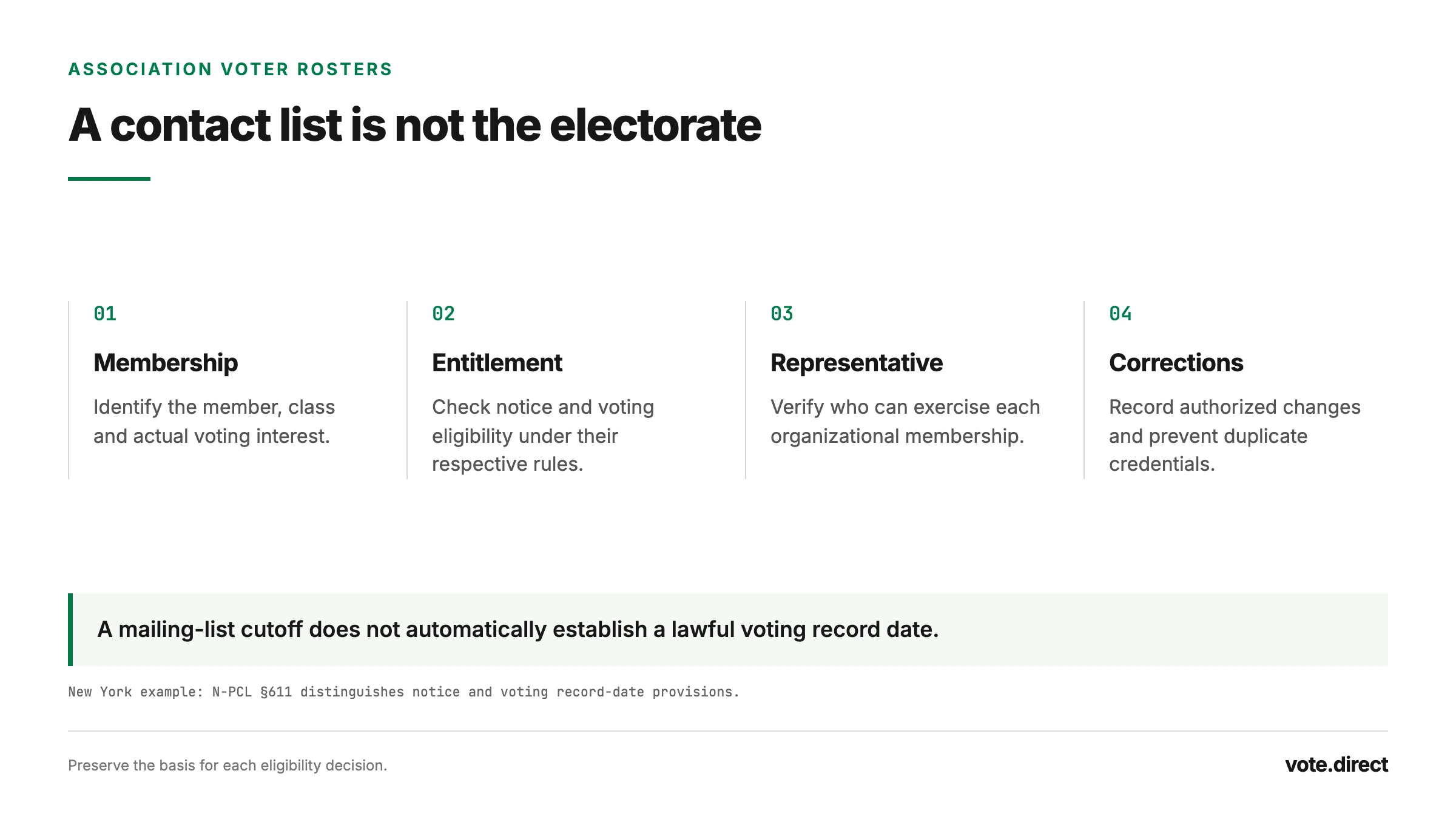
New York N-PCL §611(e), for instance, addresses the voting entitlement of organizational members and an authorized basis related to their membership. It does not mean every individual delegate can invent a weight based on chapter size. Read §611(e).
Preserve the source of each allocation: the provision, approved count, relevant date and calculation. If chapter membership changes close to the convention, apply the established allocation rule instead of quietly updating weights after credentials have been issued.
Worked example: more delegates can still mean fewer votes
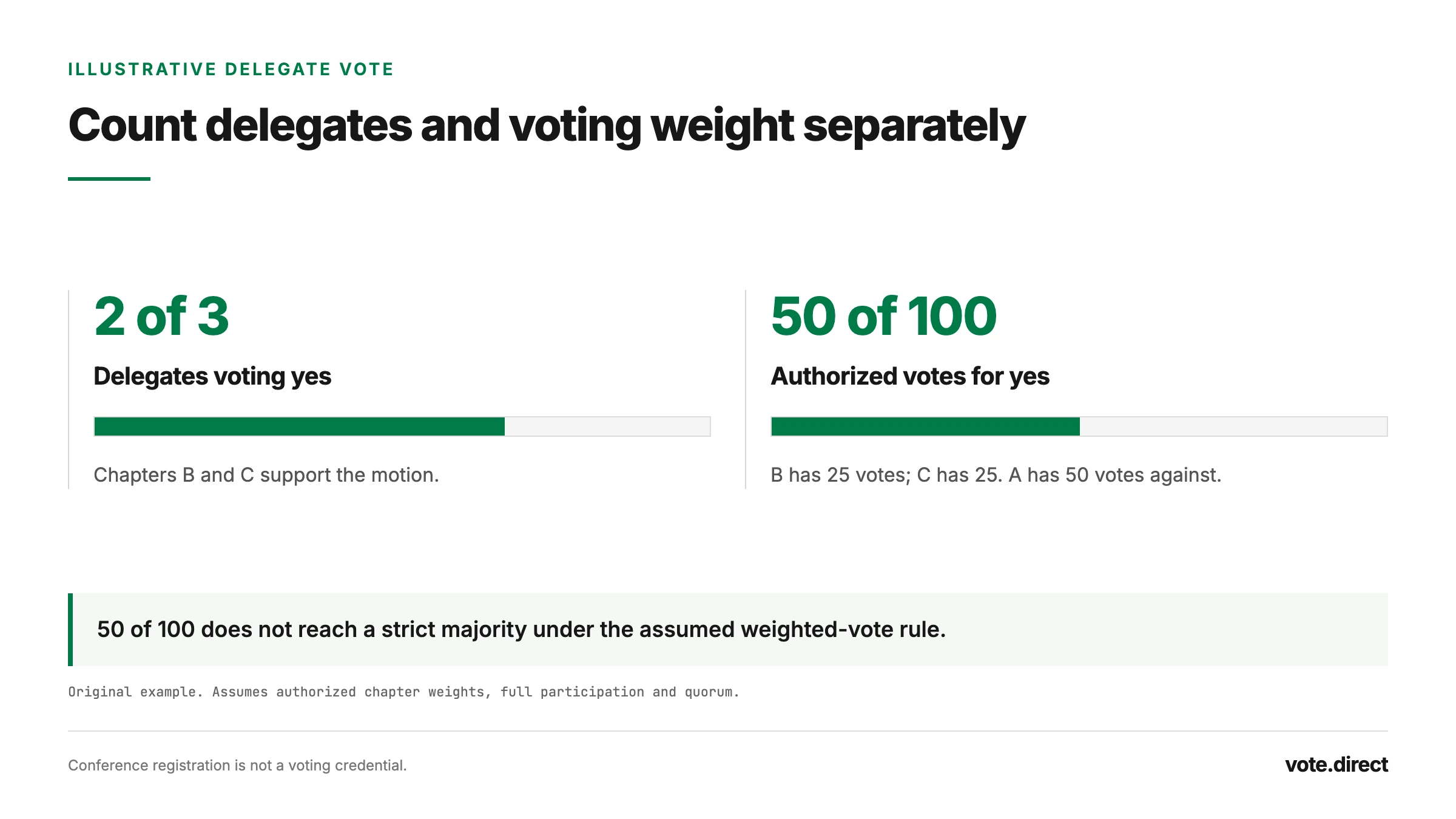
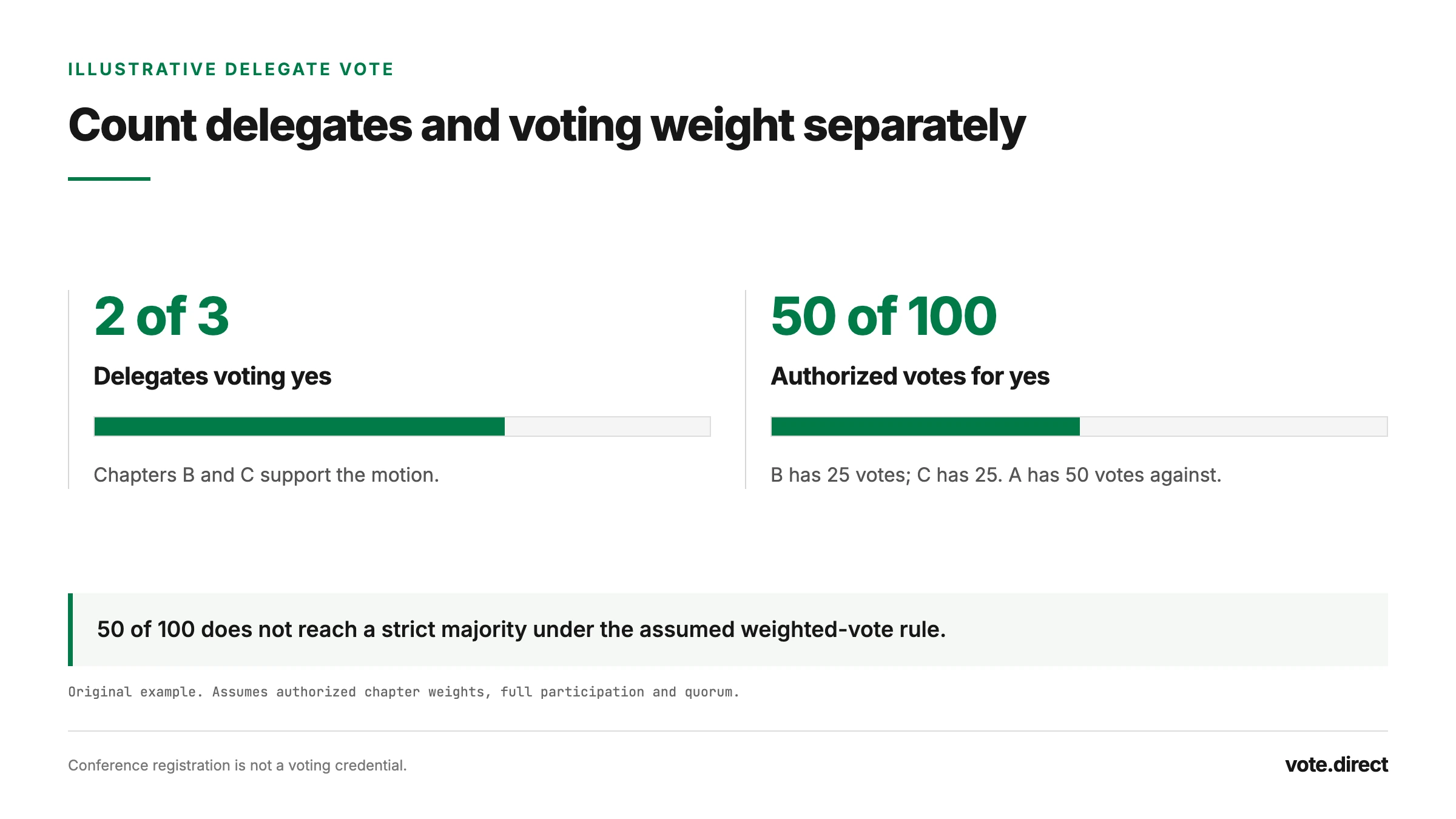
Assume a fictional association validly allocates 100 votes among three chapter delegates. Chapter A carries 50 votes, B carries 25 and C carries 25. All three attend, quorum is satisfied, and the motion requires more than half of votes cast. These are assumptions, not a statutory allocation.
| Delegate | Authorized weight | Choice |
|---|---|---|
| Chapter A | 50 | No |
| Chapter B | 25 | Yes |
| Chapter C | 25 | Yes |
Two of three delegates favor the motion, but their combined weight is 50 of 100. Under the assumed majority rule, the motion fails. A headcount display saying “67 percent yes” would describe delegates, not the deciding vote total.
State the relevant units on every screen and result report: delegates, represented chapters, eligible voting weight and votes cast. If a separate class approval is required, do not merge that class's count into the general result.
Handle alternates as controlled substitutions
An alternate's existence should not automatically double the represented vote. Check the rule for seating an alternate, who confirms the substitution, whether it applies for the meeting or a particular period, and what happens when the original delegate returns.
A practical substitution record identifies the old credential, new credential, authority, time and scope. Prevent simultaneous exercise of the same entitlement, while preserving the original record. A credential change should not reveal how either person voted on a secret ballot.
If a credential is challenged, use the applicable challenge and decision procedure. Record the issue and resolution. Do not manufacture a “provisional vote” process unless the association's rules actually allow one.
Prepare for a hybrid delegate meeting
Confirm that remote participation is authorized and supports the rights the delegate must exercise. Arrange access to motions and amendments, recognition, deliberation and the live count where required. A livestream viewer is not automatically a participating delegate.
Recheck attendance and authorized entitlement when delegates leave, disconnect or are replaced. Keep the credentials desk and the voting administrator working from the same approved status record. Afterward, preserve the seating report, tally and decisions under the applicable records policy.
Frequently Asked Questions
Is a delegate the same as a proxyholder?
No. A delegate holds authority through the association's representative structure; a proxyholder acts under an authorized proxy. The governing rules determine each role's scope and substitution rights.
Can a chapter send someone else if its delegate cannot attend?
Only through the applicable replacement or alternate procedure. Verify the new representative's authority before issuing a usable voting credential.
Should quorum be based on people or weighted votes?
Use the actual governing rule. It may refer to delegates, member organizations, voting power or another defined measure. Keep those counts separate so the chosen denominator is visible.
Source notes and next steps
Primary sources checked September 5, 2026: New York N-PCL §§603 and 611. The credential worksheet and 100-vote example are original planning material, not a model bylaw.
Read association membership and record dates, weighted voting, and the association governance library. vote.direct offers association election support and managed elections.
This article is general information, not legal advice. We recommend you do your own research and confirm anything you plan to act on. Where this article states law, the section is cited so you can read the primary source yourself rather than take our word for it. That is what the citations are for. Election requirements also turn on your own governing documents, which we have not seen, and statutes are amended. For advice about your community, consult a qualified attorney licensed in your state.
We work hard to verify every citation against the primary source, but laws change and errors happen. If you spot an inaccuracy, email support@vote.direct and we will correct it. See our editorial standards for how these pages are researched and checked.