Quick Answer
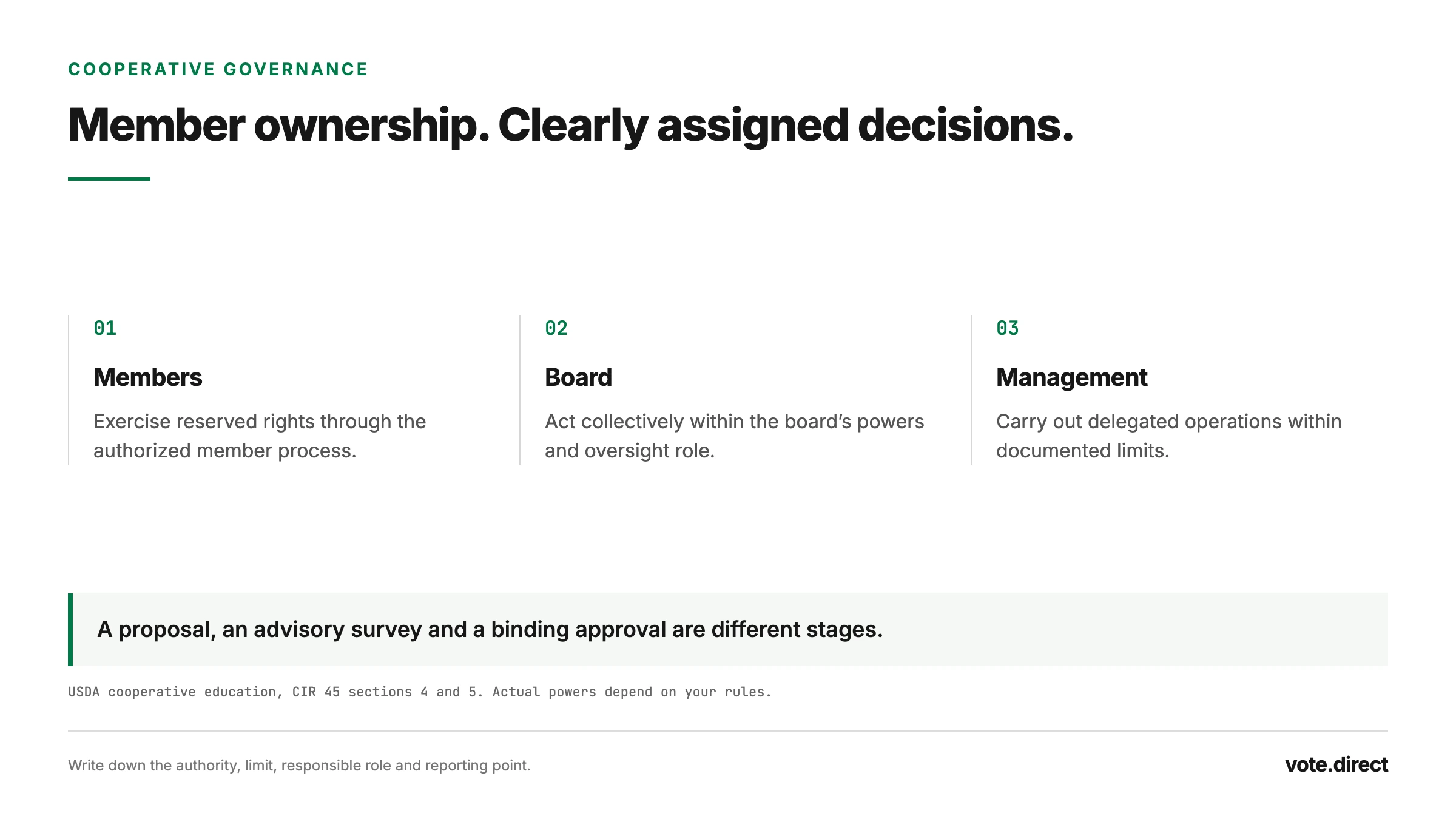
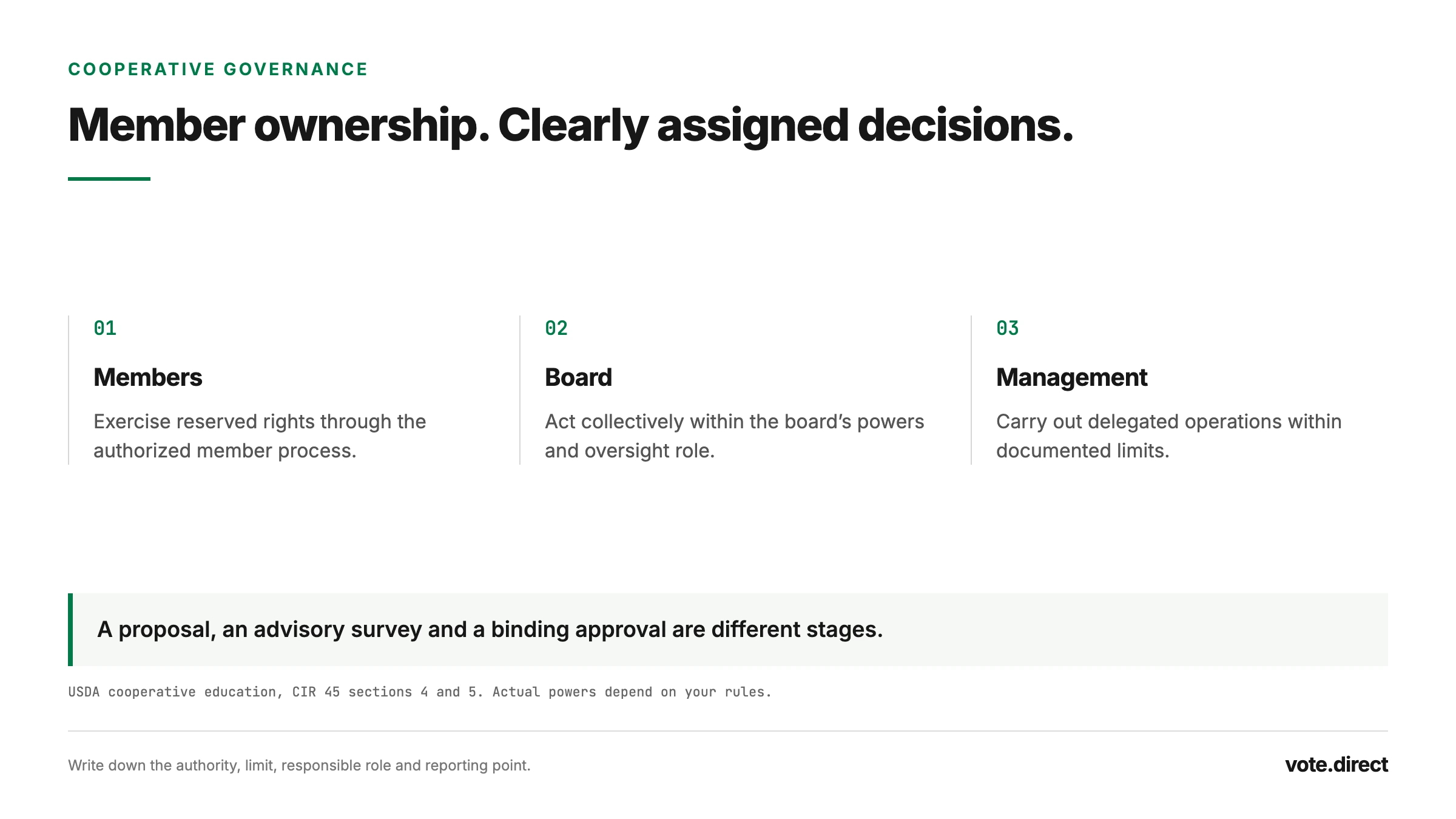
A cooperative should assign each decision to the body authorized by its law and governing documents. Members exercise their reserved rights, the board makes decisions within its oversight and management authority, and staff carry out delegated operations. A member poll can inform a decision without authorizing it. The same person may act as a worker, owner and director in different settings.
This U.S. planning guide covers the method for checking authority. Housing, worker, consumer, producer and financial cooperatives can have different legal and governance structures.
Ownership does not eliminate distinct responsibilities
USDA's cooperative education materials describe members electing directors and exercising important reserved rights, while directors act collectively on policy and management oversight. They also distinguish the manager's daily implementation responsibilities. These are educational descriptions; the cooperative's actual allocation of powers must be checked. USDA: members and USDA: board of directors.
The practical problem often appears when a popular proposal arrives in the wrong forum. A member meeting may want a new supplier, while the manager has existing delegated purchasing authority. A board may want to change director eligibility, while the bylaws reserve that amendment to members. A large turnout does not resolve the authority question.
Build a decision map for your cooperative
Use this as a list of questions to investigate, not as a universal allocation of powers.
| Proposed action | What the authority review should identify |
|---|---|
| Elect directors | Eligible voting interests, seats, nomination rights and the electing body |
| Select a manager | The hiring authority, terms and any reserved approvals |
| Approve an operating budget | The approving body, financial limits and reporting duties |
| Change membership eligibility | Whether a bylaw, article or other governing provision must change |
| Purchase equipment | Delegated spending limits, financing conditions and signature authority |
| Merge or dissolve | Required member, board, class, regulatory or other approvals |
For each action, name the controlling provision, decision-maker, required process and implementation authority. Keep this map with the governing documents and update it when powers change through a valid amendment or delegation.
Separate the proposal, recommendation and approval
Anyone permitted by the applicable process may raise an idea. That does not mean every person can place a binding motion before every body. A committee can investigate a proposal and recommend it without having power to approve it.
Label documents accordingly: “discussion paper,” “committee recommendation,” “board resolution,” or “member ballot.” The label should describe the actual stage. If members are only being consulted, explain who will make the binding decision and how their feedback will be considered.
When a decision needs several approvals, draw a sequence instead of combining them into one vague vote. A board recommendation, member approval and final contract signature may occur on different dates and require different records.
Worked example: a new processing machine
Consider a fictional producer cooperative considering a $90,000 machine. Assume its adopted delegation lets the manager approve equipment purchases only up to $25,000, with larger purchases requiring board approval. Assume its governing documents also require a member vote for the proposed borrowing arrangement. These are invented limits for the example.
The manager can prepare the business case and supplier comparison. The board can consider the purchase within its authority. The proposed borrowing still needs its separately required member process. A favorable informal member survey does not substitute for that approval.
The record should connect the stages: proposal version, board action, member decision, financing terms and authorized signatory. If members reject the financing, do not describe the board's earlier action as unconditional permission to proceed using that borrowing.
Worker cooperatives: identify the hat being worn
A worker-owner may discuss workplace scheduling as an employee, vote on a reserved matter as a member, and oversee strategy as a director. Those capacities can carry different decision rights and confidentiality obligations.
Use separate agendas when necessary. Explain whether a meeting is making an operational recommendation, conducting member business or exercising board authority. If the cooperative practices direct or collective management, document the actual authorized arrangement rather than forcing it into an assumed manager-led structure.
Housing cooperatives: do not borrow the neighboring HOA's rules
A housing cooperative may have a different ownership model, statute and governing-document hierarchy from a condominium or homeowners association. Shareholder votes, membership votes and board actions should be traced to the cooperative's own structure.
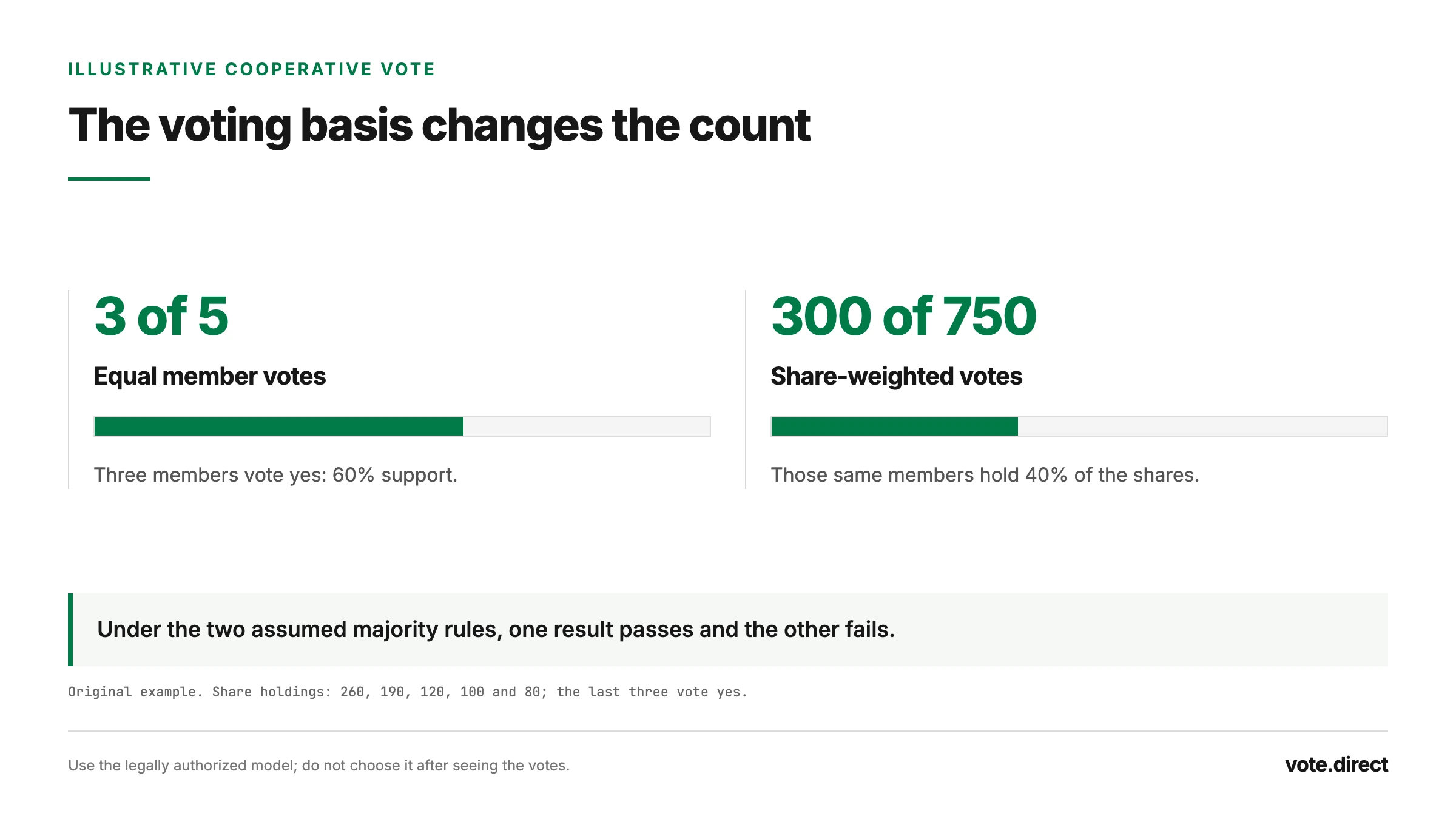
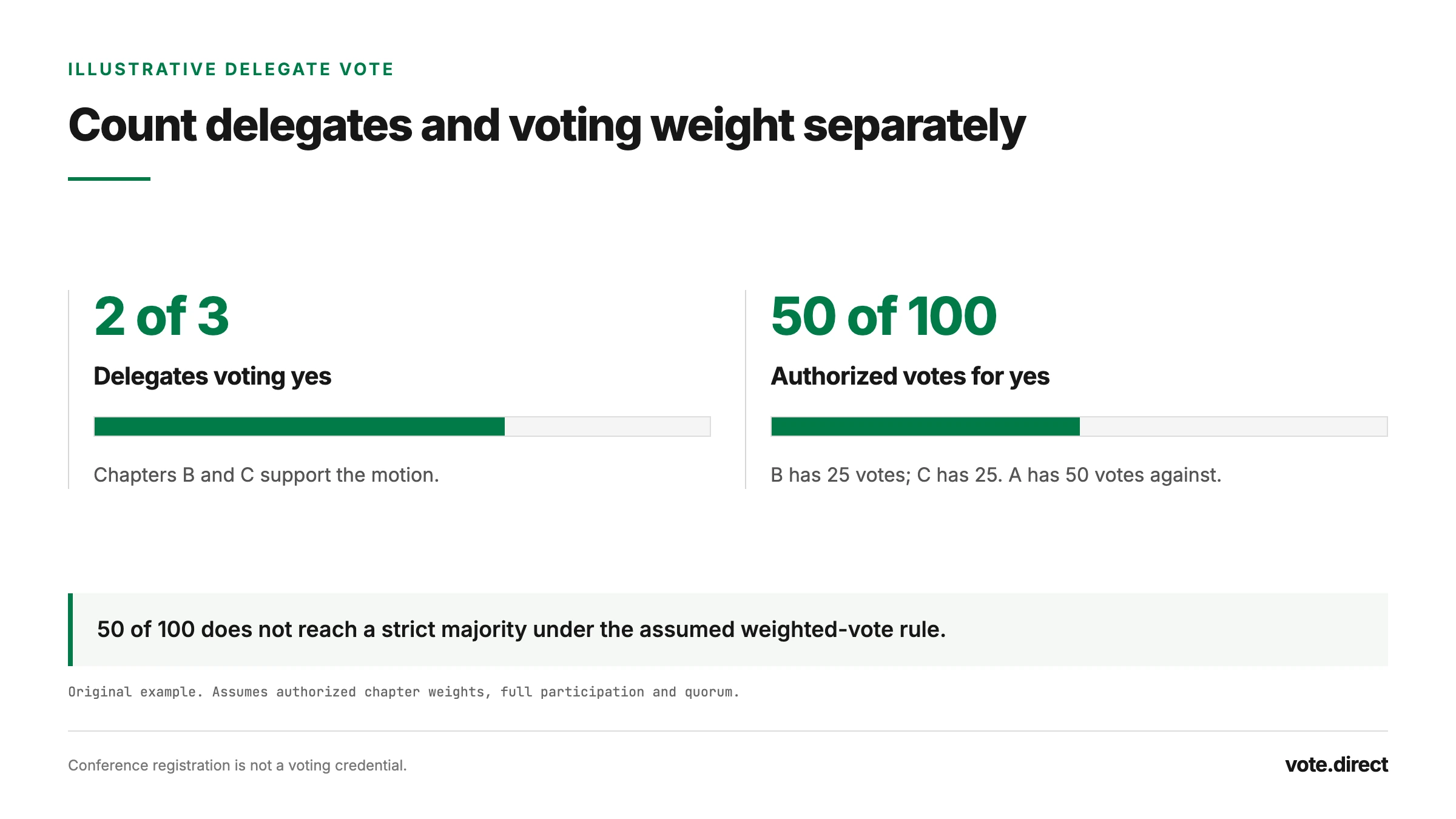
Check voting weight as well as authority. A decision reserved to shareholders may use an authorized share-weighted count. It should not be counted as equal votes per resident simply because that feels familiar. Read one member versus share-based voting.
Delegation needs a record and a reporting route
For each delegated task, record the person or role, permitted scope, financial or other limit, duration and reporting requirement. Explain when a matter must return for approval. A direction to “handle the project” is difficult to evaluate if nobody stated what decisions were delegated.
Review the action register at later meetings. Ask whether the authorized task was completed, whether circumstances changed and whether another decision is needed. Keep oversight focused on the approved responsibilities rather than recreating every operational discussion.
Frequently Asked Questions
Can a member vote override any board decision?
Not as a general rule. Members must use powers and procedures available under the applicable law and governing documents. Identify whether the matter is reserved to members and what action they can validly take.
Can a single director instruct employees?
Check the cooperative's delegation and management structure. Holding a board seat does not automatically grant individual supervisory authority. Directors may need to act collectively or through a designated role.
Is a cooperative survey binding?
Only if it is actually conducted as an authorized decision process satisfying the applicable requirements. Clearly label advisory consultation and explain how the resulting information will be used.
Source notes and next steps
Primary sources checked September 5, 2026: USDA Cooperative Information Report 45, sections 4 and 5. These longstanding educational publications explain governance roles; they are not new research or current state statutes. The decision map and machine-purchase scenario are original planning examples.
Browse the cooperative library, plan a cooperative board election, or explore managed election administration.
This article is general information, not legal advice. We recommend you do your own research and confirm anything you plan to act on. Where this article states law, the section is cited so you can read the primary source yourself rather than take our word for it. That is what the citations are for. Election requirements also turn on your own governing documents, which we have not seen, and statutes are amended. For advice about your community, consult a qualified attorney licensed in your state.
We work hard to verify every citation against the primary source, but laws change and errors happen. If you spot an inaccuracy, email support@vote.direct and we will correct it. See our editorial standards for how these pages are researched and checked.