Why Board Elections Matter More Than You Think
A nonprofit board election isn't just an administrative task. It's the mechanism through which your organization's members exercise democratic control over governance. Done well, elections build trust, legitimacy, and engagement. Done poorly, they create legal liability, factional conflict, and member disillusionment.
The IRS looks at board governance when evaluating tax-exempt status. State attorneys general investigate complaints about nonprofit elections. Donors and grantmakers assess governance quality when making funding decisions. Your election process is a signal of organizational health.
This guide covers what the best-governed nonprofits actually do, not theoretical ideals, but practical procedures that balance compliance, fairness, and operational reality.
Step 1: Know Your Legal Framework
Before designing your election process, understand the laws that apply:
State Nonprofit Corporation Law
Every nonprofit is incorporated under a state's nonprofit corporation act. These laws establish baseline requirements for:
- How directors are elected and removed
- Minimum notice requirements for elections
- Whether electronic voting is permitted
- Quorum thresholds
- How vacancies are filled
Key state variations:
- California (Corp. Code §5510-5617): Directors elected by members unless articles provide otherwise. Cumulative voting available if authorized. Electronic voting permitted if bylaws allow.
- New York (N-PCL §603): Members entitled to elect directors. At least 10 days' written notice required for member meetings.
- Texas (BOC Chapter 22): Nonprofit members have right to vote on directors. Electronic communication authorized for voting.
- Delaware (Title 8, Chapter 1, Subchapter XV): Flexible governance with electronic consent provisions.
Your Bylaws
Your bylaws override state defaults in most cases (within legal limits). Review them for:
- Term lengths and stagger patterns
- Nominating committee composition and duties
- Voting eligibility and classes of membership
- Proxy and absentee voting rules
- Supermajority requirements for specific actions
- Whether cumulative voting is authorized
IRS Requirements
While the IRS doesn't dictate specific election procedures, Form 990 (Part VI, Governance) asks about:
- Whether the organization has members with voting rights
- How directors are selected
- Whether the organization documents board meeting minutes
- Conflict of interest policies
Best practice: Ensure your election process produces documentation that satisfies Form 990 governance questions. An auditable election record demonstrates the governance practices the IRS and donors want to see.
Step 2: Establish a Nominating Committee
The nominating committee is responsible for identifying, recruiting, and vetting board candidates. A well-functioning nominating committee is the single biggest factor in election quality.
Composition
- 3-5 members is typical
- Include at least one current board member and at least one non-board member
- The board chair should not serve on the nominating committee (it creates the appearance of the board selecting its own successors)
- Diverse perspectives, different tenures, backgrounds, skills represented
Timeline
| Milestone | Timing |
|---|---|
| Nominating committee formed | 90 days before election |
| Skills/needs assessment completed | 75 days before election |
| Candidate recruitment begins | 60 days before election |
| Candidate applications due | 30 days before election |
| Slate announced to membership | 21 days before election |
| Election | Day 0 |
Candidate Vetting
For each candidate, the nominating committee should verify:
- Eligibility: Meets membership and other requirements specified in bylaws
- Conflict check: No undisclosed conflicts of interest with the organization
- Commitment: Understands time expectations (average nonprofit board service: 5-10 hours/month including meetings, committees, and events)
- Skills match: Brings skills the board currently needs (financial, legal, fundraising, programmatic, technology)
- References: At least two references from people who've worked with the candidate in a governance or leadership capacity
Open Nominations
Best practice is to combine the nominating committee's slate with open nominations from the membership. This means:
- 1The nominating committee presents a slate of vetted candidates
- 2Members can nominate additional candidates from the floor (at a meeting) or by petition (before the meeting)
- 3All candidates who meet eligibility requirements appear on the ballot
This dual approach balances quality control (nominating committee vetting) with democratic access (member nominations).
Step 3: Design the Election Process
Notice Requirements
Send election notice to every eligible member well in advance. Include:
- Date, time, and location of the election (or voting window for electronic elections)
- Slate of candidates with brief bios/statements (150-300 words each)
- Voting procedures and eligibility requirements
- How to submit proxy or absentee ballots if allowed
- Instructions for nominating additional candidates (with deadline)
Minimum notice: Check your state statute and bylaws. Common minimums are 10-30 days. Best practice: 30 days minimum, with reminders at 14 days and 48 hours.
Voting Method
Choose based on your organization's size, geography, and bylaws:
In-person ballot: Appropriate for small organizations (under 50 members) where most members attend meetings. Use written ballots (not voice votes) for contested elections to protect voter privacy.
Mail-in ballot: Necessary for organizations with geographically dispersed members. Include a pre-addressed return envelope with a ballot return deadline at least 5 days before the count.
Electronic voting: The modern standard for member engagement. Members receive a secure, individualized voting link via email, verify their identity, and submit their ballot online over a multi-day window.
Hybrid: Offer electronic voting as the primary channel with mail-in ballots for members without email access. This is the gold standard for participation.
| Method | Typical Participation | Cost | Transparency |
|---|---|---|---|
| In-person only | 10-20% | Low | Moderate |
| Mail-in | 20-35% | $2-5/ballot | Moderate |
| Electronic | 40-55% | From $4.99/election | High |
| Hybrid (electronic + mail-in) | 50-65% | Varies | Highest |
For nonprofit leaders
What's your organization's biggest governance challenge right now?
Contested vs. Uncontested Elections
If the nominating committee slate has exactly as many candidates as open seats and no additional nominations are received, the election is uncontested. In this case:
- Bylaws may allow election by acclamation (voice vote or unanimous consent)
- Some bylaws still require a ballot vote, check yours
- Even uncontested elections should follow the full notice and documentation process
Step 4: Conduct the Vote
Setting Up the Ballot
- List candidates in alphabetical order by last name (eliminates ballot position bias)
- Include candidate statements on or alongside the ballot
- State clearly: "Vote for up to [N] candidates" where N is the number of open seats
- Include an "Abstain" option if your bylaws permit
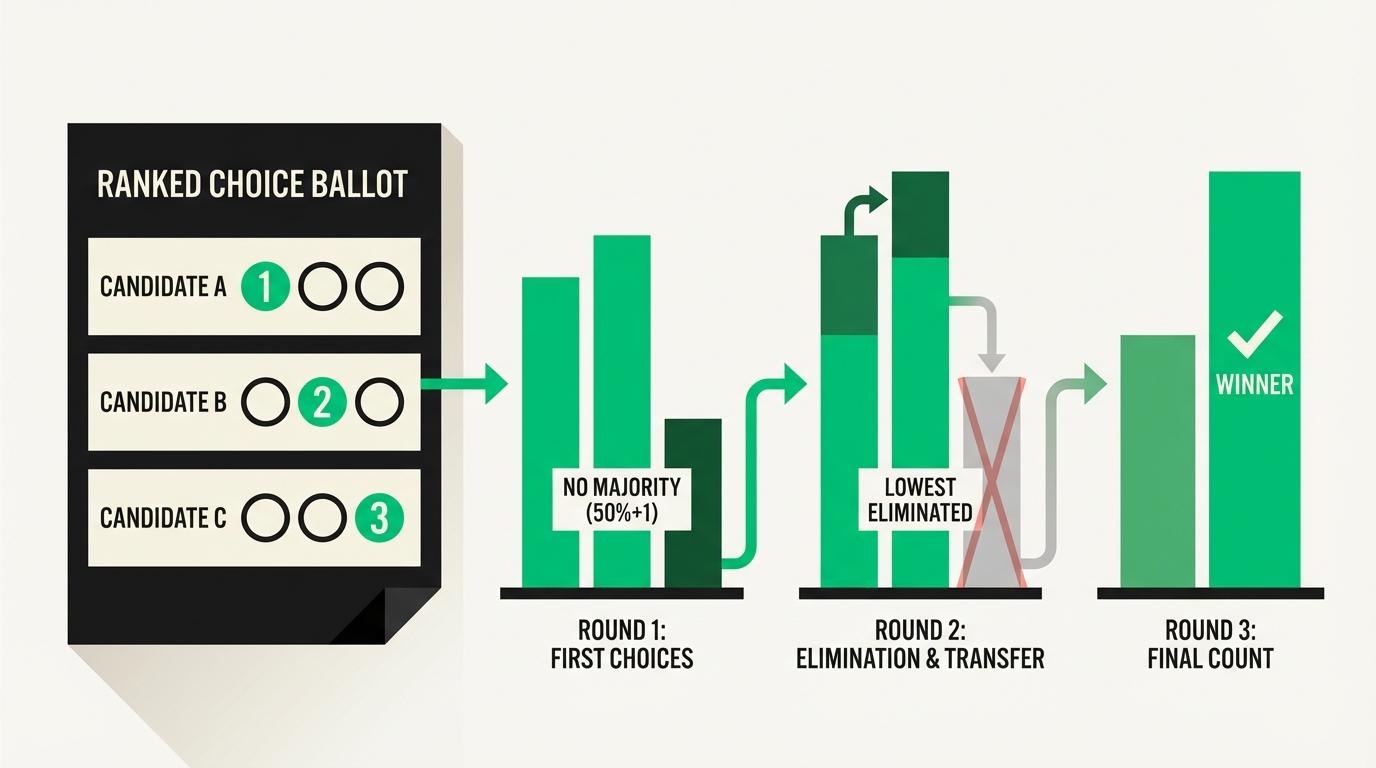
- For multi-seat elections, consider ranked choice voting (STV) for proportional representation
Identity Verification
The ballot is only as trustworthy as the verification process. For nonprofit board elections:
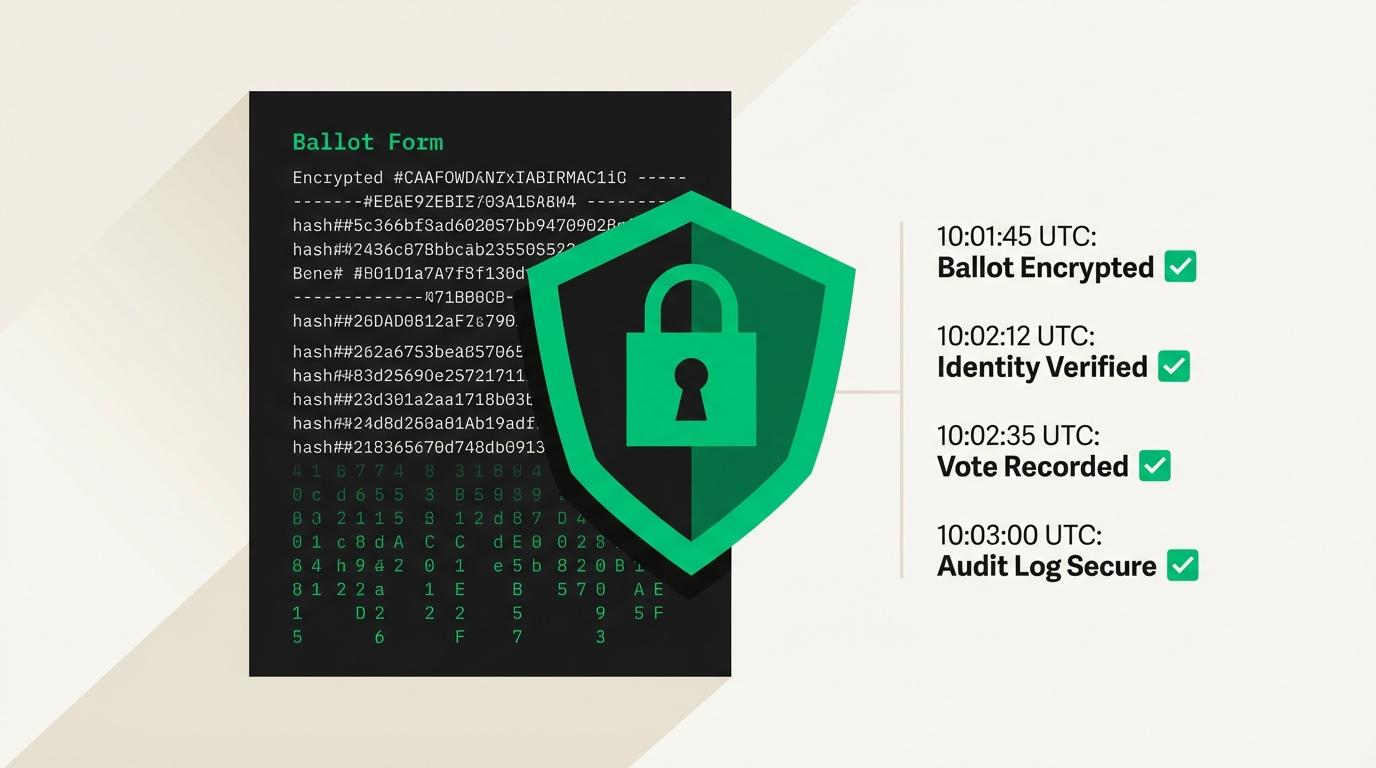
- Email OTP verification (included in flat rate): Appropriate for most nonprofit elections. Voter receives a one-time passcode at their registered email before accessing the ballot.
- SMS verification (included in flat rate): Stronger identity assurance. Good for organizations where contested elections are likely to be scrutinized.
- Government ID verification ($3.00/voter add-on): The highest standard. Appropriate for large nonprofits, unions, or organizations with a history of disputed elections.
Monitoring
During the voting period, administrators should:
- Track participation rates against quorum requirements
- Send reminders to non-voters (automated on platforms like vote.direct)
- Be available to answer member questions about the process
- Never access or share partial results before the election closes
Step 5: Count, Certify, and Record
Vote Counting
- For plurality elections (standard "pick N" voting): The N candidates with the most votes win
- For ranked choice elections: Run elimination rounds per the RCV counting method
- For bylaw amendments: Apply the required threshold (usually two-thirds of votes cast)
Digital platforms eliminate counting errors. Results are calculated instantly and produce an auditable record. If using paper ballots, have at least two tellers from different factions count independently.
Certification
- 1The election chair or committee reviews the results for accuracy
- 2Confirm quorum was met
- 3Sign a certification statement with the date, results, and any irregularities noted
- 4Report results to the full membership within the timeline specified in bylaws (typically 10-30 days)
Record-Keeping
Maintain these records for at least 7 years (IRS recommendation):
- Election notice as sent to members
- Complete voter roll with eligibility status
- Ballot design and candidate statements
- Vote tallies and certification statement
- Audit trail (if electronic voting was used)
- Meeting minutes documenting the election
- Any challenges, complaints, or irregularities and their resolution
Common Mistakes and How to Avoid Them
Mistake 1: Board Self-Perpetuation
When the current board controls the nominating committee, picks all candidates, and runs the election, it creates the appearance (or reality) of self-perpetuation. This can trigger scrutiny from state attorneys general and erode member trust.
Fix: Include non-board members on the nominating committee. Allow open nominations. Use secret ballots.
Mistake 2: Insufficient Notice
Sending election notices only at the minimum allowed interval can leave members less time to review candidates, make decisions, and arrange to vote. Use the actual statutory and governing-document deadline, then provide as much neutral preparation time as the procedure permits.
Fix: 30 days minimum. Multiple reminder touchpoints.
Mistake 3: No Audit Trail
If an election is challenged and you can't prove who was eligible, how votes were verified, and how they were counted, you lose by default.
Fix: Use a voting platform that produces timestamped audit trails. Keep all documentation.
Mistake 4: Ignoring Conflict of Interest
Candidates with undisclosed conflicts of interest who win election create governance crises later. The time to address conflicts is before the election, not after.
Fix: Require a conflict-of-interest disclosure as part of the candidate application process.
Mistake 5: Voice Votes for Contested Elections
Using a show of hands or voice vote for contested board elections violates the spirit of democratic governance and may violate your bylaws.
Fix: Always use secret ballot for contested elections. Robert's Rules specifically recommends this for elections of officers.
Resources
- IRS Governance Practices Guide: Outlines expected governance for 501(c)(3) organizations
- BoardSource: National nonprofit governance standards and best practices
- Your state's nonprofit corporation act: Legal requirements for your jurisdiction
- Robert's Rules of Order Newly Revised (12th Edition): Sections 45-46 on nominations and elections
Run Your Next Election
Vote.direct handles the mechanics of nonprofit board elections, voter verification, ballot delivery, automatic tabulation, and complete audit trails, so your nominating committee and board can focus on governance quality.
Set up your election in minutes with flat-rate pricing starting at $4.99 per election.
This article is general information, not legal advice. We recommend you do your own research and confirm anything you plan to act on. Where this article states law, the section is cited so you can read the primary source yourself rather than take our word for it. That is what the citations are for. Election requirements also turn on your own governing documents, which we have not seen, and statutes are amended. For advice about your community, consult a qualified attorney licensed in your state.
We work hard to verify every citation against the primary source, but laws change and errors happen. If you spot an inaccuracy, email support@vote.direct and we will correct it. See our editorial standards for how these pages are researched and checked.