Quick Answer
Most churches can vote online — but only after their governing documents say so, and a great many church constitutions assume voting in person.
The order that matters:
- 1Read the voting clause. If your documents require members to be present, or are silent in a tradition that has always required presence, you need an amendment before you need a platform.
- 2Amend if needed, on the notice and threshold your amendment clause requires. Address three things in the same amendment: whether remote ballots are permitted, whether remote voters count toward quorum, and for which decisions remote voting is available.
- 3Then choose how to run it.
Why the quorum point matters: churches routinely authorize electronic voting and forget to say whether an electronic voter is present. A remote ballot may then count as a vote but not toward quorum — which is a meaningfully different thing, and it will be argued about at the first meeting where it matters. See church quorum.
The objection worth taking seriously: in congregational polity, the meeting is where members hear one another. A ballot emailed to people who never gathered is not congregational deliberation. Most churches that do this well hold the meeting and open the ballot to those who genuinely cannot attend.
This article is general information, not legal or denominational advice. Your constitution, bylaws, and any denominational standard govern.
Why Churches Do It
The reasons are consistent and they are not about technology.
Homebound and elderly members. People who have belonged for forty years and can no longer get to a Sunday evening meeting. For many churches this alone settles it.
Members who work Sundays. Nurses, first responders, hospitality and retail workers, and anyone on shifts.
Military families and students. Deployed members and college students who are still members and still care.
Quorum. Churches that repeatedly fail to reach quorum are not usually apathetic; they are scheduling a meeting most of the congregation cannot attend.
The count. Paper ballots get tallied by volunteers, late, after a long meeting. Disputes about the count are avoidable.
What churches do not reliably get is a large jump in overall participation from the technology alone. Convenience helps; reminders help more; caring about the outcome helps most.
What Your Documents Have to Say
Work through these four questions with the actual text in front of you.
1. Does anything require presence? Language like "members present at the meeting" or "those present and voting" may simply describe the ordinary case, or may be a requirement. If your tradition has always required presence, read it as a requirement until counsel or your denomination says otherwise.
2. Is absentee voting addressed at all? Some church constitutions expressly permit absentee ballots for specific decisions — often pastoral calls — and are silent on everything else. That silence is meaningful.
3. What does the amendment clause require? Notice period, threshold, whether the text must be circulated in advance, whether two readings are needed. Follow it exactly — see church bylaws.
4. Does a denominational standard govern? In connectional traditions the book may address remote participation, and it takes precedence over local preference.
Writing the Amendment
Cover all four of these. Churches routinely cover only the first and create work for their successors.
Permission. That members may vote by electronic or absentee ballot, in a manner the church determines.
Quorum. Whether members voting remotely are counted present for quorum purposes. Say it explicitly.
Scope. Which decisions are eligible. Some churches permit remote voting on everything; others carve out pastoral calls or property, on the view that those require the gathered congregation. Either is defensible — decide deliberately.
Safeguards. That the method must confirm the voter is a member on the roll, must keep the ballot secret where a secret ballot is required, and must produce a record for the minutes.
Keep it principled rather than product-specific. An amendment naming a particular vendor has to be amended again when you change vendors.
Running It Well
Fix the roll first
The eligible-voter list is your membership roll as your bylaws define it, frozen before notice goes out. This is the same requirement paper voting always had; online voting just makes it visible. See who is a voting member of a church.
Keep the meeting
Hold the business meeting. Discuss. Then let those who cannot attend vote. A hybrid meeting preserves deliberation and extends participation, which is the whole point.
Make secrecy real
If your church has always used a secret ballot for pastoral calls and officer elections, an online ballot that lets the church administrator see individual choices is a downgrade. Ask the direct question of any platform: can an administrator see how an individual member voted, and if not, what prevents it?
Keep a paper path
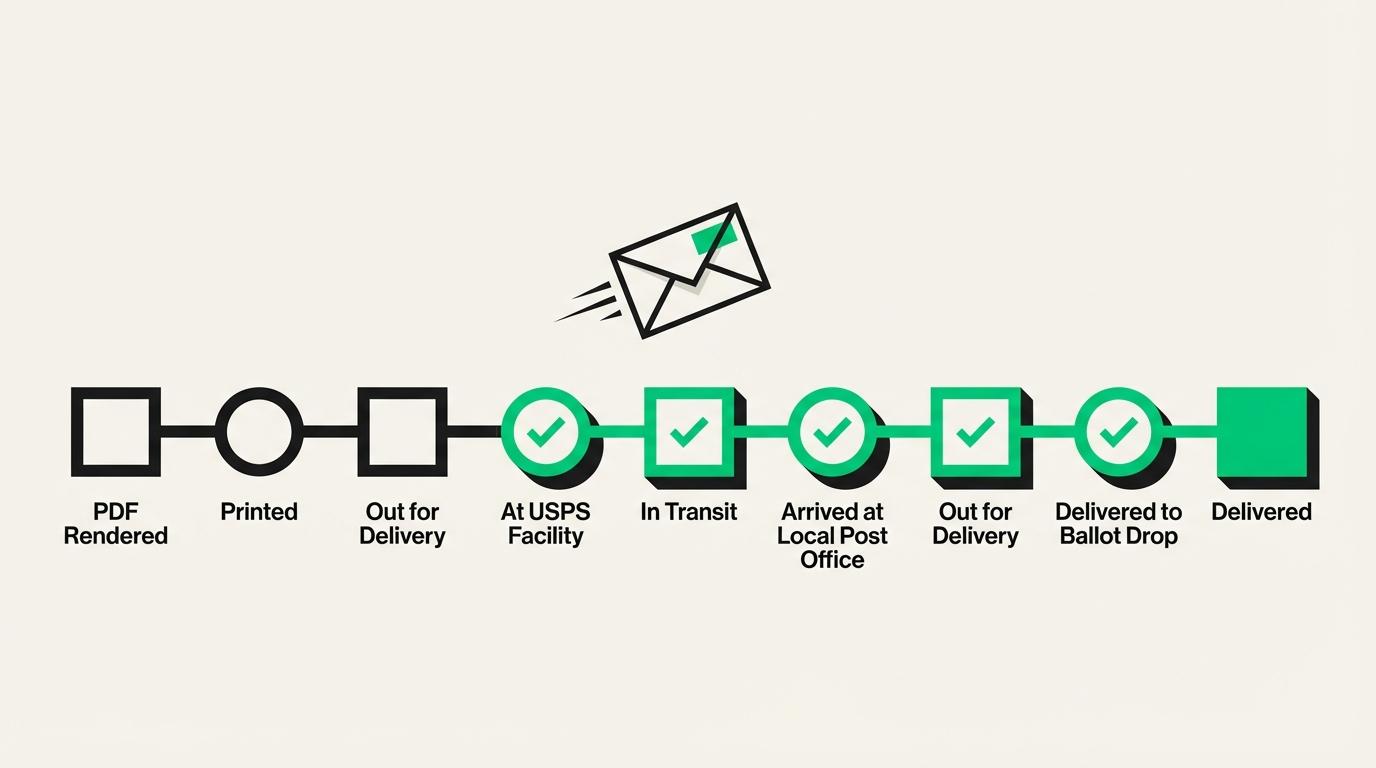
Some members will not vote online, and pressing them to is both unkind and unnecessary. Run a hybrid: most vote online, some return paper. This is what most churches actually do.
One last question
Voting in community decisions should be:
Send reminders
Two or three across the voting window, to those who have not yet voted. This is where participation actually comes from.
Record it the same way
Motion as adopted, quorum, count, date, in the minutes. The record does not change because the ballots were electronic.
What It Costs
| Voters | Price per election |
|---|---|
| up to 25 voters | Free |
| 26–50 voters | $4.99 |
| 51–100 voters | $9.99 |
| 101–200 voters | $19.99 |
| 201–400 voters | $24.99 |
| 401–1,000 voters | $69.99 |
| 1,001–2,000 voters | $149.99 |
| Above 2,000 | Talk to us |
Those are vote.direct's flat per-election prices, with email and SMS verification included and no subscription. A church of 180 members runs a verified vote for $19.99.
Compare that against what a mailed ballot costs. Two-way First-Class postage alone for 180 members is $295.20 at the 82-cent rate effective July 12, 2026 (USPS), before printing and before anyone's Saturday.
The Objections, Answered Honestly
"The gathered church should decide together." This is the strongest objection and it is theological, not technical. The honest response is not to dismiss it but to design around it: hold the meeting, deliberate together, and extend the ballot only to those who cannot be there. A church that decides remote voting is inconsistent with its understanding of the congregation has decided something legitimate.
"Older members will be excluded." They will be if online is the only option. Run a hybrid. In practice the members most helped by remote voting are frequently the oldest ones, who can no longer travel to an evening meeting.
"It will be less secure than paper." Paper church ballots are counted by volunteers in a room, with no verification of who submitted them, and are then usually destroyed. A verified electronic ballot confirms each voter against the roll and produces a record. Neither is perfect; the comparison is not the one people assume.
"Someone could vote for someone else." True of paper too, and more so. What verification does is raise the cost from nothing to needing that member's email or phone.
FAQ
Q: Can a church vote online?
Usually yes, but only if the governing documents allow it. Many church constitutions assume voting in person, and in connectional traditions the denominational book may also speak to it. Amend the bylaws first if needed.
Q: Do we need a bylaw amendment to vote online?
If your documents require members to be present, or are silent in a tradition that has always required presence, yes. Amending is a straightforward process on the notice and threshold your amendment clause specifies.
Q: Do online voters count toward quorum?
Only if your governing documents say so. This is the detail churches most often omit when authorizing electronic voting, and it should be addressed in the same amendment.
Q: How do we keep an online church ballot secret?
Use a platform that separates the voter's identity from their choices, including from administrators, and ask that question of any vendor directly. If your church uses secret ballots for pastoral calls, the electronic equivalent has to be genuinely secret.
Q: What about members who do not use email?
Run a hybrid. Most churches keep paper ballots available alongside online ones, and phone or SMS verification reaches many members who have no working email address.
Q: Does online voting increase church participation?
It removes a barrier, particularly for homebound members, shift workers, and students. Reminders matter more than the technology, and no honest vendor can promise a specific turnout figure.
Q: Can we vote on calling a pastor online?
If your documents permit remote voting for that decision. Some churches deliberately exclude pastoral calls from remote voting on the view that the gathered congregation should decide. Either choice is defensible; make it deliberately.
Q: How much does church voting software cost?
Flat per-election pricing here starts at $4.99 for up to 50 members. Compare against your current postage and printing before assuming online is the expensive option.
The Bottom Line
Read the voting clause. Amend it if you need to, and address permission, quorum, scope, and safeguards in the same amendment. Fix the roll. Keep the meeting. Keep a paper path. Then run the ballot.
The technology is genuinely the easy part. The bylaw amendment is the part that decides whether the vote counts, and it is the part churches skip because it is not the exciting bit.
vote.direct sends each member on your roll a private ballot link, confirms them by email or SMS, keeps identity separable from choice, and returns a timestamped tally for the minutes. Paper ballots for members who need them are $3.00 per letter. Church votes start at $4.99 and cover up to 50 members.
Want someone to read your voting clause before you commit? Call or text (512) 222-8191, or email [email protected] with the clause. We will tell you plainly whether you can do this, including when the answer is no.
This article is general information, not legal advice. We recommend you do your own research and confirm anything you plan to act on. Where this article states law, the section is cited so you can read the primary source yourself rather than take our word for it — that is what the citations are for. Election requirements also turn on your own governing documents, which we have not seen, and statutes are amended. For advice about your community, consult a qualified attorney licensed in your state.
We work hard to verify every citation against the primary source, but laws change and errors happen. If you spot an inaccuracy, email [email protected] and we will correct it. See our editorial standards for how these pages are researched and checked.