The Voting Method Splitting America
In November 2025, 14 cities and counties across seven states used ranked choice voting (RCV) in their elections, including New York City's June primaries, where 78% of voters ranked multiple candidates for mayor and 96% said their ballot was simple to complete.
At the same time, 17 states have passed laws prohibiting ranked choice voting entirely, including Florida, Tennessee, and Montana.
Ranked choice voting is simultaneously the fastest-growing election reform in America and the most actively banned. Whether you're an organization considering RCV for your internal elections, a voter trying to understand how it works, or a civic leader tracking the trend, this guide covers every state's current status with the legislation, data, and statistics to back it up.
This article is for informational purposes only. Ranked choice voting rules apply primarily to government elections. Private organizations (nonprofits, HOAs, unions, clubs) can generally use any voting method their bylaws allow, including RCV.
How Ranked Choice Voting Works
Instead of choosing just one candidate, voters rank candidates in order of preference: 1st choice, 2nd choice, 3rd choice, and so on.
Counting process:
- 1All first-choice votes are counted
- 2If a candidate has a majority (50%+), they win
- 3If no one has a majority, the candidate with the fewest votes is eliminated
- 4Voters who ranked the eliminated candidate as #1 have their votes transferred to their #2 choice
- 5This process repeats until one candidate has a majority
Why it matters: RCV eliminates the "spoiler effect." Voters can support their true favorite without worrying about "wasting" their vote. It also eliminates the need for separate runoff elections, saving municipalities $100,000 to $1 million per avoided runoff.
States That Use Ranked Choice Voting
Tier 1: Statewide Use for Federal/State Elections
| State | Scope | Key Legislation | Since |
|---|---|---|---|
| Alaska | All federal and state elections (general) | Ballot Measure 2 (2020) | 2022 |
| Maine | All federal elections (primaries + general) | Question 5 (2016) | 2018 |
| Hawaii | Special federal and special county elections | Act 136 (2022) | 2022 |
Alaska adopted RCV alongside an open primary system via Ballot Measure 2 in 2020. The top four candidates from the open primary advance to the general election, where RCV determines the winner. Alaska voters were asked to repeal RCV in 2024. They voted to keep it.
Maine was the first state to adopt RCV for federal elections. After a 2016 ballot initiative, RCV has been used in every federal primary and general election since 2018. Maine does not use RCV for governor or state legislature races due to a state constitutional provision requiring plurality winners.
Hawaii uses RCV more narrowly, only for special elections to fill vacancies in federal and county offices.
Tier 2: Military and Overseas Voter Use
Six states use RCV specifically for military and overseas voters as a contingency for runoff elections (so service members don't have to wait for a separate runoff ballot):
| State | Application |
|---|---|
| Alabama | Military/overseas runoff contingency |
| Arkansas | Military/overseas runoff contingency |
| Georgia | Military/overseas runoff contingency |
| Louisiana | Military/overseas runoff contingency |
| Mississippi | Military/overseas runoff contingency |
| South Carolina | Military/overseas runoff contingency |
Irony alert: Alabama, Arkansas, and Mississippi are also among the states that have banned RCV for regular elections while still using it for military voters.
Tier 3: Cities and Counties Using RCV (47 and Growing)
As of 2025, 47 U.S. cities use ranked choice voting for local elections. The largest:
| City | State | Population | Elections Using RCV |
|---|---|---|---|
| New York City | New York | 8.3M | Primary elections (mayor, council, borough president) |
| Minneapolis | Minnesota | 430K | Mayor, city council, park board, school board |
| Salt Lake City | Utah | 200K | Mayor, city council |
| San Francisco | California | 870K | Mayor, board of supervisors |
| Oakland | California | 430K | Mayor, city council, school board |
| Santa Fe | New Mexico | 88K | Mayor, city council |
| St. Paul | Minnesota | 310K | Mayor, city council |
| Arlington County | Virginia | 240K | County board |
Cities that adopted or used RCV for the first time in 2025:
- Fort Collins, Colorado: first RCV election in November 2025
- Skokie, Illinois: voted to adopt RCV in April 2025
- Bloomington, Minnesota: first use in 2025
- Minnetonka, Minnesota: first use in 2025
- St. Louis Park, Minnesota: first use in 2025
- Midvale, Utah: first use in 2025
States That Have Banned Ranked Choice Voting
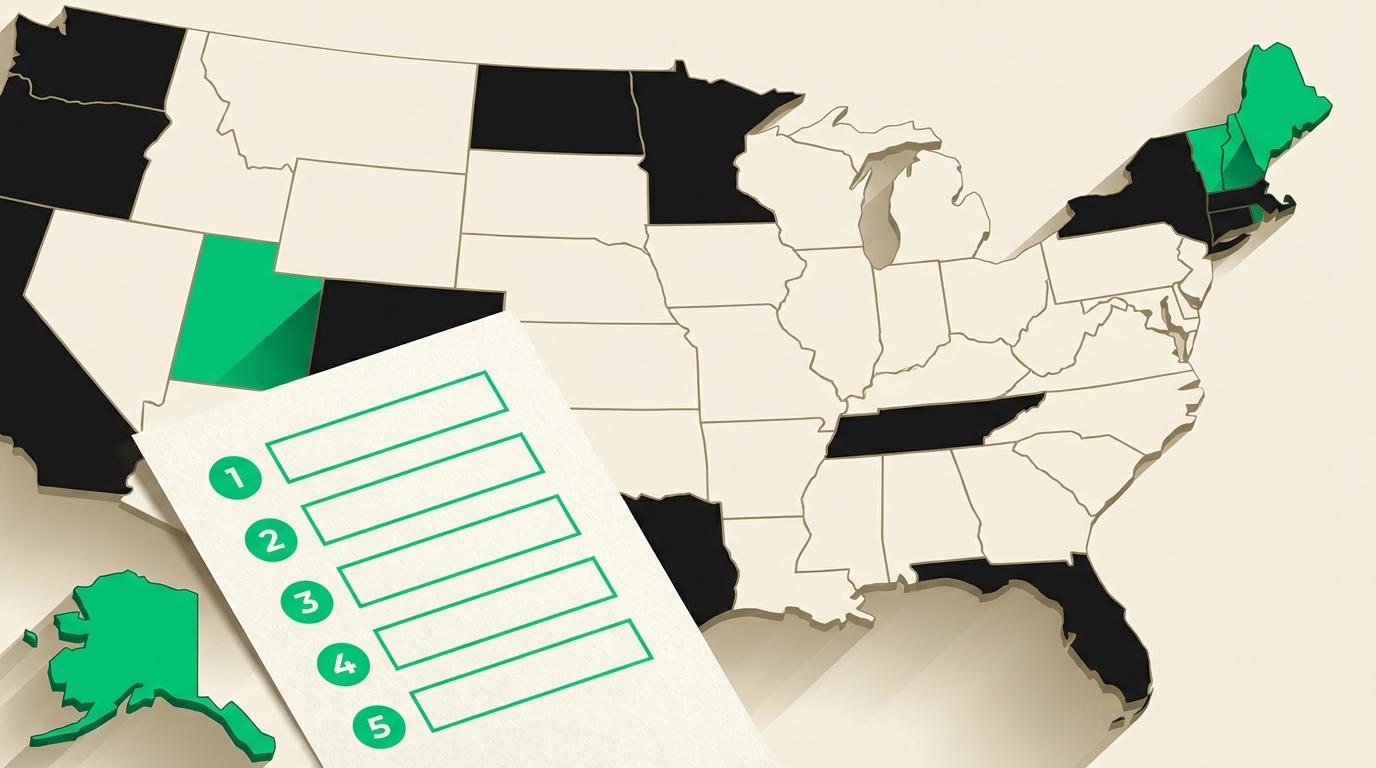
As of early 2026, 17 states have passed laws or constitutional amendments prohibiting ranked choice voting:
| State | Year Banned | Mechanism |
|---|---|---|
| Alabama | 2024 | Statutory ban |
| Arkansas | 2023 | Statutory ban |
| Florida | 2024 | Statutory ban |
| Idaho | 2024 | Statutory ban |
| Kansas | 2024 | Statutory ban |
| Kentucky | 2024 | Statutory ban |
| Louisiana | 2024 | Statutory ban |
| Missouri | 2024 | Constitutional amendment |
| Montana | 2024 | Statutory ban |
| Mississippi | 2024 | Statutory ban |
| North Dakota | 2024 | Statutory ban |
| Oklahoma | 2024 | Statutory ban |
| South Dakota | 2024 | Constitutional amendment |
| Tennessee | 2023 | Statutory ban |
| West Virginia | 2024 | Statutory ban |
| Wyoming | 2024 | Statutory ban |
| Indiana | 2023 | Statutory ban |
Key pattern: The wave of RCV bans accelerated in 2023 and 2024, largely along partisan lines. Most bans were enacted preemptively, before any RCV elections had taken place in those states.
States Considering RCV Legislation in 2025–2026
17 states had active legislation in 2025 to adopt or expand ranked choice voting:
| State | Status | Key Detail |
|---|---|---|
| Michigan | Constitutional amendment campaign | Effort to place RCV on the 2026 general election ballot for most federal and statewide elections |
| Washington D.C. | Approved by voters (2024) | Implementation for all elections by 2026; D.C. Council debated delayed rollout |
| Connecticut | Bill introduced (HB06470) | RCV for municipal elections and certain party primaries |
| Alaska | Repeal attempt defeated | Voters chose to keep RCV in 2024 |
| Colorado | Expanding local use | Fort Collins first use in 2025; statewide legislation considered |
| Oregon | 2024 ballot measure | Voters considered statewide RCV adoption |
| Nevada | 2024 ballot measure | Voters considered statewide RCV adoption |
Michigan is the state to watch in 2026: The Voters for Fairness and Unity campaign is collecting signatures to place a constitutional amendment on the November 2026 ballot that would implement RCV for Congressional, gubernatorial, and state legislative elections.
Honest question
Would you trust an online vote to decide your community's annual budget?
Federal Legislation
Two competing approaches are moving through Congress:
Pro-RCV:
- Fair Representation Act (reintroduced December 2025), would establish RCV for all U.S. House and Senate elections starting 2030
- Ranked Choice Voting Act (December 2025), companion legislation for federal RCV adoption
Anti-RCV:
- One Vote One Choice Act (2025), would ban RCV in federal elections
- Preventing Ranked Choice Corruption Act (H.R. 3040, April 2025), would prohibit federal RCV use
Neither approach has advanced past committee as of early 2026.
Does Ranked Choice Voting Actually Work? The Data
Voter Participation
- Voters in RCV jurisdictions are 17% more likely to participate in municipal elections than non-RCV areas (2024 study)
- New York City's 2021 primaries saw the highest turnout in over 30 years
- Minneapolis-St. Paul area saw a 10% increase in turnout after RCV implementation
- Youth turnout in RCV cities is measurably higher than comparable non-RCV cities
Voter Understanding
- A median of 68% of voters rank multiple candidates in RCV elections
- In competitive elections (5+ candidates), 74% rank multiple candidates
- In NYC's 2021 primary, 96% of voters found the ballot simple to complete
- 86.6% of NYC voters ranked two or more candidates (higher than the 77% average in other RCV elections)
- In Utah, 75%+ of voters found RCV easy to use
Representation and Diversity
- Bay Area cities saw 42% more women running and winning after RCV implementation
- 60% more candidates of color ran and won in Bay Area RCV elections
- Voters of color tend to use more rankings than white voters in RCV elections
- Black, Latino, and Asian American voters were more likely to fully rank ballots in San Francisco
Campaign Civility
- RCV candidates are more likely to campaign positively, seeking second-choice votes from opponents' supporters discourages negative attacks
- Voters in RCV jurisdictions report more campaign contact (candidates reaching more broadly)
- RCV does not appear to increase support for ideologically extreme candidates
Cost Savings
- RCV can eliminate separate runoff elections, saving municipalities $100,000–$1 million per runoff
- Most cities produce preliminary RCV results within 24 hours of polls closing
- Tabulation processing itself takes seconds with modern software
The Counterargument
- One study found a 3–5 percentage point decrease in voter turnout in some mayoral elections after RCV implementation (1990s–2018 data), though the effect diminished in more competitive elections
- Critics argue RCV ballots are confusing, citing ballot exhaustion (when a voter's ranked candidates are all eliminated)
- Some jurisdictions have reported longer wait times for final results in very close races
What RCV Means for Private Organizations
Here's what most articles about ranked choice voting miss: government elections are just the beginning.
Any organization that holds elections, nonprofits, HOAs, unions, clubs, student organizations, corporate boards, can use ranked choice voting if their bylaws allow it. And for many organizations, RCV solves real problems:
When RCV Makes Sense for Your Organization
| Scenario | Traditional Voting Problem | RCV Solution |
|---|---|---|
| Multi-seat board election | Top-2 candidates from same faction win; minority views unrepresented | Proportional RCV ensures diverse representation |
| Contested single-seat election | Vote splitting between similar candidates lets least-popular candidate win | RCV ensures majority support |
| Budget or initiative votes | Multiple options split the vote; "least bad" option wins | RCV finds the option with broadest support |
| Remote/distributed voters | Can't hold a runoff, voters won't participate twice | RCV eliminates the need for a separate runoff |
How to Implement RCV in Your Organization
- 1Check your bylaws: most bylaws describe voting methods broadly enough to allow RCV via board resolution
- 2Amend if needed: add language like: "The board may authorize ranked choice voting for any election or ballot measure"
- 3Educate your voters: provide a simple 30-second explanation with the ballot
- 4Use a platform that supports RCV: Vote. Direct supports ranked choice voting with automatic instant-runoff tabulation
Vote. Direct's RCV implementation handles all the complexity automatically:
- Voters rank candidates in a simple drag-and-drop interface
- Instant runoff tabulation runs automatically when voting closes
- Round-by-round results show exactly how the winner was determined
- Full audit trail documents every round of elimination
FAQ
Q: Can my nonprofit/HOA/club use ranked choice voting?
Almost certainly yes. Private organizations can use any voting method their bylaws authorize. If your bylaws don't specifically mention RCV, a board resolution authorizing it (or a bylaws amendment) is typically sufficient. Check your state's nonprofit corporation act for any voting method restrictions.
Q: Is ranked choice voting the same as instant runoff voting?
Yes, "instant runoff voting" (IRV) is the technical name for single-winner ranked choice voting. Multi-winner RCV (used for electing multiple board seats simultaneously) is sometimes called "single transferable vote" (STV). Both use ranked ballots.
Q: Why are some states banning RCV?
The bans are largely preemptive and partisan. Most states that banned RCV had never used it. Opponents argue RCV is confusing, benefits certain political ideologies, and undermines the principle of "one person, one vote." Proponents counter that RCV actually strengthens majority rule by ensuring winners have majority support.
Q: Does RCV favor one political party?
Research consistently shows RCV does not systematically favor either party. It tends to favor candidates with broader appeal, those who can attract both first-choice and second-choice support. In Alaska's first RCV election (2022), a Democrat won; in subsequent races, Republicans have won.
Q: Can voters just pick one candidate and not rank anyone else?
Yes, this is called a "bullet vote." It's always allowed. The voter's ballot simply won't transfer if their chosen candidate is eliminated. There's no penalty for not ranking all candidates.
Q: How long does ranked choice counting take?
With digital tabulation, seconds. The counting process is instant once all ballots are submitted. For government elections with paper ballots, preliminary results are typically available within 24 hours.
The Bottom Line
Ranked choice voting is at an inflection point. Three states use it for federal elections. Forty-seven cities use it locally. Seventeen states have banned it preemptively. And Michigan could become the next major state to adopt it in 2026.
The data consistently shows that RCV increases participation, improves diversity of candidates, and reduces negative campaigning. The counterarguments (voter confusion and ballot exhaustion) are measurably declining as familiarity grows: 96% of NYC voters found the ballot simple.
For private organizations, RCV is available right now. No waiting for legislation. If your organization runs elections with multiple candidates for the same position, ranked choice voting eliminates spoiler effects, avoids costly runoffs, and finds the candidate with the broadest support.
Sources:
- 1FairVote, 2025 RCV election tracker and data analysis
- 2New York City Board of Elections, 2021 RCV primary participation data
- 3Ballot Measure 2 (Alaska, 2020), Statewide RCV adoption
- 4Maine Question 5 (2016), First statewide RCV adoption
- 5Hawaii Act 136 (2022), Special election RCV authorization
- 6National Conference of State Legislatures (NCSL), RCV state legislation tracker
- 7American Academy of Arts & Sciences, Federal RCV legislation analysis
- 8FairVote, "Ranked Choice Voting and Voter Turnout" (2024 study)
- 9CUNY Graduate Center, NYC 2021 RCV election analysis (86.6% ranking rate)
- 10RepresentWomen, Bay Area RCV diversity impact study (42% more women, 60% more candidates of color)
- 11Ballotpedia, Utah RCV voter survey data (75%+ found RCV easy)
- 12Michigan Voters for Fairness and Unity, 2026 constitutional amendment campaign
- 13D.C. Council, RCV implementation debate (December 2025)
- 14Fair Representation Act (December 2025), Federal RCV legislation
- 15H.R. 3040 (April 2025), Preventing Ranked Choice Corruption Act
This article is general information, not legal advice. We recommend you do your own research and confirm anything you plan to act on. Where this article states law, the section is cited so you can read the primary source yourself rather than take our word for it. That is what the citations are for. Election requirements also turn on your own governing documents, which we have not seen, and statutes are amended. For advice about your community, consult a qualified attorney licensed in your state.
We work hard to verify every citation against the primary source, but laws change and errors happen. If you spot an inaccuracy, email support@vote.direct and we will correct it. See our editorial standards for how these pages are researched and checked.