Three Kinds of Union Elections, And Three Sets of Rules
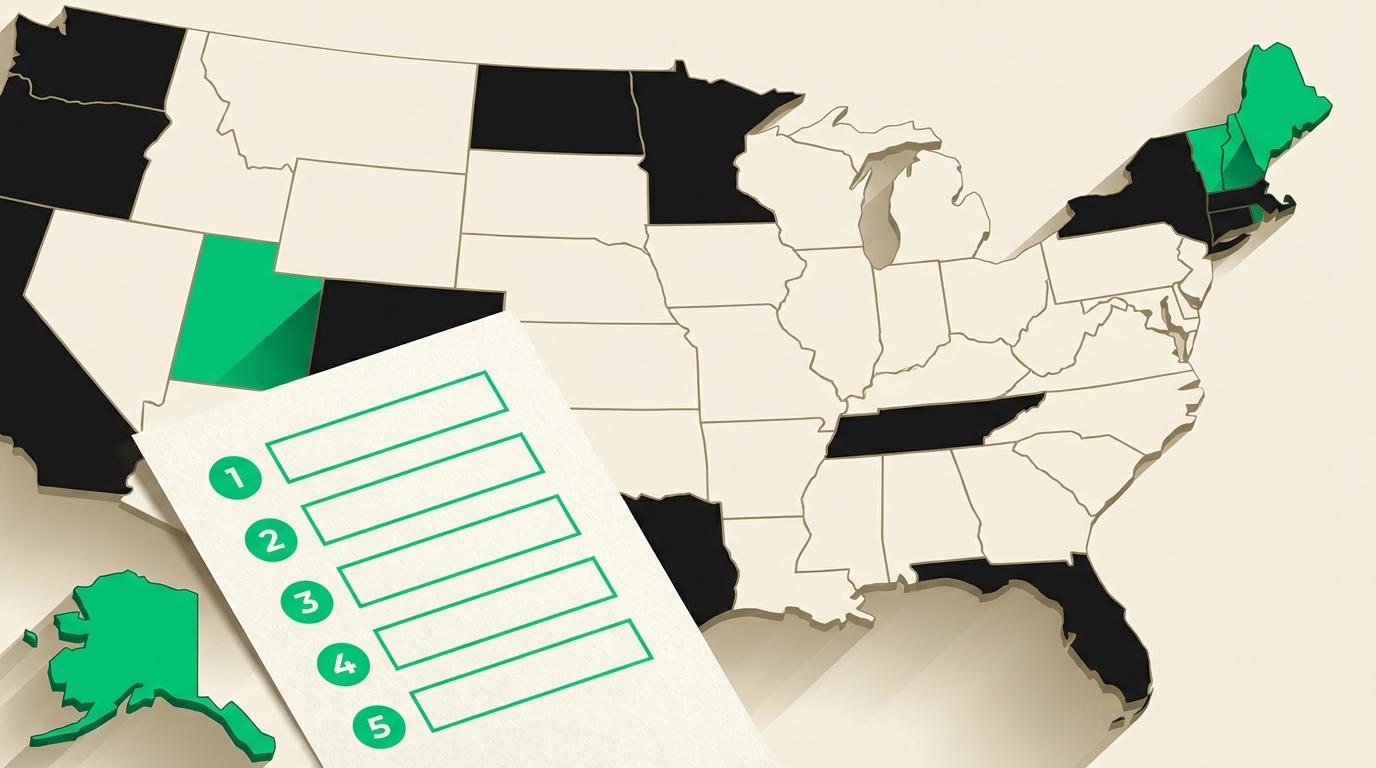
When people say "union election," they could mean any of three very different things, each governed by different laws, different agencies, and different procedures:
- 1Representation elections: workers voting on whether to form or join a union ("Do we want a union?")
- 2Internal officer elections: union members electing their leadership ("Who runs the union?")
- 3Contract ratification votes: members voting on proposed collective bargaining agreements ("Do we accept this deal?")
The rules for each are different. The agencies that enforce them are different. And the stakes, for workers, employers, and union leadership, are enormous.
Union representation-petition activity has been rising in recent years, with the NLRB reporting elevated petition filings well above pre-2022 levels. Meanwhile, public sector union density sits at roughly 32.2% (2024 BLS), far above the ~6% rate in the private sector. The gap between private and public sector unionization is widening, and the rules governing each are diverging even further.
This guide covers all three types of union elections, the federal and state laws that govern them, and what organizations need to know to run compliant elections in 2026.
This article is for informational purposes only and does not constitute legal advice. Union election requirements involve complex federal and state law. Consult a qualified labor attorney for advice specific to your situation.
Part 1: Representation Elections, "Do We Want a Union?"
Private Sector: The NLRB Process
Private sector representation elections are governed by the National Labor Relations Act (NLRA) and administered by the National Labor Relations Board (NLRB). The NLRB has jurisdiction over most private sector employers, but NOT federal, state, or local government employees.
The process:
- 1Showing of interest, at least 30% of employees in the proposed bargaining unit sign authorization cards or a petition indicating they want union representation
- 2Petition filed: the union or employees file a petition with the NLRB regional office
- 3Investigation: the NLRB determines whether the proposed bargaining unit is appropriate and whether sufficient interest exists
- 4Election ordered, the NLRB schedules a secret ballot election, typically within 2–4 weeks of the petition
- 5Voting: employees vote by secret ballot at the workplace during working hours
- 6Certification, if a majority of those who vote choose the union, the NLRB certifies it as the exclusive bargaining representative
- 7Bargaining obligation: the employer is legally required to bargain in good faith with the certified union
Alternative path, voluntary recognition: An employer may voluntarily recognize a union if presented with evidence (typically signed authorization cards) that a majority of employees support union representation. This bypasses the election entirely.
Key NLRB rules:
- Elections must be by secret ballot (NLRA §9(c))
- The employer cannot interfere with, restrain, or coerce employees regarding their union choice (§8(a)(1))
- The union cannot coerce or restrain employees (§8(b)(1))
- Campaign conduct rules prohibit threats, promises of benefit, surveillance, and interrogation
- Challenged ballots and objections can be filed within 7 business days after the election
- A union that loses an election cannot file a new petition for 12 months (election bar)
Recent data:
- NLRB representation-petition filings have risen in recent years, climbing well above pre-2022 levels (per NLRB case-activity reports)
- Union win rate has historically averaged 60–70% in elections that proceed to a vote
- Average time from petition to election: 3–5 weeks under current rules
Public Sector: 50 Different Systems
Public sector employees, teachers, firefighters, police, state workers, municipal employees, are excluded from the NLRA. Instead, they're governed by state laws, each with its own framework and administering agency.
State-by-State Public Sector Labor Relations:
| State | Governing Law | Administering Agency | Bargaining Rights | Election Rules |
|---|---|---|---|---|
| California | Meyers-Milias-Brown Act (MMBA), Dills Act, EERA | Public Employment Relations Board (PERB) | Comprehensive bargaining rights | PERB conducts secret ballot elections; 30% showing of interest required |
| New York | Taylor Law (Public Employees' Fair Employment Act) | Public Employment Relations Board (PERB) | Comprehensive bargaining rights | PERB certification via election or voluntary recognition |
| Illinois | Illinois Public Labor Relations Act (IPLRA) | Illinois Labor Relations Board (ILRB) | Comprehensive bargaining rights | 30% showing of interest; secret ballot election; window period for petitions |
| Florida | Florida Public Employees Relations Act | Public Employees Relations Commission (PERC) | Limited bargaining rights | PERC-supervised elections |
| Texas | No comprehensive statute | No state agency | No collective bargaining (except police/fire in some cities) | N/A for most public employees |
| Ohio | Ohio Collective Bargaining Act | State Employment Relations Board (SERB) | Comprehensive bargaining rights | SERB-supervised elections |
| Pennsylvania | Public Employee Relations Act (Act 195) | Penn. Labor Relations Board (PLRB) | Comprehensive bargaining rights | PLRB-supervised elections |
| Virginia | Executive Order + 2020 legislation | Dept. of Labor and Industry | Local government option (since 2020) | Secret ballot guaranteed; new regulations effective July 2025 |
| Michigan | Public Employment Relations Act (PERA) | Michigan Employment Relations Commission (MERC) | Comprehensive bargaining rights | MERC-supervised elections |
| Massachusetts | MGL Ch. 150E | Dept. of Labor Relations (DLR) | Comprehensive bargaining rights | DLR-supervised elections |
States with NO collective bargaining for public employees:
- Texas (except limited police/fire in some cities)
- Georgia
- North Carolina
- South Carolina
- Virginia (prior to 2020, now optional for local governments)
Recent developments:
- Public sector union density remains far higher than private sector, at roughly 32.2% (2024 BLS) vs. ~6% in the private sector
- Virginia implemented new regulations (effective July 2025) guaranteeing secret ballot elections for local government employees and applying existing state statutes on union elections to local government employers
- New York and California passed "trigger laws" allowing their state labor boards to assert jurisdiction over private-sector labor relations if NLRB authority diminishes, these face legal challenges
Illinois: A Closer Look at the Election Process
Illinois provides a particularly detailed blueprint that reflects best practices:
Representation petition:
- Labor organization files with the ILRB requesting an election
- Must demonstrate 30% showing of interest (signed authorization cards)
- If a collective bargaining agreement exists, petitions can only be filed during the window period (60–90 days before expiration)
- If no agreement exists, petitions can be filed at any time
Intervention petition:
- A second union can intervene in a pending election by filing an intervention petition
- Requires only 10% showing of interest
- The intervening union appears on the ballot alongside the original petitioner
Decertification petition:
- Employees can file a petition to remove their existing union
- Requires 30% showing of interest from employees who do NOT want continued representation
- Same window period rules apply
Key Statute: Illinois Public Labor Relations Act (5 ILCS 315)
Part 2: Internal Officer Elections, "Who Runs the Union?"
Federal Law: The LMRDA
Internal union officer elections are governed by federal law regardless of whether the union represents private or public sector workers. The Labor-Management Reporting and Disclosure Act (LMRDA), also known as the Landrum-Griffin Act, sets minimum standards for all union elections. The Civil Service Reform Act (CSRA) covers federal employee unions.
The U.S. Department of Labor's Office of Labor-Management Standards (OLMS) enforces these requirements.
LMRDA requirements:
| Requirement | Local Unions | Intermediate Bodies | National/International Unions |
|---|---|---|---|
| Election method | Secret ballot among members | Secret ballot OR officers elected by a body itself elected by secret ballot | Secret ballot referendum OR convention with elected delegates |
| Election frequency | At least every 3 years | At least every 4 years (29 U.S.C. §481(d)) | At least every 5 years |
| Eligible voters | Members in good standing | Members or elected delegates | Members or elected delegates |
| Candidate rights | Equal treatment for campaign opportunities | Equal treatment for campaign opportunities | Equal treatment for campaign opportunities |
| Notice requirement | Mailed to every member at least 15 days before election | Mailed at least 15 days before | Mailed at least 15 days before |
| Record retention | All ballots and records retained 1 year | All ballots and records retained 1 year | All ballots and records retained 1 year |
| Observer rights | Each candidate can have observers at polls and counting | Same | Same |
Critical LMRDA protections:
- Members cannot be retaliated against for supporting any candidate (§101(a)(2))
- Unions must provide timely notice for nominations and elections
- Nomination rules must be reasonable and uniformly applied
- Every member in good standing must have a reasonable opportunity to nominate candidates
- No union funds can be used to promote any candidate's campaign (§401(g))
- The election must be conducted in accordance with the union's constitution and bylaws (provided they don't conflict with LMRDA)
Challenging a union election:
- A member must first exhaust internal union remedies (the union has 3 months to resolve the complaint)
- If unresolved, the member can file with the Secretary of Labor within 1 month after exhausting remedies
- The Secretary of Labor can investigate and, if violations are found, file suit in federal court to set aside the election and order a new one under DOL supervision
Honest question
Would you trust an online vote to decide your community's annual budget?
Recent Example: Teamsters 2026 Elections
The International Brotherhood of Teamsters (IBT), one of America's largest unions, is conducting delegate and officer elections spanning 2025–2026, with detailed rules and schedules for nominations and elections at both the local and international levels. These elections follow the strict timelines mandated by the LMRDA and the Teamsters' consent decree, which imposed additional oversight requirements after corruption scandals.
Part 3: Contract Ratification Votes
Contract ratification votes, where members vote to approve or reject a proposed collective bargaining agreement, are the least regulated type of union election.
Key facts:
- The LMRDA does not mandate ratification votes, they're governed by each union's constitution and bylaws
- Most unions require a simple majority vote for ratification
- Some unions require a supermajority (typically two-thirds) for certain provisions
- Members can vote to reject a tentative agreement, sending negotiators back to the table
- No federal requirement for secret ballot on ratification (though most unions use it as best practice)
Electronic Voting in Union Elections
NLRB Elections
The NLRB has historically required in-person, physical ballot elections. However:
- The NLRB experimented with mail-ballot elections during and after the COVID-19 pandemic
- There is growing interest in electronic voting for NLRB elections, but no current authorization
- Any electronic voting system would need to satisfy NLRA secret ballot requirements
Internal Officer Elections
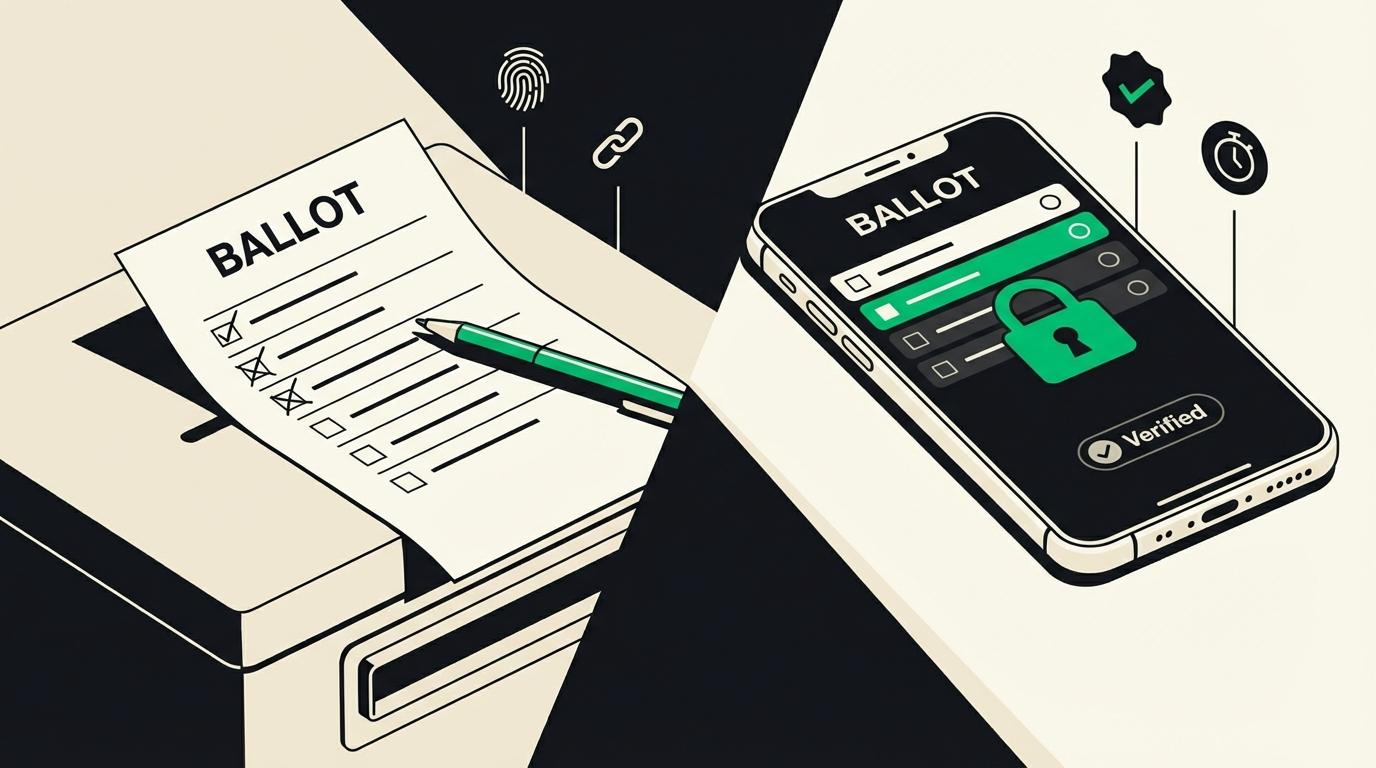
The LMRDA's secret ballot requirement can potentially be satisfied by electronic voting, provided:
- Each member's identity is verified
- Ballot secrecy is maintained
- An audit trail exists for the mandatory 1-year record retention
- The system prevents duplicate voting
- Every member has reasonable access to the voting method
The DOL's OLMS has not formally endorsed any electronic voting platform for LMRDA-covered elections, but has not prohibited them either. Unions considering electronic voting should consult with OLMS before implementation.
Public Sector Elections
State labor relations boards vary widely on electronic voting:
- California PERB: Has supervised electronic elections in some cases
- New York PERB: Primarily conducts mail-ballot and in-person elections
- Illinois ILRB: Conducts in-person and mail-ballot elections; electronic voting not formally authorized
State Legislation Trends for 2025–2026
Several states enacted significant labor legislation in 2025:
| State | Legislation | Impact |
|---|---|---|
| Virginia | New DOLI regulations (July 2025) | Secret ballot guaranteed for local government union elections; existing state election statutes now apply to local employers |
| New York | Trigger law | State labor board can assert jurisdiction if NLRB authority diminishes |
| California | Trigger law | Same as New York, state can step in for private sector if NLRB weakens |
| Kansas | Foreign contribution law | Restricts foreign contributions to ballot measure campaigns involving union issues |
| Kentucky | Foreign contribution law | Similar restrictions on foreign funding |
Key recent trends:
- Public sector unionization remains far higher than private sector (~ 32.2% density vs. ~6%)
- NLRB representation-petition volume has been rising in recent years
- States increasingly preparing backstop legislation in case federal labor law enforcement changes
- Electronic voting gaining interest but not yet authorized for most official labor board elections
What This Means for Organizations Running Union Elections
Whether you're a union running officer elections, an employer facing a representation petition, or a public agency administering labor relations, the rules matter. Violations of election procedures, at any level, lead to:
- Set-aside elections requiring re-runs (NLRB, state boards)
- Federal lawsuits by the Secretary of Labor (LMRDA violations)
- Unfair labor practice charges with significant remedial orders
- Criminal penalties in some cases (election fraud, coercion)
Best Practices for Compliant Union Elections
- 1Use secret ballots: required by law for representation and officer elections
- 2Verify voter eligibility: each voter must be a member in good standing (internal elections) or an employee in the bargaining unit (representation elections)
- 3Provide adequate notice: at least 15 days for LMRDA elections; timelines vary by state for representation elections
- 4Retain all records: 1 year minimum under LMRDA; longer under some state laws
- 5Allow observers: each candidate or party is entitled to observers during voting and counting
- 6Maintain neutrality: no union funds for candidate campaigns; no employer interference in representation elections
For organizations seeking to digitize their election process while maintaining compliance, Vote. Direct provides identity-verified, secret ballot elections with full audit trails, meeting the core requirements of both NLRB and LMRDA election standards.
FAQ
Q: Who oversees private sector union elections?
The NLRB (National Labor Relations Board) conducts representation elections for private sector workers. The NLRB does NOT have jurisdiction over federal, state, or local government employees, agricultural workers, or domestic workers.
Q: Who oversees public sector union elections?
Each state has its own agency. California has PERB, New York has PERB, Illinois has ILRB, and so on. Some states (Texas, Georgia, North Carolina) have no collective bargaining framework at all for public employees.
Q: Who oversees internal union officer elections?
The U.S. Department of Labor's Office of Labor-Management Standards (OLMS) enforces the LMRDA, which sets minimum standards for officer elections. The CSRA covers federal employee unions.
Q: Can union elections be conducted electronically?
For NLRB-supervised representation elections, generally no, physical or mail ballots are required. For internal officer elections under LMRDA, electronic voting is a gray area, not explicitly authorized but not prohibited. For public sector elections, it depends on the state board. An organization's internal votes (ratification, resolutions) can generally use any method the bylaws authorize.
Q: What's the "window period" for decertification?
If a collective bargaining agreement is in effect, employees can only file a decertification petition during the window period, typically 60–90 days before the agreement expires. If no agreement exists, a petition can be filed at any time.
Q: How long does an NLRB election take?
From petition to election, typically 3–5 weeks under current rules. The full process, including potential objections and challenges, can take several months.
The Bottom Line
Union elections operate under three distinct legal frameworks, federal (NLRA/NLRB for private sector representation), federal (LMRDA for internal elections), and state (varying public sector labor relations acts). The rules differ dramatically by type of election, sector, and state.
The single most important requirement across all three frameworks is the secret ballot. Whether it's an NLRB representation election, an LMRDA officer election, or a state-board-supervised public sector election, the integrity of the secret ballot is the foundation of legitimate union governance.
For organizations navigating this complexity, the path to compliance starts with knowing which framework applies, and ensuring your election procedures meet its requirements.
Sources:
- 1National Labor Relations Act (NLRA) §9(c): NLRB election procedures
- 2NLRA §8(a)(1): Employer unfair labor practices
- 3NLRA §8(b)(1): Union unfair labor practices
- 4Labor-Management Reporting and Disclosure Act (LMRDA) §401: Union officer election standards
- 5LMRDA §101(a)(2): Protection against retaliation for political activity
- 6LMRDA §401(g): Prohibition on union funds for candidate campaigns
- 7U.S. DOL Office of Labor-Management Standards (OLMS): Election oversight
- 8Illinois Public Labor Relations Act (5 ILCS 315): Public sector election procedures
- 9New York Taylor Law: Public Employment Relations Board (PERB)
- 10California MMBA, Dills Act, EERA: Public Employment Relations Board (PERB)
- 11Virginia DOLI: Local government union regulations (effective July 2025)
- 12NLRB: Representation case-activity and petition-filing reports
- 13U.S. Bureau of Labor Statistics: Union Members Summary, 2024 (public sector density 32.2%)
- 14Economic Policy Institute: State labor law developments 2025
This article is general information, not legal advice. We recommend you do your own research and confirm anything you plan to act on. Where this article states law, the section is cited so you can read the primary source yourself rather than take our word for it. That is what the citations are for. Election requirements also turn on your own governing documents, which we have not seen, and statutes are amended. For advice about your community, consult a qualified attorney licensed in your state.
We work hard to verify every citation against the primary source, but laws change and errors happen. If you spot an inaccuracy, email support@vote.direct and we will correct it. See our editorial standards for how these pages are researched and checked.