Quick Answer
Union election software with credential verification is software that binds every accepted ballot to a named row on your member roster and can reproduce that binding a year later. Of the six platforms compared here, only vote.direct publishes a price for all three checks: email, SMS, and an assisted government-ID check at $3.00 per checked voter.
Listed alphabetically, because we publish this page and sell one of the products on it, and a vendor that puts itself at number one has told you nothing.
| Platform | Credential checks it publishes | Published price, 200-member local |
|---|---|---|
| AssociationVoting | Email; a mailed verification announcement is a paid add-on | $199 for 126–500 voters |
| ElectionBuddy | Email and access codes | $29 for 21–350 voters |
| Helios Voting | Emailed links, plus cryptographic verifiability of the tally | Free, if you host and patch it yourself |
| OpaVote | Emailed access codes only | $20 (two 125-voter blocks) |
| Simply Voting | Email and access codes | Calculator on their site; no tiers published |
| vote.direct | Email, SMS, assisted government ID | $19.99 flat per election |
The thing none of the six do: decide whether the person behind that credential is a member in good standing. The LMRDA defines that term at §3(o), 29 U.S.C. §402(o), by pointing back at your own constitution and bylaws: someone who has met the membership requirements and has neither withdrawn nor been expelled or suspended after proceedings consistent with those documents. That determination is your election committee's, on a date it fixes in advance. Software can enforce the list. It cannot write it.
Read this before you shortlist anything: the Department of Labor's guidance on remote electronic voting systems. It approves no vendor and creates no safe harbor. An audit trail is not a substitute for candidate observers, and no software makes an election legally binding or guarantees compliance. Your constitution, your bylaws and the statute decide that, and counsel reads those, not a feature list.
Disclosure: vote.direct publishes this comparison and sells one of the products in it. Competitor prices and verification methods were read off each vendor's own published pages in August 2026. Information, not legal advice.
What Credential Verification Actually Means
Three different questions get collapsed into the phrase "verified voting," and a local that buys the wrong one finds out during a protest rather than during the demo.
1. Does somebody control this credential? A one-time code to an email address or a phone number establishes that whoever typed it can read that inbox or that handset. Real evidence, and the weakest of the three. It is what most of this market sells.
2. Is the human behind the credential the person named on the roster? An assisted government-ID check puts a document and a live face in front of an identity provider and timestamps the outcome. On vote.direct that check is arranged in advance and costs $3.00 per checked voter, so a 200-member local checking everyone pays $619.99 against $19.99 on email and SMS alone.
3. Is that person eligible to receive this ballot? Nothing in the first two answers this. Good standing is a status under your documents: dues current as your bylaws define current, initiation complete, no suspension, measured on an eligibility date. A vendor that tells you its product delivers this is describing your election committee's job.
| Check | What it establishes | What it does not establish |
|---|---|---|
| Emailed one-time code | Control of the address recorded on that roster row | That the address belongs to the member, or that nobody else reads it |
| SMS one-time code | Control of the handset recorded on that roster row | The same gap, plus nothing at all about a shared household phone |
| Assisted government-ID check | That a person presenting a government document matched it, at a recorded time | Membership, dues status, or eligibility under your bylaws |
| Roster restriction | That a ballot was issued against one specific roster row and only one | That the row belonged on the roster in the first place |
The fourth row is where protests actually live. Almost none turn on a stranger breaking into the ballot system; they turn on the list. A member who says they never got notice. A suspended member who voted. A retiree whose status nobody had reviewed since the last cycle. Two rows for one person, because the roster carries a work email and a personal one.
There is one more constraint that pulls against all of this, and it is statutory. LMRDA §3(k), 29 U.S.C. §402(k), defines a secret ballot as a choice cast so that the person expressing it cannot be identified with the choice, "but in no event by proxy." So the platform has to hold two things at once: a strong claim about who voted, and no usable claim about how they voted.
vote.direct handles that with two modes you pick before publishing. Anonymous mode withholds the voter-to-ballot link from organizers, results, per-ballot admin views and every export, keeping it in restricted application storage so vote changes and recounts stay possible. Sealed ballot mode stores the ballot with no link to the voter at all: the roster records that a member voted, the audit trail names who voted but never which ballot, and the box is shuffled at close. Sealed is the stronger secrecy claim and it costs you vote changes and per-ballot tracing. Pick the trade in writing before ballots open. More on the mechanics and the DOL guidance.
What the LMRDA Asks You to Keep
The statute is short about elections and specific about records. These are the provisions an OLMS investigator or a candidate's attorney will walk through, and every one of them produces a document somebody has to be able to hand over later.
| Requirement | Where it lives | What your file has to show |
|---|---|---|
| Officer elections at least every three years for a local | §401(b), 29 U.S.C. §481(b) | The date of the last election and the date of this one |
| At least every four years for an intermediate body, five for a national or international | §401(d) and §401(a) | The same, at the right interval for the body |
| Secret ballot, and never by proxy | §3(k), 29 U.S.C. §402(k) | How the design keeps the voter unidentifiable with the choice |
| Equal right to nominate and to vote, subject to reasonable uniformly imposed rules | §401(e) | The eligibility rule, the date it was measured, and that it was applied the same way to everyone |
| Notice mailed to each member's last known home address at least 15 days before the election | §401(e) | The mailing itself, the address list it went to, and returned mail |
| Adequate safeguards for a fair election, including each candidate's right to an observer at the polls and at the count | §401(c) | Who observed, what they were shown, and when |
| A candidate's right to inspect the membership list once within 30 days before the election | §401(c) | The request and what was made available |
| No employer or union money used to promote a candidacy | §401(g) | Nothing, until somebody alleges otherwise |
| Ballots and all other records pertaining to the election preserved for one year | §401(e) | Everything above, still retrievable twelve months on |
| Complaint route: exhaust internal remedies, then the Secretary of Labor | §402(a), 29 U.S.C. §482(a) | The protest, the local's answer, and the dates |
The Department of Labor's interpretive regulations on officer elections sit at 29 C.F.R. Part 452, and OLMS publishes compliance material on top of that. Read both alongside your international's constitution, which routinely asks for more than the statute does.
Now the part that decides which software you buy. "Preserved for one year" means legible to a stranger a year later, not "still in the account of whoever set up the election." Concretely, that file set is the roster as it stood when ballots opened with the eligibility date on it; every notice and reminder, with timestamps and delivery outcomes; which credential check each voter cleared and when; the tally; and a change log for the election configuration, so nobody has to take your word that the questions did not move mid-vote.
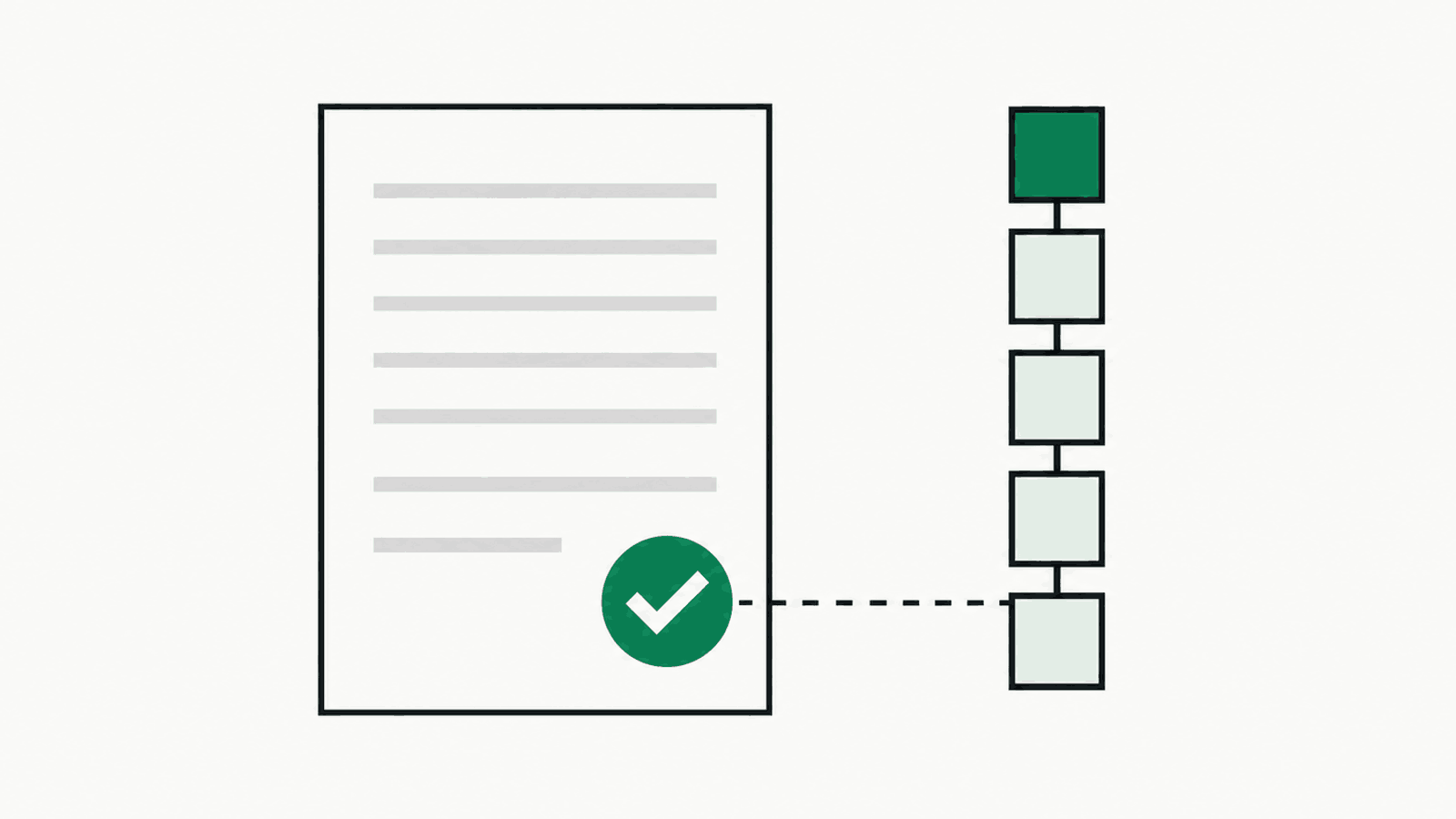
vote.direct exports hash-linked audit events, each entry chained to the one before, so a later edit to the exported sequence is detectable. That is evidence about platform activity, not proof that your notice went out on time or that your observers were let in. The platform never saw those things. How to read an audit trail, and what to ask a vendor for has the questions worth asking.
The Six Platforms
Listed alphabetically, because we publish this page and sell one of the products on it, and a vendor that puts itself at number one has told you nothing. Read them against what each can prove about a voter, not against feature count. Prices and verification methods were read off each vendor's own pages in August 2026; re-check before you buy.
1. AssociationVoting
Credential checks: Email. A mailed "voter verification announcement" is a $100 add-on. No government ID.
Price: free up to 25 eligible voters, $99 for 26–125, $199 for 126–500, $299 for 501–5,000, quoted above that. An annual subscription for unlimited non-concurrent elections runs $299–$699, election setup service is $250 extra, and postcard announcements are $2.15–$3.15 each.
The mailed verification announcement is worth a look for a local with stale contact data: a physical mailing is the one channel that tells you an address is dead. It is not the LMRDA notice, though: §401(e) notice has its own content and its own 15-day clock, and it is your obligation, not a vendor product.
2. ElectionBuddy
Credential checks: Email and access codes. No SMS verification, no government ID.
Price: Flat fee per election, by band of eligible voters. Not per voter. Free up to 20 voters, $29 up to 350, $99 up to 1,000, from $299 above that. A separate MeetingVote product handles live motions during a meeting and is not the comparable product for a ballot that stays open for days.
The established default, in market far longer than vote.direct, and the cheapest paid option across most of this list's range. Verification stops at email and access codes, so your evidence about who voted is only as good as your roster's contact data. It publishes no telephone-voting path. If members with no internet have to be able to vote by phone, that is Simply Voting below, not this one.
3. Helios Voting
Credential checks: Emailed links, with end-to-end cryptographic verifiability of the tally.
Price: free and open source. You supply the server, the deployment and the security patching.
Helios lets a voter verify that their own ballot was captured and counted (a stronger integrity property than anything else here offers), and the code is open to audit. It is also community-maintained with no vendor support, no mobile-optimized voter experience, and no identity layer of its own: it defers authentication to whatever you put in front of it. A local with staff who can run and patch a service gets something excellent. A local whose IT is a volunteer with a laptop does not.
4. OpaVote
Credential checks: Emailed access codes only. No SMS verification, no government ID.
Price: $10 for every 125 voters, on a pay-as-you-go plan with unlimited elections. Free up to 25 voters. Election data is kept three months free, then $40 a year to retain it.
The counting engine is the best in this list: single transferable vote, Condorcet, instant-runoff. If your constitution specifies a preferential method other platforms do not run, this is a shortlist of one. Two cautions for a union: there is no identity verification beyond an emailed code, and the default retention window is three months against the statute's one year, so budget the retention fee, or export everything the day you close.
5. Simply Voting
Credential checks: Email and access codes. No government ID published.
Price: Priced by number of eligible voters via an on-page calculator. No tiers are published. Elections of ten electors or fewer are free. Telephone voting, online nominations, weighted voting and voter segmentation are priced separately as premium features, and managed elections are quoted by sales.
What the premium list is for is complexity, not size on its own: for a local of several thousand members with a segmented ballot (different offices for different units), that voter segmentation is real value, and telephone voting is the one path here for members with no internet at all. For a 200-member local, you spend a call finding out the price, and the verification at the end of it is email and access codes.
Be honest
What's actually stopping your organization from switching to online voting?
6. vote.direct
Credential checks: email and SMS one-time codes included in the flat price; assisted government-ID verification at $3.00 per checked voter, arranged in advance.
Price: flat per election, on eligible voters, not turnout.
| Voters | Price per election |
|---|---|
| up to 25 voters | Free |
| 26–50 voters | $4.99 |
| 51–100 voters | $9.99 |
| 101–200 voters | $19.99 |
| 201–400 voters | $24.99 |
| 401–1,000 voters | $69.99 |
| 1,001–2,000 voters | $149.99 |
| 2,001–5,000 voters | $249.99 |
| Above 5,000 | Talk to us |
Entry price is $4.99. A 500-member local runs a verified officer election for $69.99; checking all 500 with government ID makes it $1,569.99.
What it does that the others on this list do not: it is the only one of the six that publishes a price for a document-level identity check, and the only one that includes SMS verification in the base price rather than pricing it as a premium feature. For members on job sites rather than at desks, SMS is the channel that reaches them.
Limitations, stated plainly: voter ballots are cast in a web browser, so a member with no device and no help needs an alternative you arrange (see the next section). It runs instant-runoff but not single transferable vote or Condorcet, so a local whose bylaws specify STV should look at OpaVote. It has no live-meeting motion product. And its independent review record is thin. Our third-party review record is 9 reviews across Capterra and Trustpilot, which is not a track record.
The same vendors, compared for clubs, HOAs and nonprofits, against a different set of requirements.
Hybrid and Remote Participation
§401(e) gives every member in good standing an equal right to vote, and DOL's remote-voting guidance directs officials to consider members who lack devices, internet access, digital skills, or who need an accommodation. This is the requirement that quietly kills all-digital plans, and "we told them to use a friend's phone" does not meet it.
What actually works is a documented alternative path, offered before ballots open rather than improvised after a complaint:
| Situation | Workable path | What to record |
|---|---|---|
| Member has a phone but no email | SMS ballot link and one-time code | The number on file and the delivery outcome |
| Member has neither, but has a mailing address | A mailed access letter, or a printed packet on a managed election | The mailing date and the return |
| Member needs an accommodation | Whatever your committee arranges, in writing, offered to anyone who asks | The request, the offer, and the date |
| Member disputes eligibility | Your challenged-ballot procedure, decided before the count | The challenge and the ruling |
On a managed election, printed packets are $6.00 each. Each $6.00 packet includes domestic US mail, up to 4 pages, and a return envelope with prepaid postage: the packet goes out, and it comes back in an envelope that already has the postage paid on it, so the member never buys a stamp. There is no separate postage line on your invoice. Paper returns are counted in the same tally as the online ballots, which is the point: a hybrid election with two separate counts is two elections and one argument.

One check before any of this applies to you. The LMRDA's officer-election provisions cover labor organizations in the private sector. A public-sector local (teachers, municipal employees, state workers) is generally outside it and answers to a state labor relations agency instead, and airline and railroad unions under the Railway Labor Act have their own procedures overseen by the National Mediation Board. NLRB representation elections are a third thing again: the Board runs those, and no vendor can sell you one. Union election rules by state and NLRB rules for small locals separate the three regimes.
When to Have It Run for You
There is a size below which the software is not the problem. A local of 60 members with a three-person election committee, none of whom has run an election before, does not need a better ballot builder. It needs somebody else to load the roster, draft the notices, chase the non-voters and produce the file.
| Service | Price | What it covers |
|---|---|---|
| Setup & Launch | From $99 | We build the ballot, load the roster, write and send the notices, and hand you a live election. |
| Full Managed Election | From $199 | Everything in Setup & Launch, then we run it: reminders, quorum, voter support, close, tally, certificate. |
| Managed + Mailed Packets | From $199 plus $6.00 per packet | A full managed election where the members who need paper get a printed packet with a postage-paid return envelope, and their returned ballots land in the same tally. |
| Managed + Inspector of Elections | From $499 | A full managed election where vote.direct also serves as your inspector of elections (Colorado, Nevada, Florida, Texas, Arizona and Maryland only). |
| 101 to 5,000 voters | Per voter, $1.50 down to 10 cents | Same scope. $199 covers the first 100 voters of a full managed digital election. Each voter after that costs less as the election grows: $1.50 per voter up to 200 voters, $1.00 up to 400, 20 cents up to 1,000, 15 cents up to 2,000 and 10 cents up to 5,000. Totals end in .99. For example, $349.99 for 200 voters, $549.99 for 400, $669.99 for 1,000 and $1,119.99 for 5,000. Setup & Launch works the same way from $99, at half of each per-voter rate. |
| Above 5,000 voters | Quoted | Same scope, priced on your roster (the platform itself is quoted above 5,000 voters) |
The headline is $199 for a digital election of up to 100 voters, and it needs 10 days before ballots open. Above that roster size, or once packets are mailed, it is quoted.
Two honest notes. The Inspector of Elections row is a role created by state common-interest-development statutes (the HOA world). It is not the LMRDA candidate-observer right and does not substitute for it; your observers come from your candidates under §401(c). And a managed election does not move the parts that are yours by law: nominations, candidate eligibility rulings, the mailed statutory notice, legal review and the good-standing determinations stay with the local and its counsel. The step-by-step online playbook and union election rules by state cover that division in detail.
FAQ
Q: Does the LMRDA allow a union officer election to be run online?
The statute was written in 1959 and does not address electronic voting either way. The Department of Labor's guidance on remote electronic voting systems says unions may use them provided the election still meets the LMRDA's secret-ballot, member-access, candidate-observer, safeguard and one-year record requirements. It approves no product and creates no safe harbor. Check your international's constitution first. Some require mail or in-person balloting outright, and no vendor overrides that.
Q: Is government-ID verification necessary for a union election?
No statute requires it. It is worth its price when your local has had an eligibility protest before, when a race is expected to be close, or when the roster's contact data is old enough that email control is weak evidence. On vote.direct it is $3.00 per checked voter and has to be arranged in advance, so a 200-member local checking everyone pays $619.99 rather than $19.99. Many locals check only the ballots that are challenged.
Q: Can the platform's emails count as the 15-day notice?
Treat them as a supplement, not the notice. §401(e) requires notice mailed to each member's last known home address at least 15 days before the election, and unless counsel confirms that a particular rule permits something else for your union, the mailing is the mailing. Send email and SMS as well, because they raise turnout. Just do not let them replace the envelope.
Q: How does a platform keep the ballot secret and still prove who voted?
By separating the two records: the roster records that a member voted, and the ballot store holds the choice. In vote.direct's Anonymous mode the link between them is withheld from organizers, results and exports, and kept in restricted storage so recounts and vote changes remain possible. In Sealed ballot mode there is no link at all, a stronger secrecy claim that costs you vote changes and per-ballot tracing. Pick the mode before you publish, and write down why.
Q: What does a union election actually cost on this platform?
Flat per election, on eligible voters: Free for up to 25 voters, $4.99 for 26–50 voters, $9.99 for 51–100 voters, $19.99 for 101–200 voters, $24.99 for 201–400 voters, $69.99 for 401–1,000 voters, $149.99 for 1,001–2,000 voters, $249.99 for 2,001–5,000 voters. Above 5,000 voters, talk to us. Email and SMS verification are included. Government ID is $3.00 per checked voter on top. If you want it run for you, that starts at $99 for setup and launch and $199 for a full managed digital election of up to 100 voters. Mailed statutory notice, observers, counsel and election-committee time are yours either way.
Q: We are a small local and nobody has run an election before. Where do we start?
With the documents, not the software. Read your international's constitution and your bylaws on nominations, eligibility, notice, secrecy and observers, and write the eligibility date down before you look at a roster. Then pick the tool. A platform bought first tends to define the procedure by accident, and that is the version that loses a protest.
The Bottom Line
Every platform in this comparison can collect ballots and add them up. The count has not been the hard part for decades.
What separates them is the strength of the claim each one lets you make about the voter (a code to an inbox, a code to a handset, a document check against a live face) and how legible that claim still is a year later, when the file has to satisfy somebody who was not in the room. Only one of the six publishes a price for the strongest check. The second question depends less on the vendor than on whether your election committee wrote down the eligibility date, kept the notices, and let the observers in.
Buy the software for the parts it is genuinely good at: the roster, the credential, the reminders, the tally, and an export a stranger can read. Keep the rest where the statute already put it.
Sources:
- 1Labor-Management Reporting and Disclosure Act, 29 U.S.C. §§401–531. Election provisions at §401 (29 U.S.C. §481) and enforcement at §402 (29 U.S.C. §482).
- 2LMRDA §3(k), 29 U.S.C. §402(k): definition of "secret ballot," expressly excluding proxy.
- 3LMRDA §3(o), 29 U.S.C. §402(o): definition of "member in good standing."
- 429 C.F.R. Part 452: Department of Labor interpretive regulations on union officer elections.
- 5U.S. Department of Labor, Office of Labor-Management Standards: guidance on remote electronic voting systems, https://www.dol.gov/agencies/olms/compliance-assistance/tips/remote-electronic-voting-systems
- 6Vendor pricing and verification methods: ElectionBuddy (electionbuddy.com/pricing), Simply Voting (simplyvoting.com/pricing), AssociationVoting (associationvoting.com/pricing), OpaVote (opavote.com/pricing), Helios Voting (heliosvoting.org). Read off each vendor's own pages in August 2026.
- 7vote.direct published pricing, verification options and managed-election scope.
This article is general information, not legal advice. We recommend you do your own research and confirm anything you plan to act on. Where this article states law, the section is cited so you can read the primary source yourself rather than take our word for it. That is what the citations are for. Election requirements also turn on your own governing documents, which we have not seen, and statutes are amended. For advice about your community, consult a qualified attorney licensed in your state.
We work hard to verify every citation against the primary source, but laws change and errors happen. If you spot an inaccuracy, email support@vote.direct and we will correct it. See our editorial standards for how these pages are researched and checked.