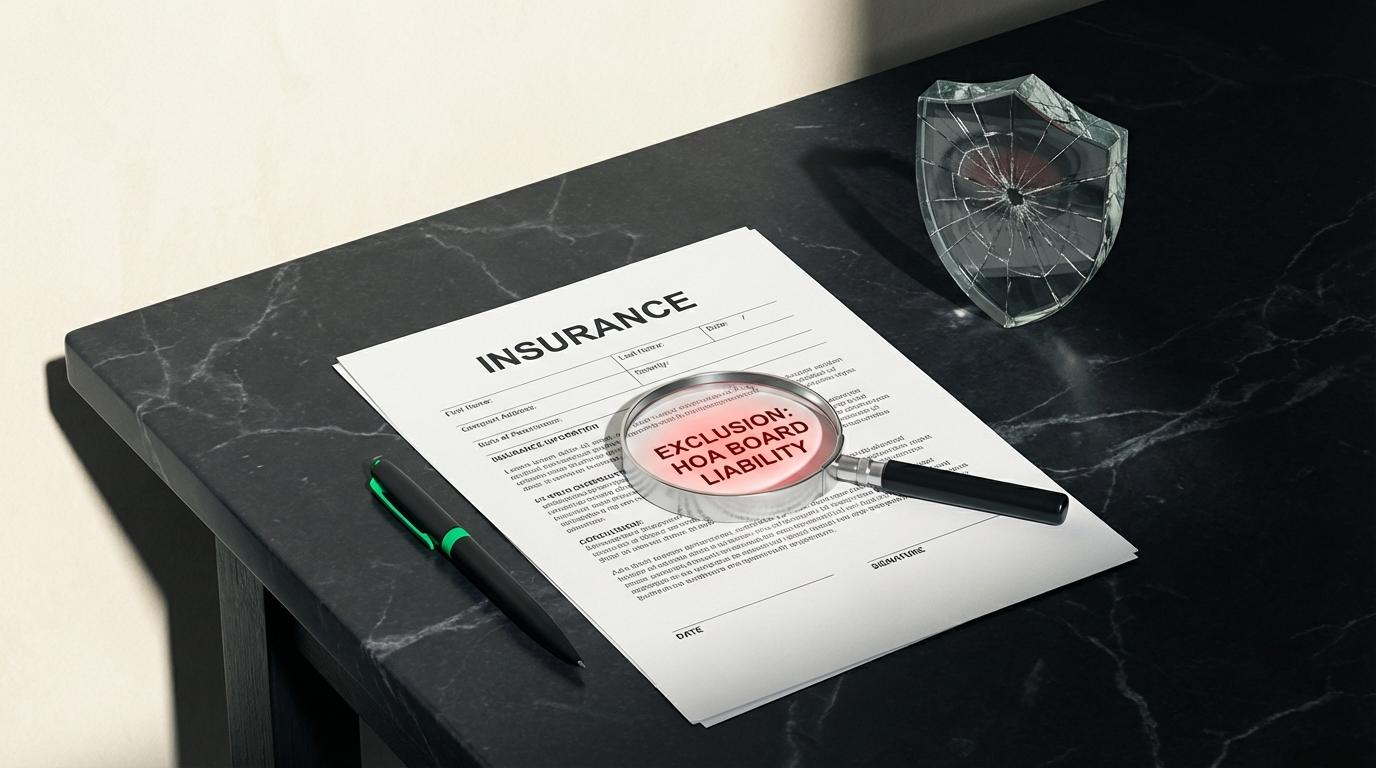
The Comforting Lie Every Board Member Tells Themselves
"We have insurance for that."
It's the phrase that lets HOA board members sleep at night. When a disgruntled homeowner threatens to sue over an election, when a losing candidate starts talking about fraud, when the community Facebook group erupts with accusations, the board takes comfort in knowing their Directors & Officers policy will handle it.
Except, in many cases, it won't.
The Exclusion Clause Nobody Reads
Insurance companies are in the business of managing risk, not absorbing it. As HOA election disputes have surged, driven by polarized communities, rising property values, and increasingly aggressive litigation, insurers have quietly tightened their policy language.
According to insurance industry analysis, many standard D&O policies now contain specific exclusions for election disputes. This isn't a secret buried in legal jargon. Insurance industry specialists openly acknowledge that election disputes sit alongside breach of contract defense and architectural review committee disputes as commonly excluded coverage categories.
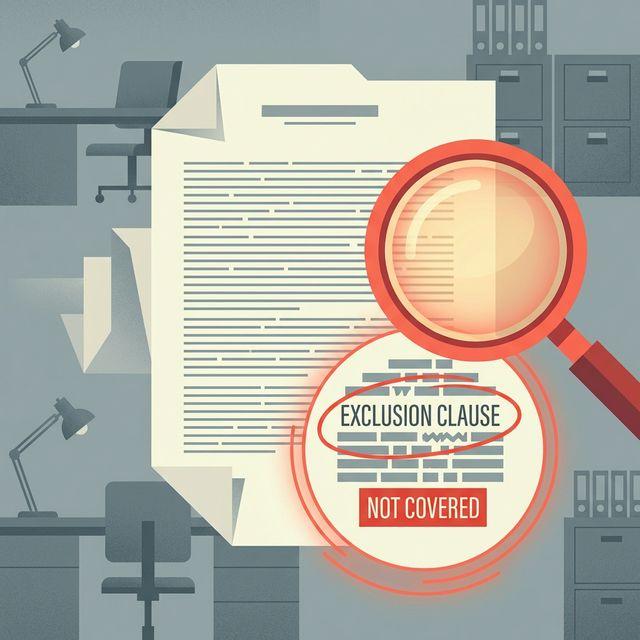
The exclusions take several forms:
- Direct exclusion: The policy explicitly states that claims arising from election processes, results, or procedures are not covered.
- Massive deductibles: Coverage technically exists, but the association is responsible for the first $10,000 to $25,000, which often exceeds the cost of the dispute resolution itself.
- Reservation of rights: The insurer agrees to provide a defense, but reserves the right to recover costs from the association if the defense is unsuccessful.
- Cancellation risk: Filing a single election-related claim can trigger policy non - renewal, leaving the entire community without D&O coverage.
The Personal Exposure Nobody Discusses
Here's what makes this truly frightening for board members: when D&O insurance doesn't cover an election dispute, the costs fall on the association's operating budget, which means every homeowner pays through special assessments. And in cases of alleged willful misconduct, individual board members can face personal liability.
California requires HOAs to carry minimum D&O coverage of $500,000 for communities with 100 or fewer units and $1,000,000 for larger ones under Civil Code § 5800. But coverage minimums are meaningless when the policy excludes the scenario that actually happens.
Consider the real numbers:
| What Your D&O Policy Covers | What It Often Doesn't |
|---|---|
| Slip - and - fall lawsuits | Election disputes |
| Employment claims | Recall challenges |
| Discrimination allegations | Proxy fraud allegations |
| General negligence | Ballot counting disputes |
The Florida Warning
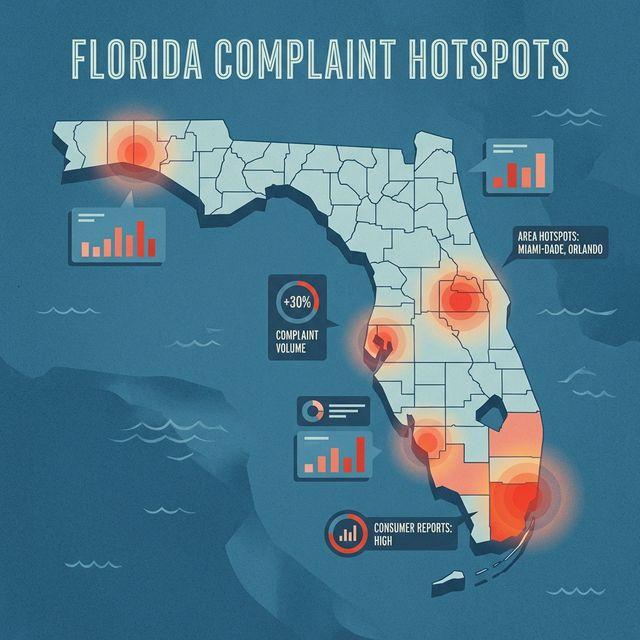
Florida's HOA landscape offers a stark preview of what's coming nationwide. The state received 1, 908 condo election fraud complaints in a single year. The * Hammocks HOA * case in Miami, involving 18,000 residents and $3 million in total fraud, settled for the full $2 million D&O insurance policy limit, leaving the community to absorb the remaining costs.
Under Florida Statute 720.306(9)(a), any challenge to HOA election results must be commenced within 60 days after results are announced. That tight window creates pressure for immediate legal action, driving up costs before anyone has time to negotiate.
In arbitration cases, Florida regulators have established that cumulative voting procedure violations, missing inner envelopes, allowing ballot changes, no signature verification, accepting ballots after polls close, can invalidate election results entirely and require new elections. Each re-run doubles the association's costs and extends the period of legal exposure.
Why Risk Elimination Beats Risk Transfer
If you can't reliably insure against election disputes, the only rational strategy is to eliminate the conditions that cause them.
The primary driver of every election lawsuit is ambiguity:
- Ambiguity about who voted
- Ambiguity about how votes were counted
- Ambiguity about whether the voter list was accurate
- Ambiguity about the chain of custody
Digital identity-verified voting eliminates each of these attack vectors. When every voter proves their identity with a government - issued ID, when every vote is timestamped and cryptographically sealed, and when the entire process generates an exportable audit trail, there is nothing left to sue about.
At[vote.direct](https://vote.direct), the cost of running a fully verified election for a 200-unit community is approximately $1,000. That's less than most D&O policy deductibles, and it does something no insurance policy can: it prevents the dispute from arising in the first place.
The Insurance Industry's Future Move
A forward-looking trend is already emerging in adjacent insurance markets. Liberty Mutual gave policyholders free Nest smoke detectors and a 5 % premium discount to reduce fire claims. Progressive's Snapshot device monitors driving habits to price auto insurance more accurately.
The same logic applies to HOA D&O coverage. Carriers who subsidize verified voting tools reduce election dispute claims, which reduces payouts, which improves underwriting profitability. The HOA D&O premium market is estimated at approximately $462 million annually, even a modest reduction in election-related claims represents significant savings.
Smart boards aren't waiting for insurers to catch up. They're adopting verified voting now, both to protect their communities and to demonstrate risk mitigation when renewal time comes.

What You Should Do Right Now
- 1Read your D&O policy: specifically look for exclusions related to elections, voting procedures, recalls, and proxy disputes.
- 2Ask your insurance broker: "Does our policy cover defense costs for a challenged election?" Get the answer in writing.
- 3Calculate your exposure: multiply the probability of a dispute(historically 5 - 10 % per year for contentious communities) by the average defense cost($50,000 +).
- 4Compare that to prevention: verified voting costs a fraction of one disputed election and eliminates the risk entirely.
The Bottom Line
D&O insurance is essential for HOA boards. But relying on it to cover election disputes is like relying on your car insurance to cover a recall, it might, but the fine print probably says otherwise.
The boards that protect themselves best aren't the ones with the most expensive insurance policies. They're the ones that run elections so transparently, so verifiably, and so thoroughly documented that there's nothing left to dispute.
Don't wait until you're served with a lawsuit to find out what your insurance actually covers.
This article is general information, not legal advice. We recommend you do your own research and confirm anything you plan to act on. Where this article states law, the section is cited so you can read the primary source yourself rather than take our word for it. That is what the citations are for. Election requirements also turn on your own governing documents, which we have not seen, and statutes are amended. For advice about your community, consult a qualified attorney licensed in your state.
We work hard to verify every citation against the primary source, but laws change and errors happen. If you spot an inaccuracy, email support@vote.direct and we will correct it. See our editorial standards for how these pages are researched and checked.