
The Law That Created a $150 Million Problem
California doesn't leave HOA elections to chance. The Davis-Stirling Common Interest Development Act, specifically Civil Code § 5110, requires every community association in the state to appoint an independent Inspector of Elections for every vote.
This isn't optional. It's not a best practice. It's the law. And with over 50,000 HOAs in California, it creates one of the largest compliance mandates in community association governance.
The intent is sound: protect homeowners from election manipulation by requiring independent oversight. But the execution has created a fragmented, expensive, and deeply inefficient market that costs California communities millions of dollars annually.
How It Works Today
Under Civil Code § 5110, associations must select one or three independent inspectors. An inspector must be an independent third party, defined as a county registrar volunteer poll worker, a California Board of Accountancy licensee, or a notary public. Board members, candidates, and their relatives are explicitly prohibited from serving.

The inspector's duties include:
- Determining the number of memberships entitled to vote
- Verifying the authenticity and validity of proxies
- Hearing and determining challenges related to voting rights
- Counting and tabulating all ballots
- Performing all duties impartially, in good faith, and expeditiously
In practice, this means California HOAs hire one-person inspector shops to show up at the clubhouse, manage paper ballots, hand-count votes, and certify results. The cost ranges from $375 to $2,000 per election depending on community size and complexity.
For California's 50,000+ HOAs, the total annual market for inspector services falls between $27.5 million and $150 million. That's a staggering amount of money being spent on manual labor that software can perform instantly, more accurately, and more securely.
Where the Current System Fails
The manual inspector model has three fundamental weaknesses:
Slow Results
Paper ballot counting takes hours or days. For large communities with hundreds of units, results may not be available for a week or more. During that gap, rumors spread, tensions rise, and the window for legal challenges begins.
Human Error
Inspectors are human. They miscount. They get tired during long tabulation sessions. They may accidentally compromise ballot secrecy. And unlike a computer system, there's no way to rerun the exact same count to verify accuracy.
No Real Identity Verification
The most critical gap: traditional inspectors verify that a ballot was received and that it appears to come from a legitimate unit, but they cannot verify that the person who filled out the ballot is actually the homeowner. Paper systems rely on signatures, which are easily forged and rarely verified against official records.
What California Law Actually Allows
Here's what many boards and management companies don't realize: California law explicitly authorizes electronic voting for HOA elections.
Civil Code § 5110(c) permits electronic voting systems provided they meet five requirements:
- 1Voter identity verification: the system must authenticate the member's identity
- 2Ballot integrity: the electronic secret ballot must not be altered in transit
- 3Receipt acknowledgment: the system must transmit a receipt to each member who votes
- 4Permanent identity separation: the system must permanently separate any authenticating or identifying information from the ballot, "rendering it impossible to connect an election ballot to a specific member"
- 5Auditable retention: ballots must stay accessible to elections officials for recount, inspection, and review
Four of these map cleanly onto what modern digital voting platforms deliver. Government ID verification exceeds the identity authentication standard. Automated confirmation emails provide receipt acknowledgment. Digital audit logs with hash-chain integrity provide retention far more robust than a box of paper ballots.
The fourth is where boards should ask hard questions, because vendors are loose with it. "Anonymous mode" on most platforms means the ballot is hidden from the board, from published results and from exports. That is a meaningful privacy control and it is not the same thing as the statute's "impossible to connect." Permanent separation is a claim about what the system stores, not about who is allowed to look. vote.direct offers both designs, chosen per election: Anonymous withholds the voter-to-ballot link from every surface the association can reach but keeps it in restricted storage for vote changes, proxies and recounts; Sealed ballot stores the ballot with no link to the voter at all and is built for §5110(c)(4)(B)(iv), so the California board-election template presets it. Ask any vendor whether the link between voter and ballot still exists in its database for the election you are running. If the answer is yes, §5110(c)(4)(B)(iv) has not been satisfied, whatever the marketing page says.

What a Platform Can and Cannot Do for the Inspector
Be clear about one thing first, because some vendors are not: no software satisfies Civil Code § 5110(a). That section requires the association to select an independent third party as inspector of elections. It contemplates a person, and the inspector carries legal responsibility for the validity, secrecy, and integrity of the ballot. A platform is a tool the inspector uses. There is no such thing as an "automated inspector," and any product page that offers you one is selling you a lawsuit.
What software does change is the labor. Most of an inspector's fee buys manual work that a platform performs automatically:
| Inspector Duty | Manual Process | With a Digital Platform |
|---|---|---|
| Verify voter eligibility | Signature comparison | Government ID + address verification |
| Ensure ballot secrecy | Physical envelope system | Anonymous mode hides identity from board, results, exports; Sealed ballot mode stores the ballot with no link to the voter |
| Count and tabulate | Hand-counting | Instant automated tabulation |
| Handle challenges | Subjective judgment | Objective audit trail review |
| Certify results | Paper certificate | Exportable audit package the inspector signs off on |
| Cost per election | $375 - $2,000 | $500 - $1,000 |
Read the secrecy row carefully. Hiding the ballot and storing it with no link to the voter are two different things, and §5110(c)(4)(B)(iv) asks for the second. On vote.direct that is the Sealed ballot setting; boards running contested board elections should choose it, and should ask any other vendor which one they are actually buying.
At [vote.direct](https://vote.direct), a 200-unit California HOA can run an election with government ID verification, anonymous balloting, and a complete audit trail for approximately $1,000, often less than what they'd pay a manual inspector to do the same counting by hand. You still appoint the inspector.
The Compliance Advantage
California's election enforcement provisions give communities strong incentives to get compliance right. Under Civil Code § 5145, a member can recover up to $500 per violation plus attorney fees if the association fails to follow election requirements. The case law is clear:
- In Wittenburg v. Beachwalk HOA (2013), the court ruled that when boards use HOA media to advocate their position on an election issue, equal access must be provided to opposing views.
- In Lake Lindero HOA v. Barone (2023), the court exercised authority under Corporations Code § 7616 to determine the validity of a recall election.
- Members have one year from the date the inspector notifies the board of results to bring a civil action for election violations.
Digital voting platforms generate the evidence trail needed to defend against these challenges. When every voter is ID-verified and every action is timestamped, the association has objective proof of compliance rather than relying on the testimony of a volunteer inspector.
50,000 Communities, One Opportunity
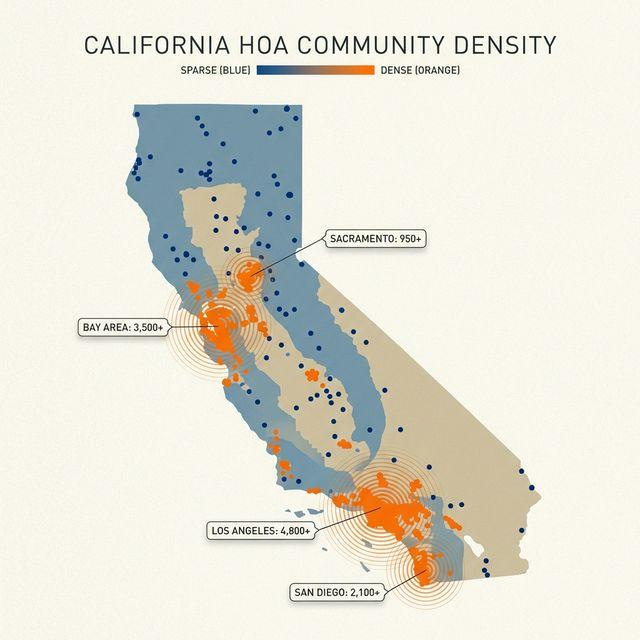
California's Inspector of Elections requirement creates a unique market dynamic: 50,000 organizations that are legally required to conduct verified elections every year. They have existing budgets for this expense. They have existing pain points with the manual process. And they have a legal framework that explicitly permits the digital alternative.
For HOA boards currently paying $375 to $2,000 per election for a manual inspector, switching to digital verified voting isn't just a cost decision: it's a compliance upgrade. Better verification. Faster results. Stronger legal defensibility. And the elimination of human error in counting.
The Davis-Stirling Act was designed to protect homeowners. Digital verified voting fulfills that intent better than any manual process ever could, at a fraction of the cost.
This article is general information, not legal advice. We recommend you do your own research and confirm anything you plan to act on. Where this article states law, the section is cited so you can read the primary source yourself rather than take our word for it. That is what the citations are for. Election requirements also turn on your own governing documents, which we have not seen, and statutes are amended. For advice about your community, consult a qualified attorney licensed in your state.
We work hard to verify every citation against the primary source, but laws change and errors happen. If you spot an inaccuracy, email support@vote.direct and we will correct it. See our editorial standards for how these pages are researched and checked.