The Show-of-Hands Problem
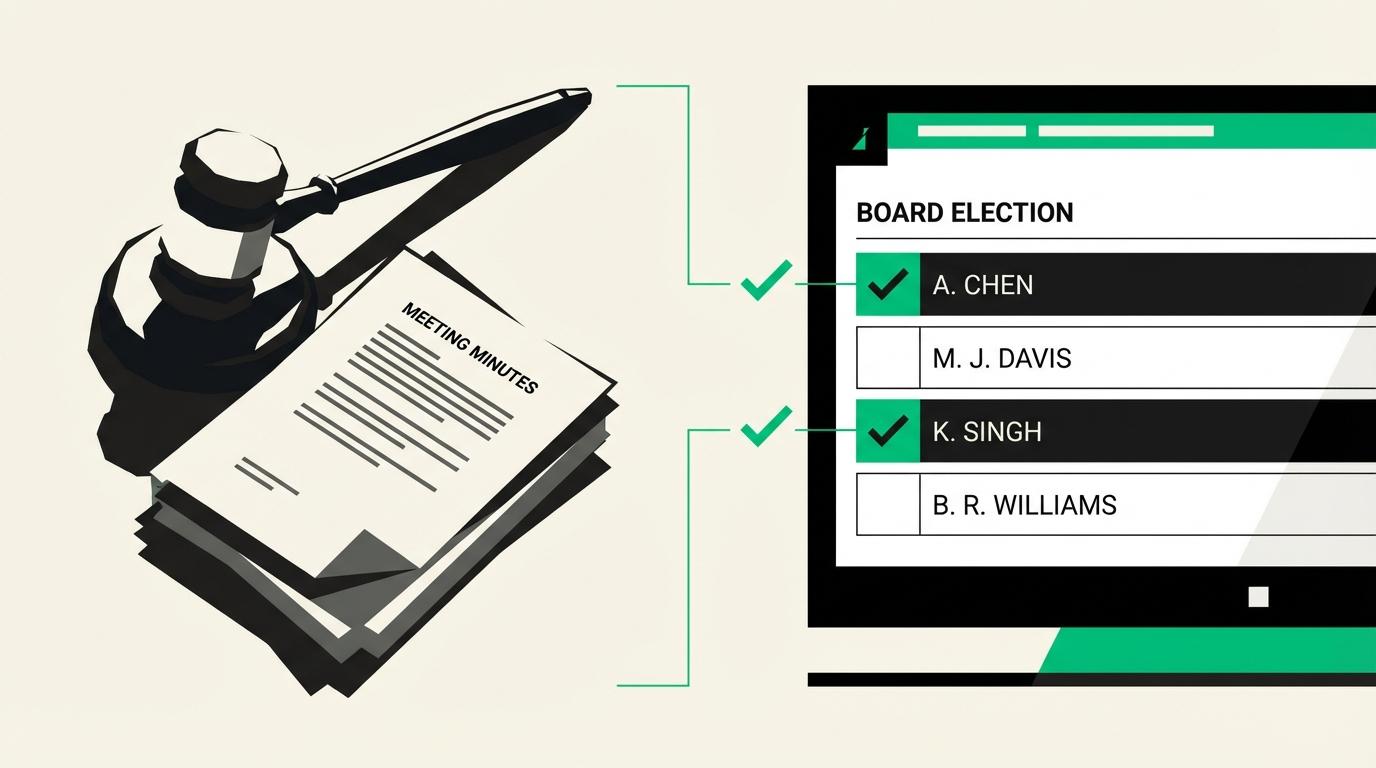
A strata council in a mixed-use Vancouver building needed to vote on replacing their VRF system, a six-figure capital expenditure affecting every owner differently depending on lot size. The default? Show of hands. The alternative? A lengthy poll vote where the strata manager manually calculated fractional weighted votes across commercial and residential lots using a spreadsheet, a calculator, and thirty minutes of everyone's time.
They're not alone. This is the standard experience for the 33,955 strata corporations in British Columbia, the 12,400+ condominium corporations in Ontario, and thousands more across Alberta and the rest of Canada. Together, these organizations govern more than 1.7 million residential units, and the vast majority still rely on show-of-hands votes, paper ballots, and manual proxy counting to make decisions worth hundreds of thousands of dollars.
The irony is that Canadian legislation has been ahead of the curve. BC legalized electronic strata meetings permanently in 2022. Ontario modernized its Condominium Act in 2023. Alberta's sweeping Bill 30 reforms take effect on February 15, 2026, this month. The law says strata corporations can vote digitally. Almost none actually do.
This guide covers exactly what you need to know: the legal framework in each province, the voting challenges that paper-based processes create, and how modern voting software eliminates them, including the weighted voting problem that commercial and mixed-use strata corporations have been waiting years to solve.
This article is for informational purposes only and does not constitute legal advice. Strata and condominium requirements vary by province and governing documents. Consult a qualified legal professional for advice specific to your corporation.
The Canadian Landscape: Three Provinces, Three Legal Frameworks
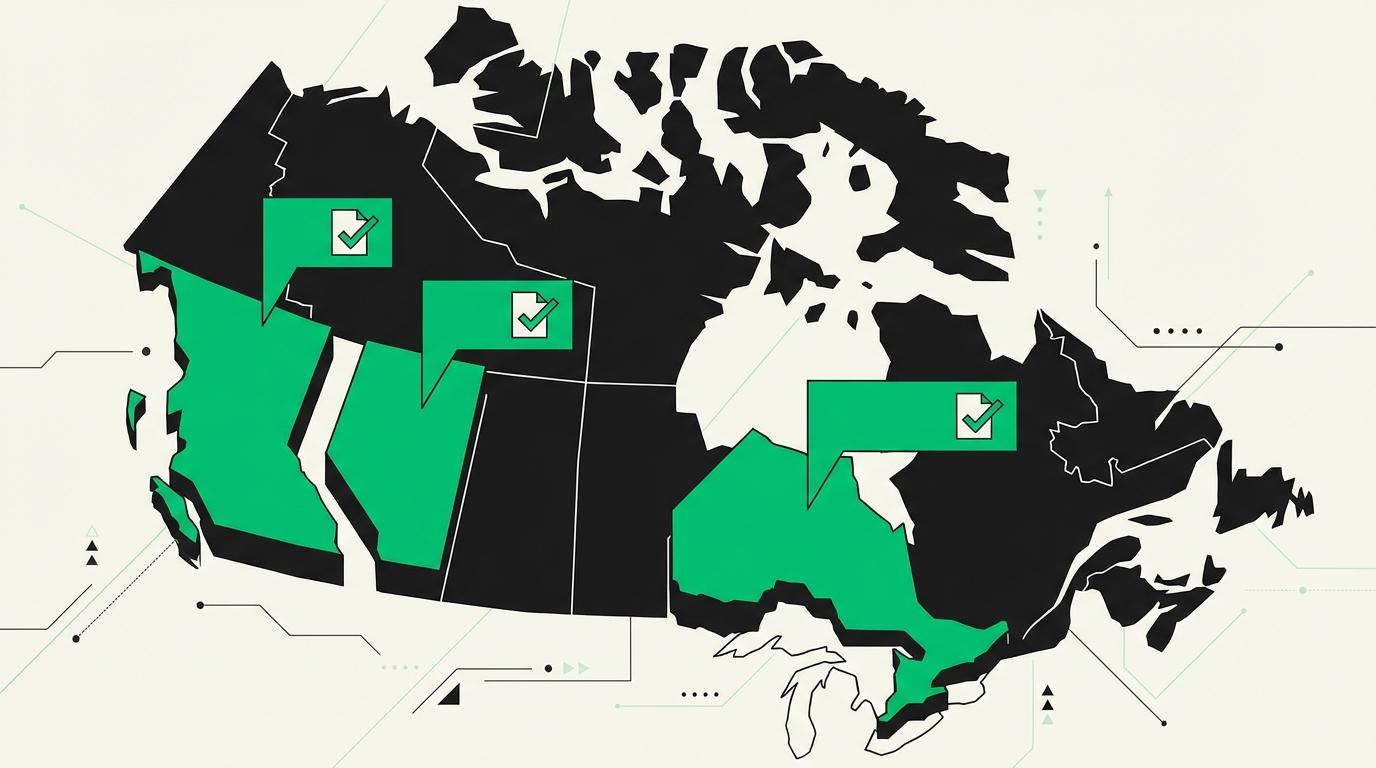
Canada doesn't have a single condominium or strata law. Each province has its own legislation, terminology, and rules. Here's what matters for voting:
| British Columbia | Ontario | Alberta | |
|---|---|---|---|
| Terminology | Strata corporation | Condominium corporation | Condominium corporation |
| Governing law | Strata Property Act (SPA) | Condominium Act, 1998 | Condominium Property Act |
| Corporations | 33,955 strata plans | 12,400+ condo corps | 10,000+ condo corps (est.) |
| Units | 777,919 active lots | 948,186+ residential units | 170,000+ units (est.) |
| Electronic voting | Allowed, no bylaw required (since Nov 2022) | Allowed, by-law required (since Oct 2023) | Allowed, unless bylaws prohibit (Bill 30, Feb 2026) |
| Weighted voting | Via Form W (commercial/mixed-use) | Based on unit proportions | Unit-factor vote on request (simplified under Bill 30) |
| Default vote type | Show of hands | Show of hands | Show of hands |
The common thread: every province defaults to show of hands, with ballot or poll voting available as an alternative when requested. The problem isn't legality, it's execution. Running a proper poll vote with weighted calculations, proxy verification, and auditable results is operationally painful enough that most strata councils avoid it unless absolutely forced.
British Columbia: The Strata Property Act and What It Actually Allows
Electronic Meetings Are Permanently Legal
As of November 24, 2022, all BC strata corporations can hold annual and special general meetings by electronic means, or use a hybrid of in-person and electronic participation. This change was made permanent after temporary pandemic provisions proved the model worked.
Key details:
- No bylaw required: the strata council chooses the meeting format
- Notice requirements: the meeting notice must include instructions for participating electronically
- Voting cards: not required for electronic participants
- Mixed format: strata corporations can run hybrid meetings with both in-person and electronic attendees
This is one of the most permissive electronic meeting frameworks in Canadian property law. The strata council doesn't need to pass a resolution, amend bylaws, or get owner approval. They simply choose to hold the meeting electronically and notify owners accordingly.
Types of Voting Under the SPA
The Strata Property Act recognizes several voting methods:
Show of hands: The default. Owners raise their hands (or use an electronic equivalent), and the chair counts them. Simple for uncontested items. Disastrous for anything controversial.
Poll vote (ballot): Any eligible voter or the chair can call for a poll vote on any resolution. When a poll is called, every strata lot's vote is counted individually. This is where weighted voting applies. This is also where things get complicated, manually tallying fractional votes across dozens or hundreds of lots is slow, error-prone, and often contested.
Secret ballot: The SPA does not itself require a secret ballot for strata council elections; it is required only where the strata's bylaws require it (or where owners present at the meeting resolve to use one).
Written resolution (without a meeting): Requires unanimous consent of all eligible voters. Impractical for most strata corporations.
| Vote Type | When Used | Complexity |
|---|---|---|
| Show of hands | Routine motions | Low, but not auditable |
| Poll vote (ballot) | Any resolution (on request) | High, weighted calculations required |
| Secret ballot | Only where bylaws require it | Medium, requires secure process |
| Written resolution | Between meetings | Very high, needs unanimous consent |
Weighted Voting and Form W: The Commercial Strata Challenge
This is the feature that strata councils with commercial units have been asking for, and that no paper process handles well.
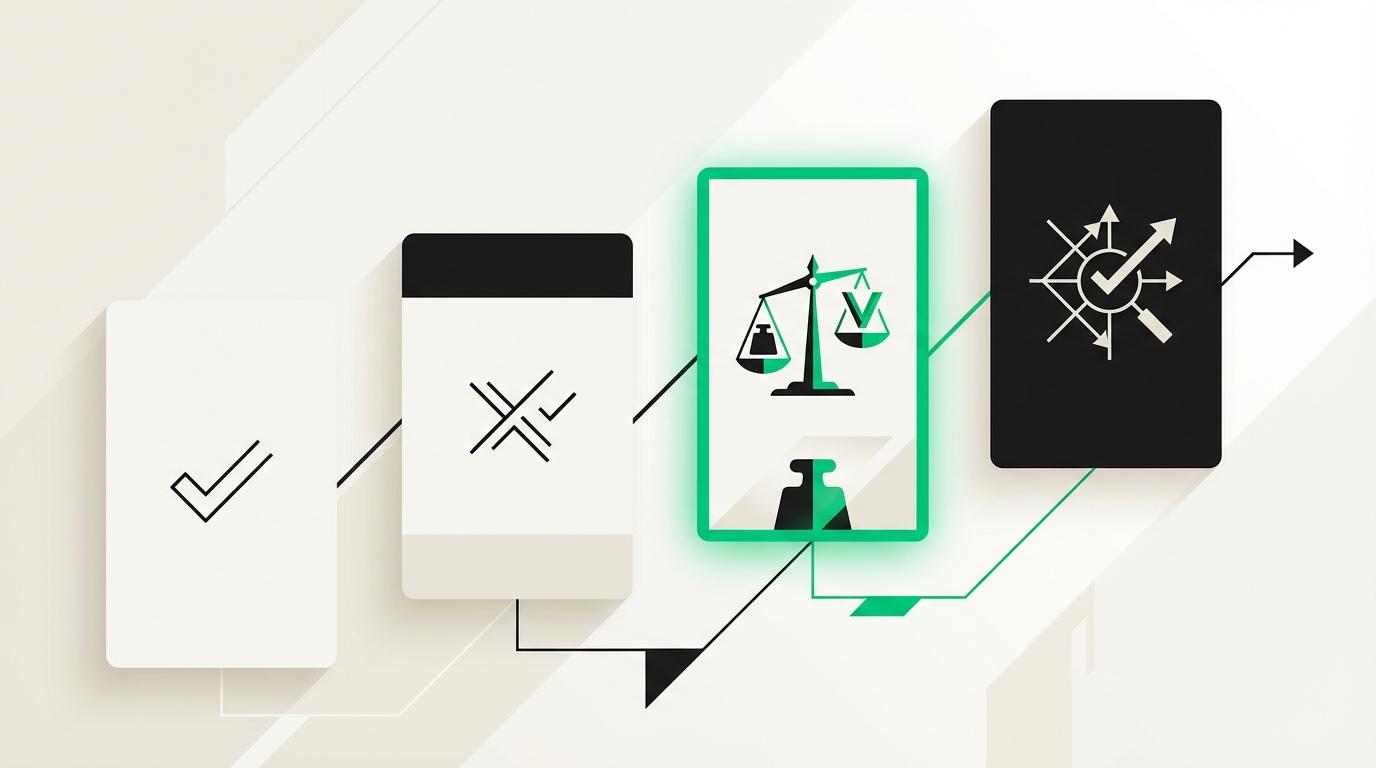
Under the SPA, the default is one vote per strata lot. But for mixed-use and commercial strata developments, a Schedule of Voting Rights (Form W) can be filed with the Land Title Office. Form W assigns votes proportional to each lot's unit entitlement, which means commercial lots often carry fractional or multiple votes:
- A small residential unit might have 1 vote
- A ground-floor retail space might have 3.7 votes
- A large commercial office might have 7.4 votes
For strata corporations with a Form W, every poll vote requires the chair or strata manager to:
- 1Look up each lot's voting entitlement
- 2Verify who is voting on behalf of each lot (owner vs. proxy)
- 3Calculate the weighted tally, not a simple count of hands, but a sum of fractional values
- 4Handle any challenges or disputes about the calculation
This is exactly the scenario the Vancouver strata council described. When their building needed to vote on the VRF (Variable Refrigerant Flow) HVAC replacement, a major capital expenditure, the poll vote dragged on because manually calculating weighted votes across commercial and residential lots is an exercise in spreadsheet chaos.
Digital voting software that preloads the Form W schedule and automatically applies weighted calculations eliminates this entirely. Owners vote. The system calculates. Results are instant and auditable.
> Key rule: Form W cannot be filed for exclusively residential strata developments (unless related to a plan amendment). Residential-only stratas default to one vote per lot. Mixed-use and commercial stratas are where weighted voting applies.
Quorum Requirements in BC
Quorum for a BC strata AGM is one-third (33.3%) of eligible voters, present in person or by proxy. If quorum isn't reached, the meeting is adjourned and reconvened, at which point the quorum drops to whatever voters are present.
This creates a pattern familiar to every strata council: the first attempt at an AGM fails for quorum, the meeting is rescheduled, and only the most persistent owners show up to make decisions for everyone.
Electronic voting directly addresses this by removing the barrier of physical attendance. When owners can vote from their phone in two minutes, quorum is a solvable problem instead of a recurring failure.
Ontario: The Condominium Act and Bill 91
Electronic Voting Is Now Permanent
Ontario's condominium landscape changed significantly with Bill 91 (the *Less Red Tape, Stronger Economy Act*), which took effect on October 1, 2023. Among its many provisions, Bill 91 made virtual meetings and electronic voting permanent features of condo governance.
Before Bill 91, electronic voting required a specific by-law. Now:
- Virtual or hybrid meetings are allowed unless the corporation's by-laws explicitly prohibit them
- Electronic voting: including advance voting, is permitted
- An owner who casts a vote in advance of a meeting is deemed present for quorum purposes
- Meeting notices must include instructions for electronic attendance
The By-Law Nuance
There's an important subtlety. While virtual meetings are now the default unless by-laws say otherwise, electronic voting by-laws are still beneficial for formalizing the process. The good news: electronic voting by-laws are easier to pass than traditional by-laws. They require only a majority of owners who attend the meeting, not a majority of all owners in the corporation.
For a 200-unit condo corporation where 60 owners attend the AGM, passing an e-voting by-law requires just 31 votes, not 101.
Ontario's Scale
Ontario is Canada's largest condominium market:
- 12,400+ condominium corporations
- 948,186+ residential units
- 47% of homes under construction in Ontario are condominiums
- 2,543 licensed property managers manage these corporations
The sheer volume means that even small improvements in voting efficiency, eliminating proxy form processing, automated quorum counting, instant results, compound into massive time and cost savings across the province.
| Ontario Condo Stat | Number |
|---|---|
| Condominium corporations | 12,400+ |
| Residential units | 948,186+ |
| Licensed property managers | 2,543 |
| Homes under construction that are condos | 47% |
Alberta: Bill 30 and the February 2026 Reforms
The Most Significant Changes in a Generation
Alberta's Bill 30 (*Service Alberta Statutes Amendment Act, 2024*) received Royal Assent on December 5, 2024, and its provisions take effect on February 15, 2026, making this guide immediately relevant for every Alberta condo board.
Bill 30 introduces sweeping reforms:
Simplified voting rules: Unless a unit-factor vote is specifically requested, decisions default to one vote per owner. This reduces the complexity of routine votes while preserving weighted voting for significant decisions where unit proportions matter.
New dispute resolution tribunal: Alberta is establishing a dedicated Condominium Dispute Resolution Tribunal, providing an alternative to expensive court proceedings for condo governance disputes. This is modeled after BC's Civil Resolution Tribunal, which has been handling strata disputes since 2016.
Enhanced board protections: Greater legal protections for condo board members acting in good faith, encouraging more owners to volunteer for governance roles.
Electronic meetings: Unless a corporation's by-laws prohibit it, electronic meetings and voting are permitted. Owners can attend by electronic means and vote by any electronic, telephone, or other method the corporation makes available.

What This Means for Alberta Boards
The February 2026 effective date creates an immediate opportunity. Boards can now:
- 1Adopt electronic voting without amending by-laws (unless existing by-laws explicitly prohibit it)
- 2Simplify routine votes using one-owner-one-vote as the default
- 3Use the new tribunal instead of courts for governance disputes
- 4Attract more board volunteers with enhanced legal protections
For boards that have been running paper-based AGMs with manual proxy counting and in-person-only attendance, Bill 30 is the green light to modernize.
The 7 Voting Challenges Facing Canadian Strata Councils
Regardless of province, Canadian strata corporations and condo boards face the same set of operational problems when running votes:
1. Quorum Failure
The problem: Strata meetings frequently fail to reach quorum on the first attempt. When owners must physically attend, even via Zoom, scheduling conflicts, apathy, and inconvenience reduce participation below the 25–50% threshold required.
The cost: Failed quorum means adjourned meetings, rescheduled dates, additional notices, and decisions delayed by weeks or months. For urgent matters like emergency assessments or infrastructure repairs, this delay has real financial consequences.
2. Proxy Abuse
The problem: Proxy farming, where one individual collects large numbers of proxy appointments, often from absentee or overseas owners, allows a small minority to control outcomes. The BC Law Institute has specifically studied whether the Strata Property Act should limit the number of proxy appointments a single person can hold.
The cost: Governance decisions that don't represent the actual will of owners. Contested results. Damaged trust in the council.
3. Manual Weighted Vote Calculation
The problem: For strata corporations with a Form W or unit-factor voting, every poll vote requires manually looking up each lot's voting entitlement and calculating weighted totals. With fractional values like 0.75, 1.9, and 7.4, a simple majority calculation becomes an arithmetic challenge.
The cost: Long meetings. Disputed tallies. The reluctance to call poll votes even when they're appropriate, meaning decisions that should use weighted voting are decided by show of hands instead.
4. Paper Ballot Logistics
The problem: Printing ballots, distributing them, collecting them, counting them, and storing them. For a 200-unit building, this is an afternoon of manual work. For a 500-unit commercial strata, it's a logistics operation.
The cost: Time, printing costs, human error in counting, and records that are difficult to audit or retain.
5. Verification Gaps
The problem: Who is actually voting? Is the person raising their hand the registered owner of that lot, or a tenant, a family member, or someone holding an improperly completed proxy? Traditional methods have no reliable way to verify voter identity at scale.
The cost: Challenged election results. Votes that don't hold up under scrutiny. Legal exposure for the council.
6. Accessibility Barriers
The problem: Owners who are elderly, disabled, traveling, or living elsewhere cannot easily participate in physical meetings. Even virtual meetings via Zoom require being available at a specific time.
The cost: Governance decisions made by whoever can show up, not by the full ownership. Disproportionate exclusion of owners who most need representation.
This one gets heated
Should community boards be required to use independent election administrators?
7. Record Retention and Auditability
The problem: How do you prove how a vote went? Paper tally sheets, hand-written proxy forms, and informal vote counts are difficult to preserve, hard to audit, and nearly impossible to defend in a dispute proceeding.
The cost: Vulnerability to challenges at the Civil Resolution Tribunal (BC), the Condominium Authority Tribunal (Ontario), or the new Alberta Condominium Dispute Resolution Tribunal. When records are poor, the council loses.

How Digital Voting Solves Each Challenge
The table below maps each operational problem to its digital solution, not in theory, but in how verified voting software works in practice:
| Challenge | Paper/Manual Process | Digital Voting Solution |
|---|---|---|
| Quorum failure | Reschedule meeting, re-send notices | Owners vote from any device, anytime during the voting window, participation rates increase 3–5x |
| Proxy abuse | Accept proxy forms on trust | Each owner votes directly with identity verification, no proxies needed |
| Weighted vote calculation | Manual lookup of Form W values, arithmetic | Voting entitlements preloaded per lot, system calculates weighted totals instantly |
| Paper ballot logistics | Print, distribute, collect, count | Digital ballots sent to verified owners, results tabulated automatically |
| Verification gaps | Rely on sign-in sheets | Government ID verification or phone/email authentication per owner |
| Accessibility barriers | Attend in person or by Zoom at a fixed time | Vote from phone, tablet, or computer during a multi-day voting window |
| Record retention | Paper files, manual archives | Cryptographic audit trail, tamper-evident, digitally timestamped, tribunal-ready |
Weighted Voting in Practice
For the commercial strata use case, the exact scenario described at the top of this guide, here's how digital voting handles Form W weighted votes:
Setup (one time):
- 1Upload the Form W schedule: each lot's voting entitlement is loaded into the system
- 2Map each lot to its registered owner (from the strata roll)
- 3Configure the voting threshold (simple majority, 3/4 vote, or unanimous based on the resolution type)
Each vote:
- 1Owners receive a secure ballot on their verified device
- 2They cast their vote, the system knows their lot's entitlement
- 3Results calculate automatically: Lot 101 (1.0 vote) + Lot 201 (3.7 votes) + Lot 301 (0.75 votes) = weighted totals
- 4The chair announces results immediately, with a full audit log
No spreadsheets. No disputes. No lengthy poll votes.
Province-by-Province Compliance Checklist
Use this checklist to confirm your strata or condo corporation is set up for legally compliant digital voting:
British Columbia
- [ ] Confirm strata council has chosen electronic or hybrid meeting format
- [ ] Include electronic participation instructions in meeting notice (minimum 14 days before AGM)
- [ ] If your strata has a Form W, ensure weighted voting entitlements are configured in your voting system
- [ ] Confirm the voting platform supports secret ballot for council elections
- [ ] Verify proxy handling complies with SPA Section 56 requirements
- [ ] Ensure vote results are recorded in meeting minutes per SPA Section 45
Ontario
- [ ] Check whether existing by-laws prohibit virtual meetings (Bill 91 default: allowed unless prohibited)
- [ ] Consider passing an electronic voting by-law to formalize the process
- [ ] Ensure advance votes are counted for quorum purposes
- [ ] Include electronic attendance instructions in meeting notice
- [ ] Confirm voting records are retained for minimum 90 days
- [ ] Verify platform compliance with Condominium Act, 1998 record-keeping requirements
Alberta
- [ ] Confirm by-laws do not explicitly prohibit electronic meetings (Bill 30 effective Feb 15, 2026)
- [ ] Decide whether to use one-owner-one-vote (new default) or unit-factor voting for each resolution
- [ ] Ensure voting platform supports both voting modes
- [ ] Update meeting notice templates to include electronic participation instructions
- [ ] Brief board members on new dispute resolution tribunal process
- [ ] Review and update by-laws to align with Bill 30 provisions
Canadian Strata Voting vs. American HOA Voting
If you've looked at voting solutions before, you may have noticed that most are built for American HOAs. Here's why the Canadian market has different needs:
| Feature | American HOAs | Canadian Strata/Condo |
|---|---|---|
| Terminology | HOA, CC&Rs, bylaws | Strata corporation, condo corp, strata lots |
| Governing law | State statutes (50 different) | Provincial acts (13 different) |
| Weighted voting | Rare, usually one vote per lot | Common in commercial/mixed-use (Form W in BC) |
| Electronic voting | Varies by state, many require specific authorization | BC: no bylaw needed. Ontario: by-law recommended. Alberta: default unless prohibited |
| Proxy culture | Widely used | Widely used, and widely abused |
| Dispute resolution | Courts only (expensive) | Dedicated tribunals (BC CRT, Ontario CAT, Alberta CDRT) |
| Inspector of Elections | Required in some states (e.g., California) | Not typically required, strata council or manager runs the vote |
| Bilingual requirements | None (except Puerto Rico) | Federal bilingual obligations; Quebec requires French |
A voting platform built for the Canadian market must handle weighted voting natively, understand provincial compliance requirements, and integrate with the strata management workflows that Canadian property managers actually use.
What to Look for in a Canadian Strata Voting Platform
Not all digital voting tools are created equal. For Canadian strata corporations, here's what matters:
Must-Have Features
Weighted voting support: The system must allow administrators to upload a voting schedule (Form W or equivalent) and automatically calculate weighted results. This is non-negotiable for commercial and mixed-use strata.
Province-aware compliance: Voting thresholds differ by resolution type and province. A 3/4 vote resolution in BC requires 75% of votes cast at a properly convened meeting. The platform should enforce the correct threshold automatically.
Identity verification: At minimum, email or phone verification to confirm the voter is the registered owner of that lot. For high-stakes votes (special levies, significant bylaws), government ID verification provides the strongest legal defensibility.
Multi-day voting windows: Unlike a show of hands that happens at a single moment, digital voting should allow a window of several days. This is what drives the 3–5x increase in participation: owners vote when it's convenient, not when the meeting happens to be scheduled.
Audit trail: Every vote cryptographically timestamped and tamper-evident. When a dispute goes to the CRT, CAT, or the new Alberta tribunal, the audit trail is your evidence.
Nice-to-Have Features
- Automatic quorum calculation as votes come in
- Real-time results for the chair/strata manager
- Candidate statement pages for council elections
- Multi-language ballot support (English/French at minimum)
- Integration with strata management software
- PDF results packages for meeting minutes
The Market Nobody Is Serving
Here are the numbers:
| Province | Corporations | Average Units | Total Units |
|---|---|---|---|
| British Columbia | 33,955 | ~23 | 777,919 |
| Ontario | 12,400+ | ~76 | 948,186+ |
| Alberta | 10,000+ (est.) | ~17 | 170,000+ (est.) |
| Rest of Canada | 5,000+ (est.) | Varies | 200,000+ (est.) |
| Total | 61,000+ | 2,000,000+ |
Over 61,000 corporations governing more than 2 million units, every one of them legally required to hold annual general meetings, elect councils or boards, and vote on budgets, bylaws, and special assessments.
And virtually all of them are still doing it by show of hands.
Getting Started
If you're a strata council member, condo board director, or property manager who has been waiting for voting software that handles Canadian requirements, weighted voting, provincial compliance, identity verification, and instant auditable results, the wait is over.
vote.direct was built to provide roster-controlled browser ballots and exportable platform records at a published price. The applicable provincial statute, bylaws, meeting procedure, chair, and proxy rules still determine validity.
For strata councils and condo boards:
- Set up your first vote and send yourself a free test ballot before anything goes out
- Upload your Form W voting schedule (or use one-lot-one-vote)
- Owners vote from their phone, no app download required
- Results are instant, weighted calculations are automatic, and the audit trail is permanent
For property managers:
- Run votes across your entire portfolio from one dashboard
- Eliminate proxy form processing and manual ballot counting
- Generate tribunal-ready results packages automatically
- Reduce AGM administration time by 80%
FAQ
Q: Do I need to change my strata bylaws to use electronic voting in BC?
No. Since November 24, 2022, BC strata corporations can hold electronic or hybrid meetings without any bylaw amendment. The strata council simply chooses the meeting format and includes electronic participation instructions in the notice.
Q: Does electronic voting count for quorum in Ontario?
Yes. Under Bill 91 (effective October 1, 2023), an owner who casts a vote in advance of a meeting is deemed present for quorum purposes. This means electronic advance voting directly helps you reach quorum.
Q: When do Alberta's Bill 30 voting reforms take effect?
February 15, 2026. The new rules simplify voting (one vote per owner as default), permit electronic meetings unless by-laws explicitly prohibit them, and establish a new Condominium Dispute Resolution Tribunal.
Q: How does weighted voting work with digital voting software?
You upload your Form W (Schedule of Voting Rights) or equivalent voting schedule during setup. The system assigns each lot its voting entitlement. When owners cast their votes, the system automatically calculates weighted totals, so a lot with 3.7 votes contributes exactly 3.7 to the tally. No manual arithmetic required.
Q: Can digital voting produce useful evidence for a Canadian tribunal proceeding?
Yes, when implemented correctly. The Civil Resolution Tribunal (BC), Condominium Authority Tribunal (Ontario), and the new Alberta Condominium Dispute Resolution Tribunal all accept digital records as evidence. A cryptographic audit trail, where every vote is timestamped and tamper-evident, provides stronger evidence than paper tallies or show-of-hands counts.
Q: What about bilingual requirements?
Federal bilingual obligations apply to certain contexts, and Quebec condominiums (syndicates of co-ownership) require French-language documents. Vote.direct supports bilingual ballots to meet these requirements where applicable.
Q: Can owners still vote by proxy if we use digital voting?
Yes, but they probably won't need to. The main reason owners use proxies is that they can't attend the meeting. Digital voting with a multi-day window removes that barrier. In practice, proxy usage drops by 80–90% when owners can vote directly from their phone.
Q: What does digital voting cost for a strata corporation?
Flat-rate pricing based on voter count. A 100-unit strata pays $9.99 per election (51–100 voters, email + SMS included), less than the cost of printing and mailing paper ballots.
Sources:
- 1BC Land Title and Survey Authority: 33,955 filed strata plans and 777,919 active strata lots (February 2025)
- 2British Columbia Strata Property Act, SBC 1998, c. 43
- 3Province of British Columbia: Changes to strata legislation (electronic meetings, November 2022)
- 4BC Land Title Practice Manual: Form W: Schedule of Voting Rights
- 5Condominium Authority of Ontario: 12,400+ condo corporations, 948,186+ residential units
- 6Ontario Bill 91, Less Red Tape, Stronger Economy Act, 2023 (effective October 1, 2023)
- 7Ontario Condominium Act, 1998, S.O. 1998, c. 19
- 8Alberta Bill 30, Service Alberta Statutes Amendment Act, 2024 (Royal Assent December 5, 2024; effective February 15, 2026)
- 9Alberta Condominium Property Act, RSA 2000, c. C-22
- 10BC Law Institute: Spotlight on strata governance: proxy appointment limits
- 11Condominium Authority of Ontario: CAO By the Numbers
This article is general information, not legal advice. We recommend you do your own research and confirm anything you plan to act on. Where this article states law, the section is cited so you can read the primary source yourself rather than take our word for it. That is what the citations are for. Election requirements also turn on your own governing documents, which we have not seen, and statutes are amended. For advice about your community, consult a qualified attorney licensed in your state.
We work hard to verify every citation against the primary source, but laws change and errors happen. If you spot an inaccuracy, email support@vote.direct and we will correct it. See our editorial standards for how these pages are researched and checked.