
The Election Nobody Sees
Every year, thousands of organizations across North America hold elections that most people never think about. Not government elections: organizational elections. Board votes, officer elections, bylaw amendments, and budget approvals that affect millions of members and billions of dollars.
These elections happen in credit unions, agricultural cooperatives, labor unions, professional associations, and strata corporations. They're often legally mandated. They involve real governance decisions. And the vast majority still rely on paper ballots, show-of-hands votes, or unverified email polls.
The organizations that have modernized their election processes have discovered something surprising: verified digital voting isn't just cheaper: it fundamentally changes participation, trust, and governance quality.
Credit Unions: 143.8 Million Members Deserve Better
The United States has 4, 370 federally insured credit unions serving 143.8 million members as of mid - 2025. Every one of these institutions holds annual board elections. Directors serve three - year terms, with the average board comprising seven members, meaning most credit unions elect two to three directors every year.

The credit union model is built on democratic governance: one member, one vote, regardless of account balance. This principle makes verified identity particularly important: without it, the democratic foundation is theoretical rather than actual.
Traditional credit union elections suffer from:
- Abysmally low participation: when voting requires physical attendance at an annual meeting, turnout rarely exceeds 5 - 10 % of membership
- Geographic barriers: members who've moved but kept their accounts can't easily participate
- Cost burden: printing ballots, renting venues, and processing mail -in votes strains already tight budgets
For a credit union with 10,000 eligible members, vote.direct requires an enterprise quote because the election is above the self-serve cap. Assisted ID checks are priced per completed check only when arranged, but the election cannot be budgeted by assuming a 20–30% turnout. Use the full eligible roster, the selected verification workflow, required notices, teller or observer procedures, and record retention when requesting a quote.
Agricultural and Worker Cooperatives: 65,000 Organizations
The United States has approximately 65,000 cooperatives across agriculture, housing, consumer, and worker - owned sectors. Like credit unions, cooperatives are democratically governed: members elect boards, approve budgets, and vote on major decisions.
The cooperative movement is experiencing a renaissance. Worker cooperatives in particular have grown significantly, driven by interest in alternative ownership models. But governance infrastructure hasn't kept pace. Many cooperatives still run elections with the same paper-based processes they used decades ago.
| Cooperative Type | Estimated Count | Election Frequency |
|---|---|---|
| Agricultural co - ops | 2,000 + | Annual |
| Housing co - ops | 7,000 + | Annual |
| Consumer / retail co - ops | 3,000 + | Annual |
| Worker co - ops | 1,000 + | Annual / Semi - annual |
| Electric co - ops | 900 + | Annual |
| Total | 65,000 + | Varies |
For cooperatives, verified voting solves a unique problem: proving that voters are actual members.Many cooperatives have experienced disputes where former members, non - member residents, or people with unclear membership status participated in votes. Government ID verification combined with membership rolls eliminates this ambiguity.
Labor Unions: A Market That Doubled
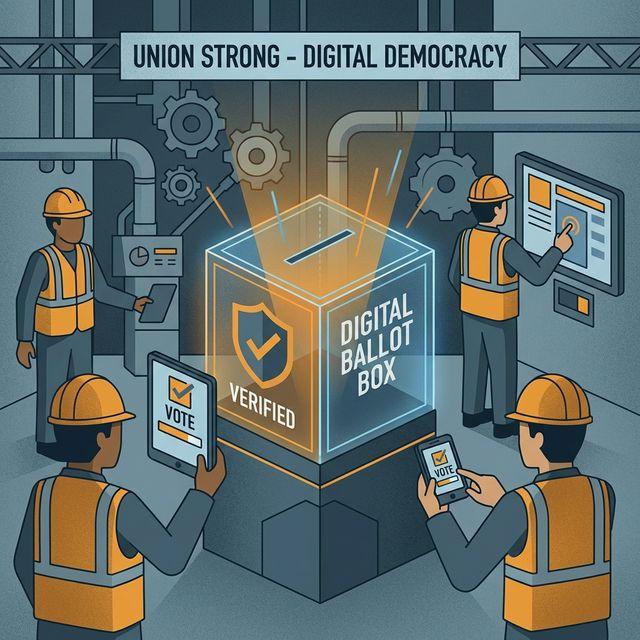
Union election activity has more than doubled since 2021, with over 2, 100 NLRB - supervised elections per year. The Labor - Management Reporting and Disclosure Act(LMRDA) imposes strict requirements on how unions conduct officer elections, and the Department of Labor actively investigates violations.
The stakes in union elections are uniquely high. A flawed election can result in:
- Federal oversight: the DOL can order supervised re - elections
- Court - ordered re-runs: with all associated costs borne by the union
- Loss of member confidence: undermining bargaining power and solidarity
- Legal liability: for election officials who failed to follow LMRDA requirements
Traditional union elections face the same challenges as other organizational elections, geographic dispersion, low turnout, high costs, but with the added pressure of federal regulatory scrutiny. ID-verified digital voting addresses each of these while producing the auditable records that LMRDA compliance demands.
Professional Associations: $40 Billion in Collective Revenue
The United States has approximately 60, 500 professional and trade associations with collective annual revenue exceeding $40 billion.These organizations, from the American Medical Association to local bar associations to industry trade groups, elect boards, approve policy positions, and make decisions that affect entire professions.
Professional association elections often have the lowest participation rates of any organizational type. When members must attend a conference or annual meeting to vote, participation is limited to whoever can afford the travel and time. Digital verified voting opens participation to the full membership.
British Columbia Strata Corporations: A Ready - Made Market
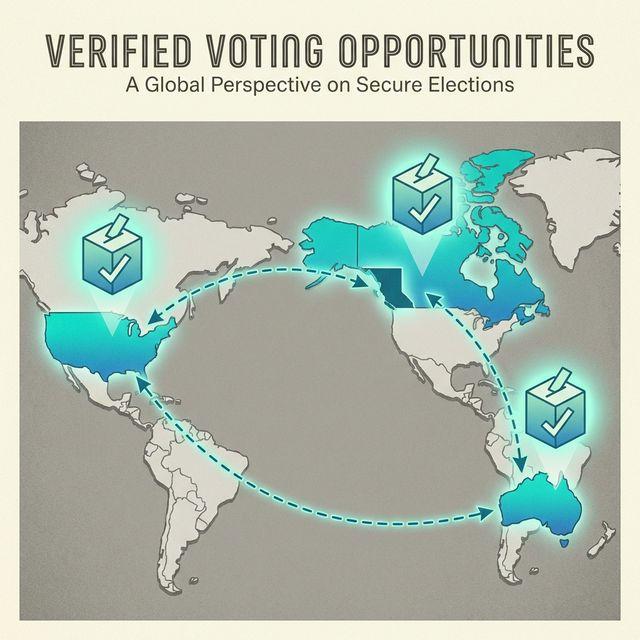
Across the border, British Columbia has approximately 29,000 strata corporations (the Canadian equivalent of condominiums). Under BC's Strata Property Act, these organizations are legally required to hold annual general meetings and conduct elections for strata council.
The BC strata market is particularly promising because:
- Elections are legally mandated: there's no debate about whether to hold them
- The legal framework is well - defined: compliance requirements are clear
- Management companies are centralized: a few major firms manage thousands of strata properties
- No major competitor offers identity-verified digital voting in this market
At just 2 % market penetration with an average of $500 per strata corporation per year, BC stratas alone represent $290,000 in annual revenue, and that's before considering the larger markets in Ontario and Alberta.
Australia: 340,000 Body Corporates
Australia's 340,000 body corporates (equivalent to HOAs) represent an even larger opportunity. Australian property law varies by state, but all body corporates are required to hold annual elections and pass resolutions for major decisions.
At 2 % market penetration with $500 per organization: $3.4 million in annual revenue.
The Common Thread
Every organization in this article shares three characteristics:
- 1They are legally required to hold elections: this isn't optional governance, it's mandated
- 2They have existing budgets for election administration: whether spent on venues, printing, mailing, or inspector services
- 3They suffer from the same vulnerabilities: unverified voters, disputed results, low participation, and expensive legal challenges
The total addressable market across these sectors is enormous:
| Market | Organizations | Revenue / Customer | Market Size |
|---|---|---|---|
| US HOAs | 373,000 | $500 - $2,000 / yr | $186M - $746M |
| Credit unions | 4, 370 | $1,000 - $5,000 / yr | $4.4M - $21.9M |
| Cooperatives | 65,000 | $100 - $5,000 / yr | $6.5M - $325M |
| Professional associations | 60, 500 | $200 - $50,000 / yr | $12.1M - $3B |
| Union elections | 2, 100 + /yr | $1,000 - $50,000/yr | $2.1M - $105M |
| BC strata corporations | 29,000 | $500 - $25,000 / yr | $14.5M - $725M |
Why Now
Three converging trends make this the right moment for verified digital voting across all of these sectors:
Identity verification is now affordable. A document-and-selfie check is priced per checked voter ($3.00 on vote.direct), and it applies only to the voters an organization chooses to check, so it can be used on one contested seat without being bought for every ballot the organization ever runs. That makes verified voting economically viable for organizations of any size.
Remote participation is expected. Post - 2020, members of every type of organization expect the option to participate remotely. Organizations that require physical attendance for voting are experiencing declining participation and growing complaints.
Reviewable records matter. A roster, participation record, tabulation, and hash-linked event export can make platform activity easier to review. They do not establish that every organization followed its governing law and documents.
Atvote.direct, we built verified voting for HOAs. But the platform works equally well for any organization that needs trusted, auditable election results. Government ID verification, cryptographic audit trails, and instant results, at a price point that works for a 50-member cooperative or a 50,000-member credit union.
This article is general information, not legal advice. We recommend you do your own research and confirm anything you plan to act on. Where this article states law, the section is cited so you can read the primary source yourself rather than take our word for it. That is what the citations are for. Election requirements also turn on your own governing documents, which we have not seen, and statutes are amended. For advice about your community, consult a qualified attorney licensed in your state.
We work hard to verify every citation against the primary source, but laws change and errors happen. If you spot an inaccuracy, email support@vote.direct and we will correct it. See our editorial standards for how these pages are researched and checked.