A Crisis Hiding in Plain Sight
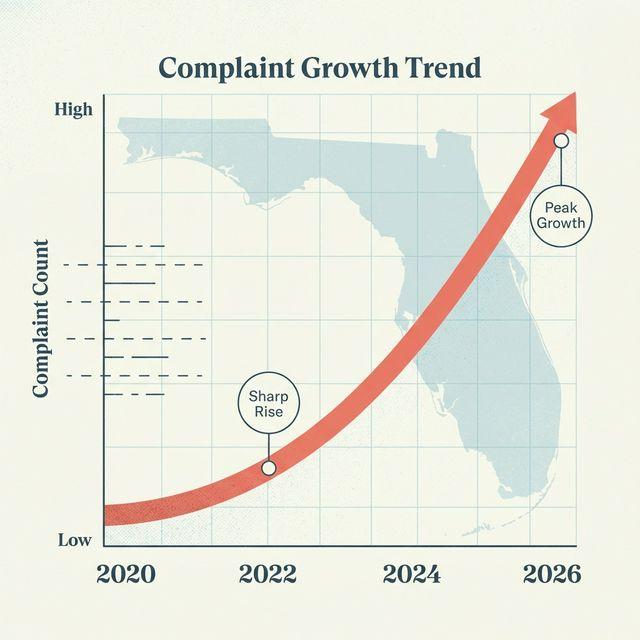
Florida is ground zero for the HOA election crisis in America. In a single year, the state's Department of Business and Professional Regulation (DBPR) received 1,908 condominium election fraud complaints, an average of more than five new complaints every single day.
The cited counts work out to roughly one investigator for every 76,000 units and 58 complaints per investigator per year. That ratio may indicate capacity pressure, but it does not by itself establish how long a complaint will remain unresolved.
This isn't a bureaucratic inconvenience. It's a governance crisis affecting millions of Floridians.
Why Florida Is the Epicenter
Several factors converge to make Florida's HOA election landscape uniquely volatile:
Massive scale. Florida has the highest concentration of community associations in the nation. With millions of residents in HOAs and condominiums, the sheer volume of elections conducted annually creates proportional opportunity for disputes.
Aging population. Many Florida communities are retirement destinations where residents have the time, motivation, and resources to pursue election challenges. Board service is taken seriously, and losing candidates are more likely to pursue legal remedies.
High property values. When a community's decisions affect property values in the hundreds of thousands, the stakes of board elections become financial, not just procedural. A board that approves a special assessment or rejects a maintenance plan can impact every homeowner's net worth.
Complex legal framework. Florida's election requirements are among the most detailed in the nation, creating more procedural requirements and therefore more opportunities for procedural violations.
The Anatomy of a Florida Election Dispute
Florida arbitration decisions reveal a consistent pattern. Election challenges don't typically allege grand conspiracies: they allege cumulative procedural failures that individually seem minor but collectively undermine the election's integrity:
- Missing inner envelopes: ballots received without proper double-envelope procedures
- Ballot alterations allowed: voters permitted to change ballots after submission
- No signature verification: returned ballots accepted without verifying the voter's signature
- Ballots accepted after polls close: late - arriving ballots counted in the results
- Improper proxy handling: particularly in HOA elections where proxies are permitted
Florida courts and arbitrators have established that when multiple violations accumulate, election results can be invalidated entirely, requiring a new election at the association's expense.
The Legal Labyrinth
Florida's statutory framework for HOA and condo elections is extensive:
For Condominiums(Chapter 718):
- Florida Statute 718.1255 governs election dispute arbitration
- Proxies are prohibited in condominium board elections
- DBPR has expanded authority as of 2024 to investigate election complaints
For HOAs(Chapter 720):
- Florida Statute 720.306(9)(a) requires challenges within 60 days of announced results
- Florida Statute 720.311 provides for binding arbitration
- The prevailing party may recover reasonable attorney fees and costs under 720.305
The 60 - day challenge window is particularly significant. It creates urgency for dissatisfied homeowners to act immediately, often before emotions have cooled or the full facts are known. This compressed timeline drives hasty litigation that might otherwise be resolved through communication.
| Florida Election Legal Pathway | Timeline | Typical Cost |
|---|---|---|
| DBPR complaint | 6 - 18 months to investigate | $0 filing fee |
| Binding arbitration | 3 - 6 months | $5,000 - $25,000 |
| Circuit court lawsuit | 12 - 24 months | $50,000 - $300,000 |
| Appeal | Additional 12 - 18 months | $25,000 - $100,000 |
The Hammocks: A Case Study in What Goes Wrong
The * Hammocks HOA * in Miami provides the most dramatic example of Florida's election governance failures. As South Florida's largest HOA with over 18,000 residents, the community experienced a perfect storm of governance breakdown:
- Four former board members and one spouse were charged with misappropriating $2 million
- Investigation revealed total fraud exceeding $3 million
- The scheme included canceling in -person voting mid - election to manipulate results
- The community ultimately settled for the full $2 million D&O insurance policy limit
The Hammocks case illustrates how election manipulation isn't just about counting ballots: it's about the systems and controls that either prevent or enable broader governance fraud.
The DBPR's Expanded Powers
In 2024, Florida expanded the DBPR's authority to investigate HOA complaints in several areas including elections, voting requirements, recalls, and electronic voting procedures. This expansion acknowledges the severity of the problem but creates new compliance requirements for boards:
- Associations must now respond to DBPR investigations or face penalties
- Election records must be preserved for investigation access
- Electronic voting systems must meet specific requirements
For boards, this means that running an election without proper documentation isn't just a litigation risk: it's a potential regulatory violation.
What a Better-Documented Florida Election Looks Like
No system makes a Florida election fraud-proof or dispute-free. A documented procedure can reduce avoidable ambiguity.
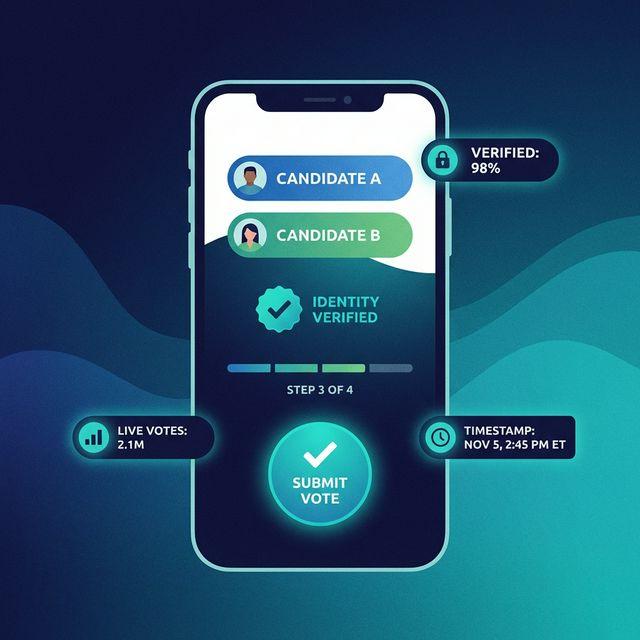
Eligibility and optional identity checks: Start with the association’s voting-interest record and credential controls. An assisted government-ID and selfie check can add evidence about the person presenting the document, but it does not prove that the roster is correct or that the person holds the voting interest.
Timestamped digital records: These record when the platform received events. They do not establish that every required notice, consent, meeting, or offline step occurred.
Hash-linked audit exports: Recomputing the chain can reveal later changes to the exported event sequence. This is tamper-evidence, not proof that no ballot or outside record was ever mishandled.
At [vote.direct](https://vote.direct), the current election fee for 200 invited voters is $19.99 with email or SMS verification included. Assisted government-ID checks for all 200 voters bring the software-and-check total to $619.99 when that workflow is arranged. Neither configuration is challenge-proof: Florida’s statutory resolution, notice, consent, authentication, and record requirements remain the association’s responsibility.
The Path Forward
Florida associations should begin with the current official statute and their governing documents. For HOAs using Internet voting, Florida Statute §720.317 lists resolution, consent, authentication, system-testing, secrecy, and record requirements. Section 720.306 addresses meetings, quorum, elections, and related procedures. Condominium law is different.
Use digital tools where they fit the approved procedure, retain the complete record, and involve Florida association counsel for the exact vote.
Every rule on one page: Florida HOA voting rules, with quorum, notice, proxy and electronic voting at a glance.
This article is general information, not legal advice. We recommend you do your own research and confirm anything you plan to act on. Where this article states law, the section is cited so you can read the primary source yourself rather than take our word for it. That is what the citations are for. Election requirements also turn on your own governing documents, which we have not seen, and statutes are amended. For advice about your community, consult a qualified attorney licensed in your state.
We work hard to verify every citation against the primary source, but laws change and errors happen. If you spot an inaccuracy, email support@vote.direct and we will correct it. See our editorial standards for how these pages are researched and checked.