The Votes That Cost More Than a House
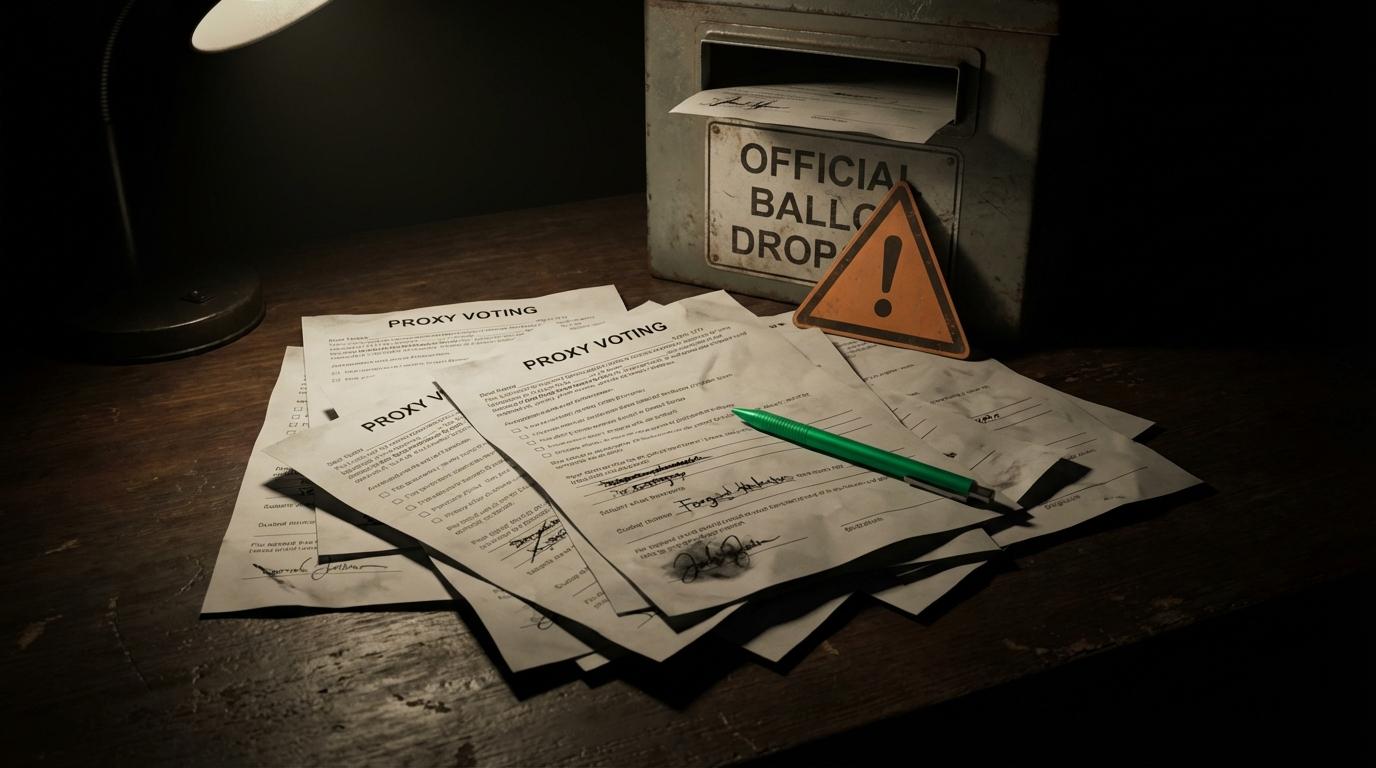
At The Plantation of Carrollwood, one of Hillsborough County's largest deed-restricted communities, with more than 1,800 homes, two election disputes between 2019 and 2024 left the HOA $291,000 over budget on "legal special matters," [according to a Tampa Bay 28 I-Team investigation](https://www.tampabay28.com/news/local-news/i-team-investigates/lengthy-disputes-over-hoa-board-elections-contribute-to-360-000-in-special-legal-fund-expenses). One lawsuit alone generated 315 docket entries over three years, nearly twice as many court events as the Terri Schiavo guardianship case, over a single allegedly fraudulent proxy ballot that wouldn't have changed the outcome. In a separate reported case, a D&O insurance case study documented election dispute defense costs reaching $660,000 when the original board refused to leave after a court-ordered re-run election.
These aren't edge cases. They're the predictable result of running elections without audit trails, identity verification, or documented procedures. And they can happen in any state.
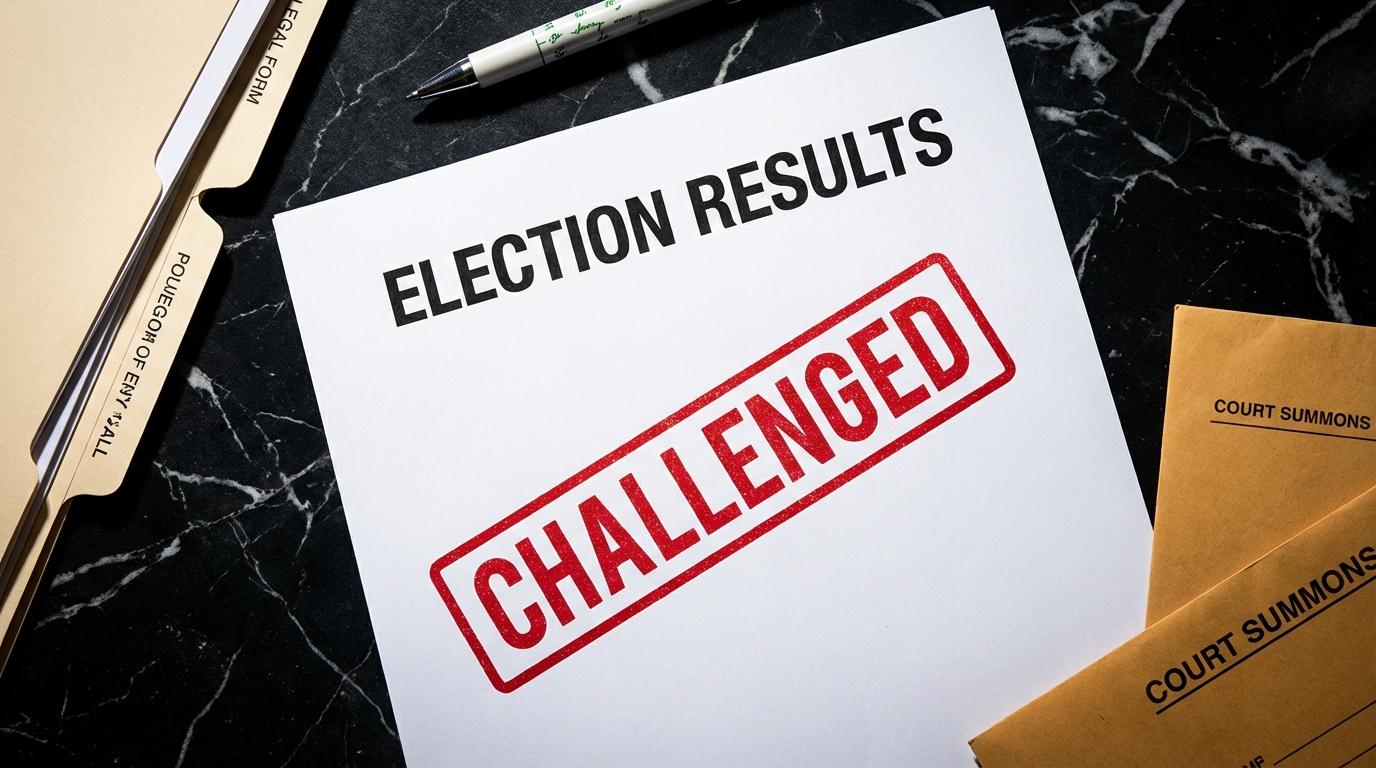
This article walks through exactly what happens when an HOA election is challenged, the legal process, the costs, the timelines, and what you can do to prevent it.
This article is for informational purposes only and does not constitute legal advice. HOA election requirements vary by state, governing documents, and local regulations. Consult a qualified attorney for advice specific to your community.
The Numbers Behind Election Disputes
- Average defense cost for any HOA lawsuit: $50,000 to $75,000 before settlement discussions even begin
- Florida alone received 1, 908 condominium election fraud complaints in a single year, with only 33 investigators handling complaints for approximately 2.5 million condominiums
- One Florida HOA generated 315 docket entries over three years in a lawsuit triggered by a single allegedly fraudulent proxy ballot that wouldn't have changed the outcome
- A D&O insurance case study documented election dispute defense costs reaching $660,000 when the original board refused to leave after a re-run election
- HOA litigation typically spans 1 to 3 years from filing to resolution
These costs are borne by the association, which means every homeowner in the community pays through special assessments or depleted reserves.
What Triggers a Challenge?
Election challenges follow predictable patterns. The most common grounds include:
Procedural Failures
- Inadequate notice: missing the required advance notice deadline(90 days in California, 60 days for Florida condos, 14 days for Florida HOAs)
- Improper ballots: failing to use the required double-envelope system, not listing all eligible candidates
- No inspector of elections: in California, this is a mandatory requirement under Civil Code §5110
- Wrong proxy rules applied: most commonly, Florida condominiums accepting proxy votes in board elections, which is prohibited by §718.112(2)(b)
Identity and Access Issues
- Unverified voters: no confirmation that the person who submitted the ballot was actually the unit owner
- Denied ballots: eligible members who never received a ballot or were told they couldn't vote
- Duplicate voting: the same owner voting twice, or votes cast on behalf of owners who didn't authorize them
Counting Disputes
- Chain of custody gaps: who had access to ballots between collection and counting
- Counting errors: misread ballots, miscounts, or mathematical mistakes in tabulation
Bad Faith Actions
- Ballot box stuffing: additional ballots added by someone with physical access
- Proxy manipulation: collecting blank proxies or proxies from uninformed members
In one notorious Miami case, a community with over 18,000 residents saw voting participation reach 115 %, more votes cast than owners existed. Four former board members were ultimately charged in a scheme involving $3 million in misappropriated funds.
The Challenge Process: State by State
How a challenge plays out depends entirely on where you live.
California: 1 Year, Civil Court
Deadline: 1 year from when the cause of action accrues(Civil Code §5145)
Where to file: Superior Court or Small Claims Court
What the challenger can get:
- Declaratory relief
- Equitable relief(court orders a new election)
- Civil penalties up to $500 per violation
- Attorney's fees and court costs
The key rule: A court shall void the election results unless the association proves the noncompliance didn't affect the outcome (Civil Code §5145). The burden is on the HOA.
California allows challenges in Small Claims Court. A homeowner can challenge a procedurally flawed election without hiring a lawyer.
Florida: 60 Days, DBPR or Court
Deadline: 60 days after results are announced(§720.306 for HOAs; §718.112 for condos)
Where to file: DBPR arbitration($200 filing fee) or Circuit Court
Criminal dimension(post - HB 1021): If the challenge reveals forged ballots or destroyed records, the matter can be referred for criminal prosecution, with penalties up to a third - degree felony (5 years in prison).
For condominiums, DBPR can subpoena records, compel testimony, audit bank accounts, and levy fines up to $5,000 per violation (§718.501).
Texas: 15 Days for Recount
Deadline: 15 days for a recount request via verified mail(Property Code §209.0057(b))
Texas has the shortest window, just 15 days for a recount. Each candidate may name one observer during vote counting.
Nevada: Graduated Enforcement with Felony Penalties
Deadline: 1 year from discovery
Process: Ombudsman's Office → Real Estate Division → Court
Nevada has the most structured escalation path. The Real Estate Division can impose fines and remove board members from office.Fraudulently altering an election outcome is a Category D felony (1 - 4 years in prison) under NRS 116.
How Much Does a Challenge Actually Cost?
For the Association(Defending)
| Phase | Typical Cost |
|---|---|
| Attorney retainer | $5,000 - $15,000 |
| Discovery and depositions | $10,000 - $40,000 |
| Expert witnesses | $5,000 - $20,000 |
| Trial preparation | $15,000 - $50,000 |
| Trial(if it goes that far) | $20,000 - $100,000 + |
| Total range | $50,000 - $300,000 + |
What keeps you up at night?
What concerns you most about your organization's current voting process?
The Hidden Cost: D&O Insurance
Most board members assume their Directors & Officers insurance covers election disputes. According to insurance industry analysis, many standard D&O policies contain specific exclusions for election disputes.After one claim, the policy may be cancelled entirely.
Average HOA D&O premium: $1,000 to $2,000 / year.Average election dispute defense cost: $50,000 +.The math is obvious.
The Timeline of a Typical Challenge
| Month | What Happens |
|---|---|
| Month 0 | Election held. Results announced. |
| Month 1 | Challenger consults attorney. Pre - suit notice sent. |
| Month 2 - 3 | Complaint filed. Association retains defense counsel. |
| Month 4 - 8 | Discovery phase: document production, depositions. |
| Month 9 - 12 | Mediation attempted. |
| Month 12 - 18 | Pre - trial motions. Summary judgment briefing. |
| Month 18 - 24 | Trial(if no settlement). |
| Month 24 - 36 | Appeals(if either side contests). |
Throughout this entire period, the board operates under a cloud of legitimacy. Decisions made by directors whose election is being challenged can themselves be questioned.
How to Reduce Avoidable Challenge Risk
1. Follow Your State's Procedures Exactly
Common mistakes that lead to challenges:
- Sending notice 88 days before a California election instead of 90
- Using proxies in a Florida condo board election
- Not appointing an inspector of elections in California
- Failing to use the double-envelope system when required
Courts will void elections for procedural violations even when the underlying results would have been the same.
2. Document Eligibility and Credential Use
Start with the official owner or member record and document the record date, corrections, credential issuance, and accepted ballots. Electronic authentication can show credential use; optional identity checks can add evidence about the person presenting a document. Neither proves that the source roster was correct.
3. Apply the Required Secrecy Model
Use the paper or electronic separation required for the exact vote. vote.direct Anonymous mode keeps the voter-to-choice link out of organizer views and exports but retains the underlying link in restricted storage; vote.direct Sealed ballot mode stores the ballot with no link to the voter at all. Choose Sealed where a statute requires permanent separation.
4. Maintain an Unbroken Audit Trail
Every action, ballot issuance, receipt, recording, tabulation, should be logged with timestamps and user identification. This turns "he said, she said" into a factual record courts can evaluate.
5. Retain Everything
California keeps election records with the inspector until the §5145 challenge window closes, which is one year(Civil Code §5125, §5145). Florida requires 1 - year for ballots and 7 years for official records. With Florida's HB 1021 making record destruction a potential felony, keeping everything is not paranoia: it's prudent.
6. Treat Platform Exports as One Part of the Record
Credential, timestamp, tabulation, and hash-linked event exports can help a reviewer understand what happened inside the platform. They do not prove that authority, notices, consent, inspectors, meetings, paper choices, or retention duties outside the platform were satisfied, and they do not predict what a court will decide.
FAQ
Q: Can any homeowner challenge an election?
In most states, yes, any member entitled to vote can file a challenge. In California, even Small Claims Court is available(Civil Code §5145).
Q: What happens to the board if the election is voided?
The court may order a new election, reinstate the previous board, or appoint a receiver. During the interim, any board action can be questioned.
Q: Does D&O insurance cover election disputes?
Coverage is policy- and fact-specific. Read the declarations, retention, limits, exclusions, endorsements, defense provisions, and reservation-of-rights correspondence with the broker or coverage counsel.
Q: How common are election challenges?
More common than most boards realize. Florida received 1, 908 condo election fraud complaints in a single year. Most resolve through settlement or arbitration rather than trial, but costs are still substantial.
Q: Can the board negotiate to avoid a challenge?
Sometimes. If a challenger notifies the board of procedural violations before filing, the board may voluntarily void results and hold a new election, often less expensive than litigation.
The Bottom Line
An election challenge can be expensive and disruptive. No workflow prevents every challenge, but ambiguity, missing records, and procedural shortcuts create avoidable risk.
Boards should map the current official rules and governing documents, document every assigned duty, use an appropriate eligibility and secrecy model, and retain the complete record. That makes review easier without guaranteeing an outcome.
The cost of getting it right is a fraction of the cost of getting it wrong. A community that spent $291,000 over budget on election-related legal fees is a lesson your community shouldn't have to learn firsthand.
Sources:
- 1Tampa Bay 28 I-Team Investigation: HOA election dispute costs($291,000 over budget on legal special matters, 2020 - 2024)
- 2Distinguished Insurance Group: D&O case study($660,000 defense costs)
- 3Cedar Management Group: HOA D&O Insurance Guide($50,000 - $75,000 defense costs)
- 4Condo Control: Florida election fraud complaints(1, 908 in one year)
- 5California Civil Code §5110: Inspector of elections requirement
- 6California Civil Code §5145: Election challenges, 1 - year deadline, $500 / violation
- 7Florida Statutes §718.112: Condominium election procedures, proxy prohibition
- 8Florida Statutes §720.306: HOA election procedures, 60 - day challenge deadline
- 9Florida HB 1021(2024): Criminal penalties for election fraud
- 10Texas Property Code §209.0057(b): 15 - day recount window
- 11Nevada NRS 116: Category D felony for election fraud
This article is general information, not legal advice. We recommend you do your own research and confirm anything you plan to act on. Where this article states law, the section is cited so you can read the primary source yourself rather than take our word for it. That is what the citations are for. Election requirements also turn on your own governing documents, which we have not seen, and statutes are amended. For advice about your community, consult a qualified attorney licensed in your state.
We work hard to verify every citation against the primary source, but laws change and errors happen. If you spot an inaccuracy, email support@vote.direct and we will correct it. See our editorial standards for how these pages are researched and checked.