Quick Answer
"SMS voting" means two different things, and only one of them is fit for an election.
- Reply-to-vote. People text a word or a number to a short code and the replies are tallied. It is quick, it suits a room full of people choosing a favorite, and it cannot show who was entitled to vote.
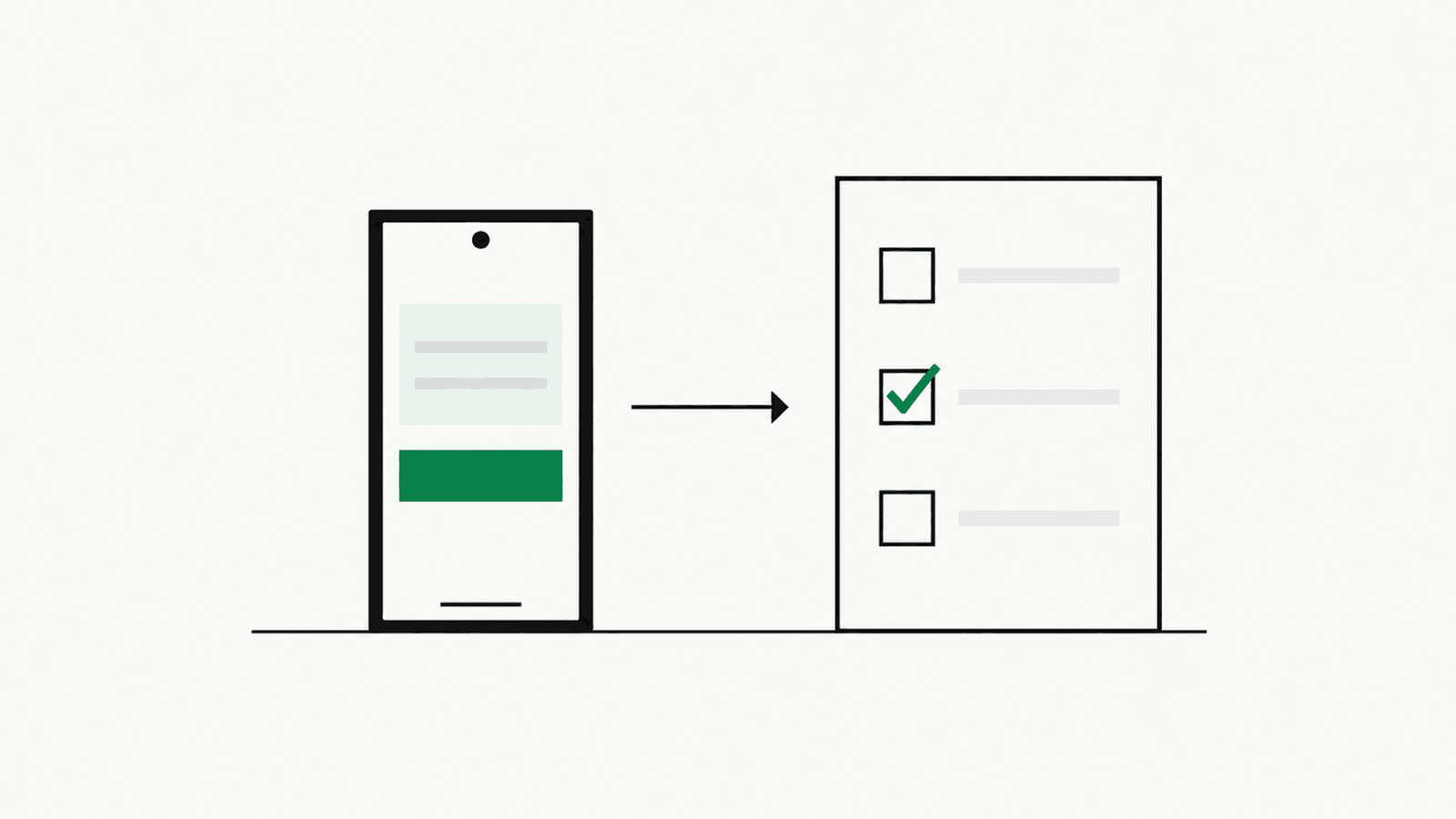
- A texted ballot link. Each voter on a roster receives a text with their own private link to a web ballot. The text is the envelope. The vote is cast on the ballot, counted once, and recorded against the roster.
| Reply-to-vote | Texted link to a ballot | |
|---|---|---|
| Who can vote | Anyone who has the number | Only people on the roster |
| One person, one vote | One reply per phone at best | One ballot per voter |
| Secret ballot | No. The vote arrives attached to a phone number | Yes, if the election is set up that way |
| Several seats, ranked choices, written motions | Awkward or impossible | The same as any online ballot |
| Record afterwards | A list of numbers and replies | Roster, delivery, who voted and when, tally |
| Good for | Audience polls, talent shows, quick straw votes | Board elections, bylaw votes, budget votes, anything that could be challenged |
If the result has to be defended later, use the second kind. The rest of this article is about doing that properly, including the consent you need before you text anyone.
This article is general information, not legal advice. Texting rules and election rules both vary, and your governing documents may say how ballots and notices must be delivered. Confirm your own rules before you rely on a text for either.
Why Reply-to-Vote Fails as an Election
It helps to be exact about what a reply-to-vote system knows. It knows that a message arrived from a phone number. It does not know who sent it, whether that person is a member, or whether they have already voted from another phone.
That produces four problems an election cannot live with.
- 1No eligibility. The system counts whoever texts in. A member's teenager, a former member and a stranger who saw the number on a slide all look the same.
- 2No secrecy. Every vote arrives stamped with the number that sent it, and whoever runs the tally can see how each number voted.
- 3One vote per phone, not per person. Two owners who share a phone get one vote. One person with two phones gets two.
- 4No real ballot. A reply is a word or a digit. Electing three directors from seven candidates, ranking choices, or approving the exact text of an amendment does not fit.
None of this is a criticism of using it for what it is good at. A congregation choosing a picnic date or a conference audience picking a session does not need a roster. A vote that changes who governs or what members pay does.
How a Texted Ballot Link Works
The mechanics are simple, and each step exists to answer a question someone will ask afterwards.
- 1Start from the roster. The organizer loads the list of eligible voters with a mobile number for each one who will be reached by text.
- 2Confirm consent. Before any text goes out, the organizer confirms that the organization has each of those voters' permission to text them. More on that below.
- 3Send each voter their own link. The text names the organization and the vote, says when voting opens and closes, and carries a link that belongs to that one voter.
- 4The voter opens a web ballot. No app is needed. The ballot is an ordinary web page on the phone, with every contest and option written out in full.
- 5The ballot is counted once. When it is submitted, that voter is marked as having voted, and the link will not produce a second ballot.
- 6Reminders go only to people who have not voted. Nobody who has voted is texted again about it.
On vote.direct the same election can reach some voters by email, some by text and some by a mailed ballot, and it still produces one tally. An election can also require a one-time code, texted to the voter's phone, before the ballot opens. Whether a ballot is identified, anonymous or sealed is chosen when the election is set up, and the options are explained in voter privacy in online elections.
Consent: You Need It Before You Text
This is the part that surprises organizers. In the United States you may not put a list of mobile numbers into a system and text all of them without permission.
Federal law restricts automated calls and texts to mobile numbers that are made without the prior express consent of the person being called (47 U.S.C. §227; 47 C.F.R. §64.1200(a)(1)). The mobile carriers apply their own consent rules to texts sent by software on behalf of an organization, whatever the content. An election notice is not marketing, which makes the kind of consent simpler. It does not make consent optional.
Three practical points follow.
The organization holds the consent, not the software. Your association, church or club has the relationship with the member, so it is the one that asked for the number and the one that has to be able to say the member agreed to be texted. On vote.direct the organizer confirms this, in a fixed statement, before a roster can be texted, and that confirmation is recorded with the election. If you cannot honestly confirm it for part of your roster, send those voters their ballot by email or by mail instead.
Ask for the number the right way. The simplest fix is a line on whatever form collects contact details: "The association may send election notices and ballot links by text to this number." Keep the form.
Stopping has to work. A person may revoke consent by any reasonable method, and the Federal Communications Commission's rule names the replies that always count: stop, quit, end, revoke, opt out, cancel or unsubscribe (47 C.F.R. §64.1200(a)(10)). Once someone opts out, do not text them again. Their vote is not lost. Send the ballot another way.
Honest question
Would you trust an online vote to decide your community's annual budget?
When Text Beats Email, and When It Does Not
Text is the better channel when:
- A member has a mobile number on file and no email address, or an email address they never read.
- The voting window is short and a reminder has to be seen today.
- Your email keeps landing in spam folders and turnout shows it.
Email or paper is the better channel when:
- The ballot comes with long documents, such as a proposed budget or the full text of an amendment. A text can link to them, but people read long documents on a larger screen.
- You do not have consent to text.
- The voter does not use a phone with a web browser. They need a mailed ballot.
Timing matters more with text than with email. People act on a text when it arrives. If it arrives hours before voting opens, they tap the link, find a ballot that is not open yet, and many do not come back. Send the text when voting is open, or say plainly in the message when it opens and send a second one at that moment.
Mixing channels is normal, and it is usually what reaches quorum. The other tactics are in how to reach quorum.
Does the Law Allow a Vote by Text?
For most private organizations the question splits in two.
The ballot. A texted link leads to an electronic ballot, so the question is whether your state and your documents allow electronic voting at all. Many states now do for community associations, usually with conditions. Connecticut, for example, lets unit owners vote by electronic ballot unless the declaration or bylaws prohibit or limit it (C.G.S. §47-252(a)). The state-by-state picture is in electronic voting for HOAs by state.
The notice. The formal notice of a meeting or a vote often has its own delivery rule, and a text may not satisfy it. Connecticut allows notice by electronic means where the unit owner has given the association an electronic address (C.G.S. §47-261c). Alabama lets a nonprofit corporation send notices to a member's email address on file, and requires the member's consent for other forms of electronic transmission (Ala. Code §10A-3A-1.03(d)). Where the rule is unclear, send the formal notice the way the statute or the bylaws describe, and use the text for the ballot link and the reminders.
Churches, clubs and nonprofits without a statute on the point look to their bylaws. If the bylaws require voting "in person" or "by written ballot at the meeting," amend them before you rely on any electronic method.
What It Costs
Carriers charge for every text, and a sender has to be registered with them, so texting voters is not free anywhere it is done properly.
On vote.direct text delivery is included in every paid election, with no separate charge per message. Elections of up to 25 voters are free with email delivery. A small election that wants to text its voters pays the first paid price, $4.99, which is also the price for any election of up to 50 voters. A 200-voter election is $19.99. The full ladder is at pricing.
Free test ballots go by email, so you can rehearse the whole election before paying for anything.
FAQ
Q: Can you vote by text message?
Yes, in two ways. You can reply to a number with a choice, which suits informal polls. Or you can receive a text with a private link and vote on a web ballot, which is how a real election by text works. Only the second checks who is voting and counts one ballot per voter.
Q: Is SMS voting secure?
Reply-to-vote is not, in the sense an election needs: it cannot verify eligibility or keep the vote secret. A texted link to a ballot is as secure as the online ballot behind it, since the text only delivers the link. Look for one link per voter, one ballot per voter, and a record of who was sent a ballot and who returned one. More in online voting security.
Q: Is voting by text free?
Reply-to-vote tools often have a free tier for small audiences. Texting each voter on a roster costs money everywhere, because carriers charge per message. On vote.direct texts are included in every paid election, and elections of up to 25 voters are free by email.
Q: Do I need permission to text my members about a vote?
Yes. The organization needs each member's prior express consent to receive texts at that number, and has to honor a request to stop (47 U.S.C. §227; 47 C.F.R. §64.1200). Collect that permission when you collect the number.
Q: Can a member without a smartphone vote by text?
Not with a texted link, which needs a web browser. Give that member a mailed ballot or let them vote in person. A good election offers more than one way in.
Q: Can a vote by text be anonymous?
A reply-to-vote cannot, because each vote arrives with a phone number. A ballot reached through a texted link can be, because the link only proves the voter is entitled to a ballot and the election can be set up so the ballot is not stored with the voter's identity.
Q: What if someone forwards their link?
Then they have handed their ballot to someone else, the same as passing on a paper ballot. The link still produces only one ballot. Where that risk matters, require a one-time code sent to the voter's own phone before the ballot opens.
Q: Does a text count as official notice of the meeting?
Often not. Notice rules are set by statute and by your bylaws, and many name mail, hand delivery or email. Send the formal notice the required way and use the text for the ballot link and reminders.
The Bottom Line
Voting by text works when the text is treated as an envelope. It gets a private ballot link in front of a member who would never have opened the email, and the vote itself happens on a ballot that checks the roster and counts once. Counting replies to a phone number is a poll.
Before you send anything, settle two things. Make sure you have each voter's permission to text them, in writing if you can. And make sure the text arrives when the ballot is actually open.
Sources: Telephone Consumer Protection Act, 47 U.S.C. §227. Federal Communications Commission rules, 47 C.F.R. §64.1200(a)(1), (a)(10). Connecticut General Statutes §47-252(a); §47-261c. Code of Alabama §10A-3A-1.03(d). Read on October 12, 2026.
This article is general information, not legal advice. We recommend you do your own research and confirm anything you plan to act on. Where this article states law, the section is cited so you can read the primary source yourself rather than take our word for it. That is what the citations are for. Election requirements also turn on your own governing documents, which we have not seen, and statutes are amended. For advice about your community, consult a qualified attorney licensed in your state.
We work hard to verify every citation against the primary source, but laws change and errors happen. If you spot an inaccuracy, email support@vote.direct and we will correct it. See our editorial standards for how these pages are researched and checked.