Quick Answer
California HOA elections are governed by seven sections of the Davis-Stirling Act — Civil Code §5100, §5105, §5110, §5115, §5120, §5125 and §5145 — which together require a secret ballot, one or three independent inspectors of elections, three stacked 30-day notices, and general notice of the result within 15 days. All seven are enforced through one remedy: under §5145 a court shall void the election unless the association proves the noncompliance did not affect the outcome.
| Section | Requires | Deadline | If you get it wrong |
|---|---|---|---|
| §5100 | Secret ballot for director elections and removals, assessment votes, amendments, exclusive-use grants | A seat goes to an election when the term expires, and at least every four years | Not an election under the article, and voidable under §5145 |
| §5105 | Adopted election rules: media access, qualifications, voting period, inspector selection, voter and candidate lists | No amendments inside 90 days; members verify list entries 30 days before ballots | §5145 reaches your own rules, not just the statute |
| §5110 | One or three independent inspectors, performing nine listed duties | Selected before the process starts; device check 30 days before the voting deadline | No inspector, no valid count, no prima facie report |
| §5115 | Notice of the nomination deadline, notice of candidates and the count meeting, two preaddressed envelopes | 30 days before nominations close, 30 before ballots, 30 before the voting deadline | The easiest §5145 claim to prove — the dates are documentary |
| §5120 | Ballots counted in public at a properly noticed open meeting, then notice of the result | Within 15 days of the election | A private count is a violation on its face |
| §5125 | Inspector holds ballots, envelopes, voter list, proxies, candidate list, tally sheet | Until the §5145 window expires, then custody passes to the association | You cannot carry your own burden without the record |
| §5130 | Proxies may not be used in lieu of a ballot | Revocable until the inspector receives the ballot | Counting proxies as votes is a straight §5145 violation |
| §5145 | The remedy itself | One year from the inspector notifying the board and membership | Results voided unless you disprove prejudice, plus $500 per violation and the member's fees |
Read the last column across: California does not fine a board for a procedural slip and move on. It gives the member a year, shifts the burden of proof onto the association, and makes the association pay the member's lawyer.
This is a walkthrough of the statute text, not legal advice, and no software can make an election legally binding or an association compliant. This page is the statute reference; the guide to running the election itself is California HOA election rules, and for the inspector market and its cost read California's inspector of elections problem.
Civil Code §5100 — Which Votes Must Be Secret Ballots
§5100(a)(1) opens with "notwithstanding any other law or provision of the governing documents", which is the tell: your CC&Rs cannot opt out. Four categories must be held by secret ballot — assessments legally requiring a vote, election and removal of directors, amendments to the governing documents, and grants of exclusive use of common area under §4600. §5100(a)(2) adds the rule boards miss: a seat goes to an election when that director's term expires, and at least once every four years regardless.
The rest forecloses arguments: operating rules may pull other topics in (b), it binds incorporated and unincorporated associations alike (c), it covers votes cast directly by the membership but not by delegates (d), and it prevails over the Nonprofit Mutual Benefit Corporation Law (e). A show of hands on any of these is not an election. Secret ballot requirements by state shows how far an outlier this is.
Civil Code §5105 — Election Rules, and the 90-Day Lock
Boards skip §5105, and §5145 punishes it hardest: §5145(a) voids results for failure to follow "the election procedures of this article, or the adoption of and adherence to rules provided by Article 5". Your own rules become enforceable law against you.
§5105(a) requires rules that give equal access to association media and common area meeting space to every candidate and member advocating a point of view, including those the board does not endorse; specify candidate qualifications and a nomination procedure that never stops a member nominating themself; specify voting power, proxies and the voting period; specify how one or three inspectors are selected; and require a candidate registration list and a voter list members may verify at least 30 days before ballots are distributed, with errors corrected within two business days. Subdivisions (b) to (f) govern disqualification: assessment arrears and a conviction that would cost the association its §5806 insurance are permitted grounds; fines, late charges, payment under protest and skipping internal dispute resolution are not.
Two deadlines in §5105(h) decide your calendar. The inspector delivers the ballot and a copy of the election operating rules at least 30 days before an election. And §5105(h)(4)(B)(iii) is blunt: rules "shall not be amended less than 90 days prior to an election" — a defect found 60 days out cannot be fixed for that cycle.
§5105(i): the electronic secret ballot
AB 2159 (Stats. 2024, Ch. 383) rewrote §5105 effective January 1, 2025 to let an association adopt a rule allowing the inspector to run an election by electronic secret ballot — except for an election regarding regular or special assessments, carved out to Chapter 8. That is the most consequential line for a board shopping for software: the vote with the most money attached still goes out on paper.
| The rule must provide for | Section |
|---|---|
| Changing a preferred voting method no later than 90 days before an election | §5105(i)(1)(A) |
| Electronic and written ballots listing the same items | §5105(i)(1)(B) |
| Written ballots only to members who opted out or have no email on file | §5105(i)(1)(C) |
| A voting list of who votes which way, with opt procedures in the §5310 annual statement | §5105(i)(1)(D) |
| Electronic voters supplying a valid email address | §5105(i)(1)(E) |
| No nominations from the floor in an electronic election | §5105(i)(1)(F) |
| Individual notice of the electronic ballot 30 days before the election, with access instructions | §5105(i)(3)(A) |
| Individual notice 30 days before the opt-out deadline, naming the member's method and how to opt out | §5105(i)(4) |
Four paragraphs matter operationally: a vote takes effect on transmission to the system the inspector designates (i)(5); an electronic vote shall not be revoked (i)(6); a member with no email on file when ballots go out gets a written ballot (i)(7); and an electronic voter counts as present for quorum, after which no substantive vote may be taken on anything the ballot did not name (i)(8). For elsewhere, see electronic voting for HOAs, state by state.
Civil Code §5110 — The Inspector of Elections

§5110(a): the association shall select an independent third party or parties as inspector of elections, and the number shall be one or three. Never two. Never zero.
§5110(b) defines independence by example — a volunteer poll worker with the county registrar of voters, a licensee of the California Board of Accountancy, a notary public — then by exclusion. A member may serve, but not a director, not a candidate, not anyone related to either. Then the sentence that catches most vendors and most management companies: an inspector "may not be a person, business entity, or subdivision of a business entity who is currently employed or under contract to the association for any compensable services other than serving as an inspector of elections."
§5110(c) lists nine duties: determine the memberships entitled to vote and each one's voting power, rule on proxies, receive ballots, hear and decide challenges to the right to vote, count and tabulate, determine when polls close, determine the tabulated results, and do whatever else is proper to conduct the election fairly.
Paragraph (c)(4), inserted by AB 2159, makes the inspector — not the vendor — responsible for two lists. Under (c)(4)(A) each member gets a way to authenticate, a way to transmit a ballot preserving the secrecy and integrity of each ballot, and a way to confirm at least 30 days before the voting deadline that their own device reaches the system. Under (c)(4)(B) the system must authenticate the member, authenticate each ballot so it is not altered in transit, transmit a receipt to every voter, permanently separate identifying information from the ballot "rendering it impossible to connect an election ballot to a specific member", and store ballots accessibly for recount and inspection.
Item four is where marketing copy and statute text diverge. Most platforms sell an anonymous mode that hides the voter-to-ballot link from the board, from published results and from exports — a real access control, and a different claim. §5110(c)(4)(B)(iv) asks what the system stores, not who may look. Ask any vendor in writing whether that link still exists in its database after the ballot is cast. On vote.direct the mode that stores no link is Sealed ballots, which the California board-election template presets.
§5110(d) adds that a majority of three inspectors binds, and that any report the inspector makes is prima facie evidence of the facts stated in it — the only document in your election that arrives in court with a presumption attached. Our inspector of elections guide covers who to appoint.
Civil Code §5115 — Notice, Envelopes, and the 20 Percent Quorum

§5115 was last amended by AB 1170 (Stats. 2025, Ch. 67), effective January 1, 2026, so work from the operative text and not a 2023 checklist.
Subdivision (a) requires general notice of the nomination procedure and deadline at least 30 days before that deadline. Subdivision (b) requires general notice, at least 30 days before ballots are distributed, of five things: the time and physical address for returning ballots; the electronic transmission deadline and preliminary instructions if you allow electronic voting; the date, time and location of the meeting where quorum is determined and ballots counted; every candidate name that will appear on the ballot; and, where your documents require a quorum, a statement that a reconvened meeting may be held at least 20 days later at a 20 percent threshold.
Subdivision (c) requires ballots and two preaddressed envelopes mailed first class or delivered not less than 30 days before the voting deadline — in an electronic election, only to written-ballot members. The mechanism is modeled on California county vote-by-mail: the voter does not sign the ballot, the ballot goes into a sealed envelope, that envelope goes into a second sealed envelope addressed to the inspector, and in the second envelope's upper left corner the voter signs, prints their name, and gives the address or separate interest identifier entitling them to vote.
The double envelope is where paper elections die: unsigned outer envelopes, ballots in the wrong envelope, and packets that never come back because the member had to find a stamp. Mailed packets in a managed election remove the last one by paying the return leg. The $6.00 covers the trip both ways: the packet out, and a return envelope that already has the postage paid on it, so the member never buys a stamp. There is no separate postage line on your invoice.
Under subdivision (d) each ballot the inspector receives counts as a member present, and if quorum fails at a director election you may adjourn at least 20 days out — notice no less than 15 days beforehand — where the threshold drops to 20 percent voting in person, by proxy or by secret ballot. Subdivision (e) preserves cumulative voting where the governing documents provide for it, (f) permits an election run entirely by mail or entirely by electronic ballot apart from the §5120(a) count meeting, and (g) requires the text of a proposed amendment to travel with the ballot. HOA quorum requirements by state puts the 20 percent rule in context.
This one gets heated
Should community boards be required to use independent election administrators?
Civil Code §5120 and §5125 — The Count, and the Record
§5120(a) requires all votes to be counted and tabulated by the inspector, or the inspector's designee, in public at a properly noticed open meeting, where any candidate or member may witness. Nobody may open or review any ballot before that time and place, though the inspector may verify the member's information and signature on the outer envelope beforehand. Once the inspector receives a secret ballot it is irrevocable. Under §5120(b) results are promptly reported to the board, recorded in the minutes of the next board meeting, and within 15 days of the election noticed to members under §4045 — any individual-notice method under §4040, a billing statement or newsletter, or a posting in a prominent common area or on the association website where the annual policy statement designates it.
§5120(c) should decide which product you buy: no person, including a member or an employee of the management company, may open or review any tally sheet of electronic secret ballots before the count meeting. A platform showing the board a live running tally puts your election on the wrong side of §5120(c) every day it is open. Sealed ballots mode on vote.direct keeps the box shut until the election closes.
§5125 then names six things — the sealed ballots, the signed voter envelopes, the voter list, the proxies, the candidate registration list, and the electronic tally sheet — and keeps all six "at all times" in the inspector's custody until after tabulation and until the §5145 challenge window has expired, which in practice means a year. On a recount or challenge the inspector must, on written request, make the ballots and tally sheet available to a member or their authorized representative, preserving the confidentiality of the vote. Which is exactly why §5110(c)(4)(B)(v) keeps electronic ballots accessible for recount while (B)(iv) requires the identity link to be gone.
Civil Code §5130 — Proxies Are Not Ballots
§5130(b) is one sentence: proxies "shall not be construed or used in lieu of a ballot". You may use them if your bylaws permit or require them, but the article never obliges you to prepare any. Under §5130(c) an instruction telling the proxyholder how to vote sits on a separate, detachable page the proxyholder keeps, the proxyholder then casts the vote by secret ballot like anyone else, and the member may revoke until the inspector receives the ballot. Proxy voting explained covers the mechanics — in California a proxy gets a person into the room and a ballot into the box, and that is all.
Civil Code §5145 — The Remedy That Enforces the Rest
§5145(a) sets the clock and the burden. A member may bring a civil action for declaratory or equitable relief, including injunctive relief or restitution, within one year of the date the inspector notifies the board and membership of the results, or the date the cause of action accrues, whichever is later. Then the sentence that makes the article bite: if the member establishes by a preponderance of the evidence that the procedures of the article, or the adoption of and adherence to the association's own election rules, were not followed, "a court shall void any results of the election unless the association establishes, by a preponderance of the evidence, that the association's noncompliance ... did not affect the results of the election."
The member proves a procedural failure, then the association must prove it was harmless — which is why the record matters more than the tally.
§5145(b) prices it. A prevailing member is entitled to reasonable attorney's fees and court costs, and the court may impose a civil penalty of up to $500 per violation, with one limit: an identical violation affecting every member equally draws a single penalty. A prevailing association recovers nothing unless the court finds the action frivolous, and §5145(c) lets the member choose superior court or small claims. No state agency polices any of this — California has no equivalent of Florida's DBPR or Nevada's ombudsman. What happens when an HOA election is challenged walks through how those cases unfold.
The 105-Day Timeline
No section of the Davis-Stirling Act says "105 days". The number is what you get by stacking the deadlines that already exist and counting backwards from the meeting where ballots are counted.
| Days before the count | What must happen | Section |
|---|---|---|
| 120 | Electronic elections with an opt-out rule: individual notice of the member's voting method, email on file, how to opt out, and the deadline | §5105(i)(4) |
| 90 | Last day to amend the election operating rules for this election | §5105(h)(4)(B)(iii) |
| 90 | Last day a member may change their preferred voting method | §5105(i)(1)(A) |
| 90 | Notice of the nomination procedure and deadline, if nominations close 60 days out | §5115(a) |
| 60 | Nominations close and the candidate list becomes final | §5105(a)(3) |
| 60 | Notice: return address and deadline, voting instructions, the count meeting, the candidate list, the reconvened-meeting statement | §5115(b) |
| 60 | Members verify their voter-list and candidate-list entries; errors corrected within two business days | §5105(a)(7) |
| 30 | Ballots and two envelopes to written-ballot members; access instructions to electronic voters; the election rules with the ballot | §5115(c), §5105(i)(3)(A), §5105(h)(4) |
| 30 | Members can confirm their own device reaches the voting system | §5110(c)(4)(A)(iii) |
| Count day | Ballots counted in public at a properly noticed open meeting | §5120(a) |
| 15 days after | General notice of the tabulated result under §4045 | §5120(b) |
Ninety days in front, fifteen behind: 105. Two things bend it. An electronic election under an opt-out rule starts closer to 120 days out, because §5105(i)(4) hangs a 30-day notice off an opt-out deadline §5105(i)(1)(A) already pushes to 90 days out — boards that go electronic and count from "30 days before ballots" are a month late before they begin. And if quorum fails, §5115(d) adjourns you at least 20 days out with 15 days of notice. Election timelines by state does this exercise elsewhere; the recall process guide covers the removal variant.
Why vote.direct Is Never Your Inspector in California
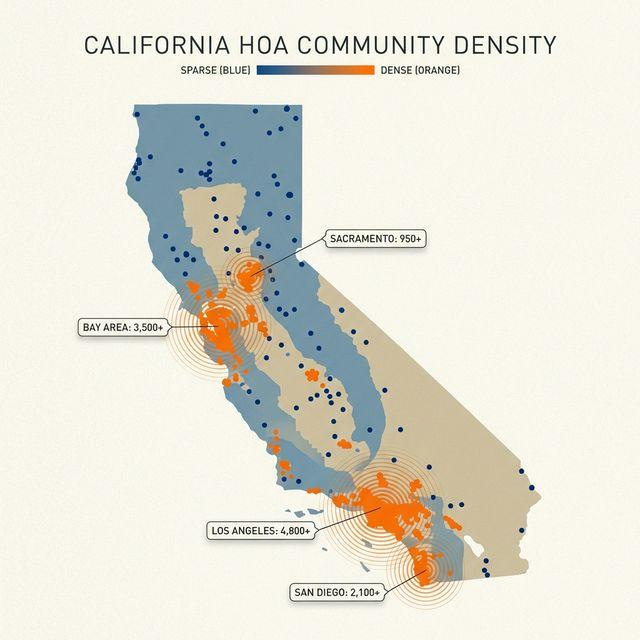
vote.direct will serve as inspector of elections in Colorado, Nevada, Florida, Texas, Arizona and Maryland. It will never do so in California, and the reason is Cal. Civ. Code §5110(b).
Your association pays us for the voting platform. That is a compensable service under contract, so §5110(b) disqualifies us by its plain text — and disqualifies your management company on the same words. A vendor offering to be both your platform and your California inspector is either not reading §5110(b) or hoping you will not, and the cost of finding out is a voided election plus the challenger's legal fees.
So the platform does the labor and a named human being holds the office. The inspector confirms the roster before ballots go out, rules on proxies, decides challenges, reviews the frozen tally against its integrity hash, signs the certification and downloads the §5125 record to hold through the challenge year. Before any of that they accept independence attestations, and in California one line is added: that they are not employed by or under contract to the association for any compensable service other than serving as inspector. The §5110(b) test, asked of the person, in writing, before they touch the roster.
Budget the whole thing rather than half. Running it yourself is $4.99 for up to 50 voters and $19.99 for a 200-owner association. Handing the work over, $99 buys Setup and Launch and $199 a full managed election for a digital vote of up to 100 voters, with 10 days of lead time. The assessment vote §5105(i) keeps on paper, and every member who opts out, goes by mailed packet at $6.00 each. Budget the inspector separately: this site's published inspector cost comparison puts a California engagement at $500–$2,500.
Being barred from a role in the largest HOA market in the country is not an apology. §5110(b) exists because an election run by the association's own contractor is not independent, which is the correct rule.
FAQ
Q: Can our management company serve as the inspector of elections?
No. §5110(b) excludes any person or business entity currently employed or under contract to the association for compensable services other than serving as inspector. A management company under a management contract fails that test, as does an attorney on retainer and your voting platform.
Q: Which California HOA votes can be held by electronic secret ballot?
Any vote in the article except one. §5105(i) authorizes an electronic secret ballot rule "except for an election regarding regular or special assessments", which stays on written ballots. Director elections, recalls, amendments and exclusive-use grants can all run electronically once the rule is adopted.
Q: Can a member change an electronic vote after casting it?
No. §5105(i)(6) says a vote made by electronic secret ballot shall not be revoked, and §5120(a) makes any secret ballot irrevocable once the inspector receives it. A platform offering California voters a change-your-vote feature is offering something the statute does not allow.
Q: How late can we amend our election rules before an election?
90 days before it. §5105(h)(4)(B)(iii) provides that election operating rules shall not be amended less than 90 days prior to an election, so a defect found at 60 days cannot be fixed for that cycle.
Q: Do we still mail ballots if we vote electronically?
Only to some members. §5115(c) requires ballots and two preaddressed envelopes for every member unless the association runs an electronic election under §5105, in which case only written-ballot members get them. §5105(i)(7) adds that any member without an email address on file when ballots go out gets a written ballot.
Q: How long does the inspector keep the ballots?
Until the §5145 challenge window closes — one year from the date the inspector notifies the board and membership of the results, or later if the cause of action accrues later. §5125 then transfers custody to the association.
Sources
Every quotation was read from the operative text at leginfo.legislature.ca.gov: Civil Code §5100 (AB 502, 2021); §5105, §5110, §5120 and §5125 (all AB 2159, Stats. 2024, Ch. 383); §5115 (AB 1170, Stats. 2025, Ch. 67); §5130 (AB 805, 2012); §5145 (SB 323, 2019); and §4040 and §4045 on notice delivery. Statutes change — confirm the operative text and your governing documents with California counsel before you run the election.
Every rule on one page: California HOA voting rules, with quorum, notice, proxy and electronic voting at a glance.
This article is general information, not legal advice. We recommend you do your own research and confirm anything you plan to act on. Where this article states law, the section is cited so you can read the primary source yourself rather than take our word for it — that is what the citations are for. Election requirements also turn on your own governing documents, which we have not seen, and statutes are amended. For advice about your community, consult a qualified attorney licensed in your state.
We work hard to verify every citation against the primary source, but laws change and errors happen. If you spot an inaccuracy, email [email protected] and we will correct it. See our editorial standards for how these pages are researched and checked.