Quick Answer
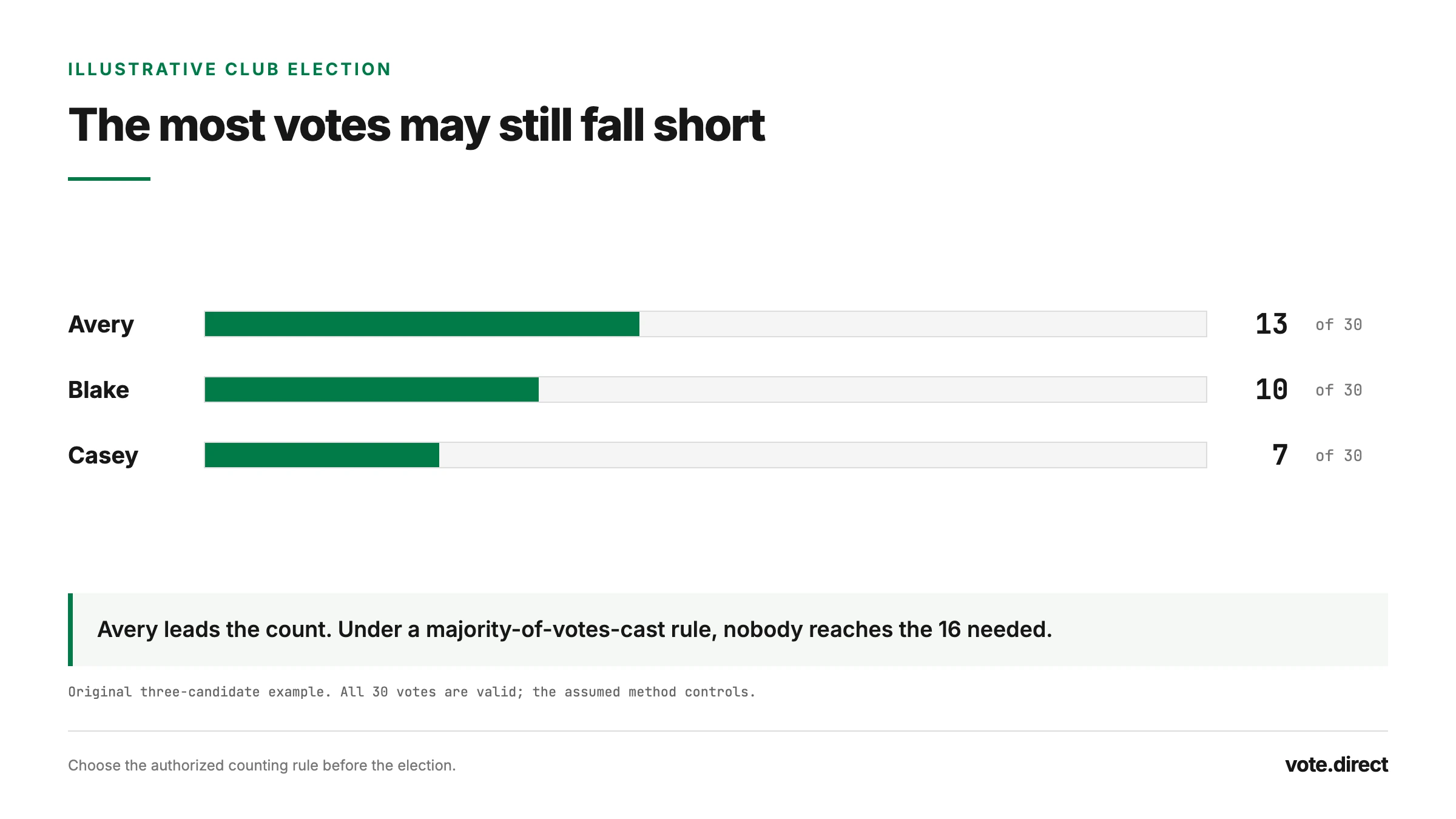
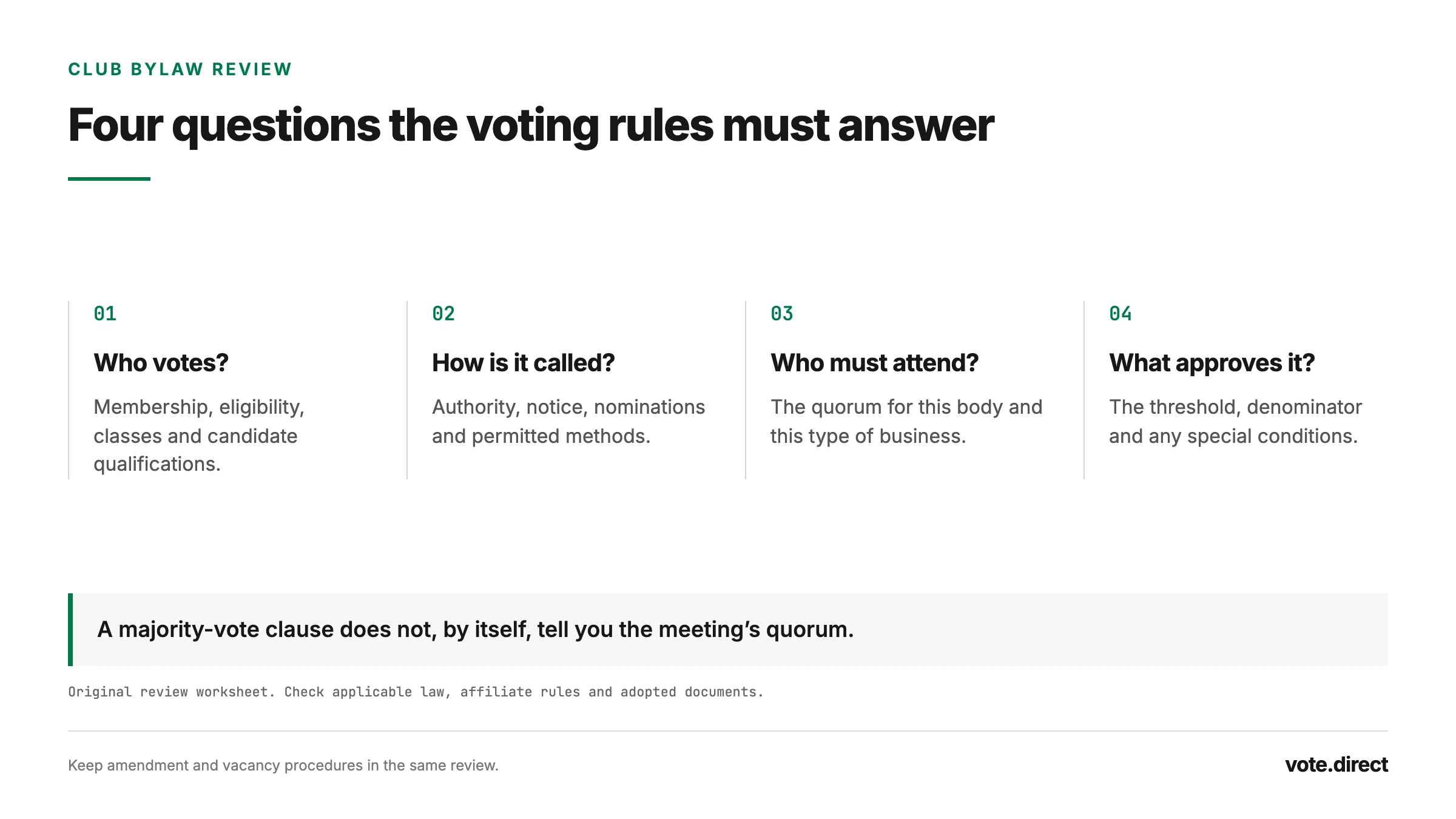
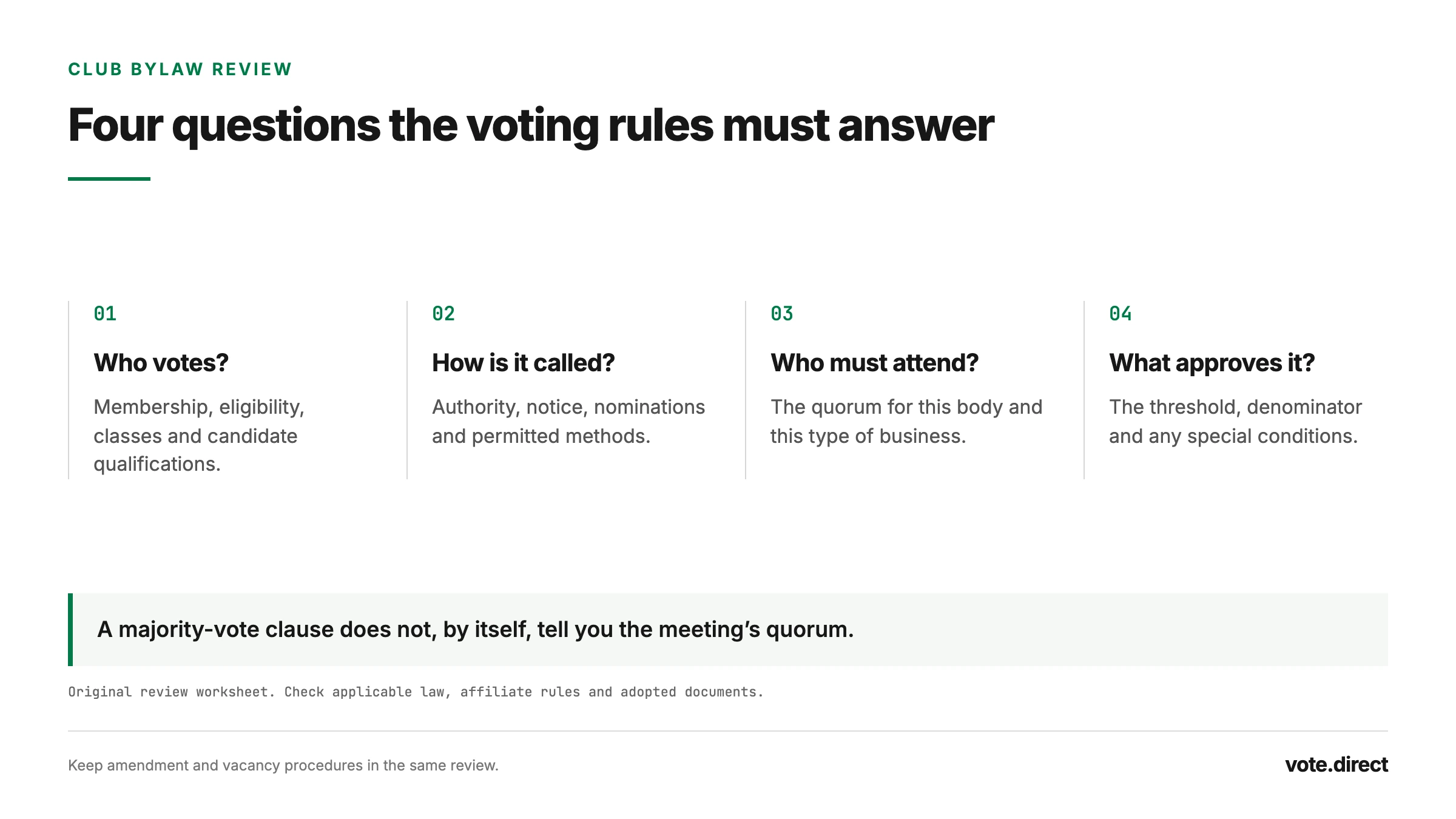
A club's voting provisions should identify eligible voters, how meetings and elections are called, nomination rights, quorum, approval thresholds, permitted participation methods, vacancy procedures and amendment authority. Read them together. A rule describing a majority vote does not tell you the quorum, and permission for an online meeting does not necessarily authorize an advance absentee ballot.
This is a U.S. review worksheet, not a ready-to-adopt constitution. An incorporated club, an unincorporated association and a chapter of a national organization may operate under different controlling rules.
Gather the current documents first
Find the constitution or articles, bylaws, adopted amendments, relevant affiliate rules and any properly adopted election procedures. Identify dates and approval records. A document labeled “final” on a former secretary's laptop may not be the version the members actually adopted.
If clauses conflict, record the conflict and establish which authority controls before using the provision. For example, New York N-PCL §602 limits nonprofit bylaws to provisions consistent with the statute and certificate of incorporation, and addresses amendment powers. It is an example for entities governed by that law, not a rule for every U.S. club. Read §602.
Eight provisions worth reviewing
| Provision | Question the text should answer | Common gap |
|---|---|---|
| Voting membership | Who has a vote, and how is status established? | “Members” is used without defining the voting class |
| Meeting and election notice | Who calls the event, by what method and when? | The calendar exists but nobody knows who must receive notice |
| Nominations | Who can stand and how can members nominate? | A nomination committee is treated as the only route without authority |
| Quorum | What participation permits this body to conduct business? | The board's quorum is used for the full membership |
| Approval | What proportion of which denominator approves this action? | “Majority” is treated as a complete description |
| Participation methods | Which live, proxy, absentee or written procedures are permitted? | Online attendance and asynchronous voting are conflated |
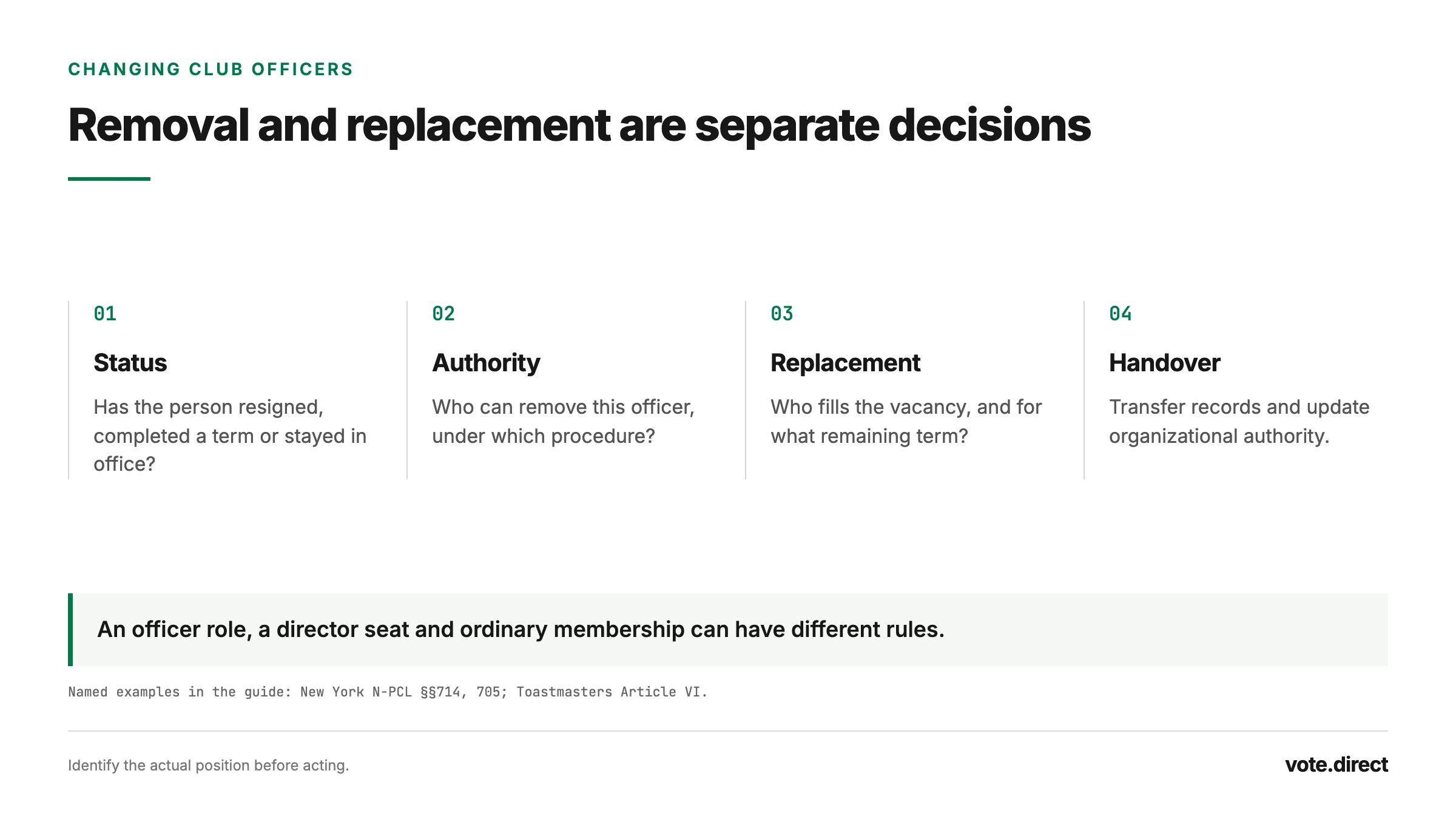
| Vacancies and removal | Who acts, for what remaining term and by which procedure? | The president assumes power to fill every vacancy |
| Amendments | Who can change the rules and when do changes become effective? | A new election rule is adopted after voting begins |
For each row, record the clause, interpretation, person responsible and any unresolved question. This produces a reviewable rules sheet instead of relying on meeting-day recollection.
Quorum and approval need separate sentences
Assume a fictional independent club has 31 eligible members and a valid rule setting quorum at at least 20 percent. It needs seven eligible participants, because 20 percent of 31 is 6.2. Six is below the assumed minimum.
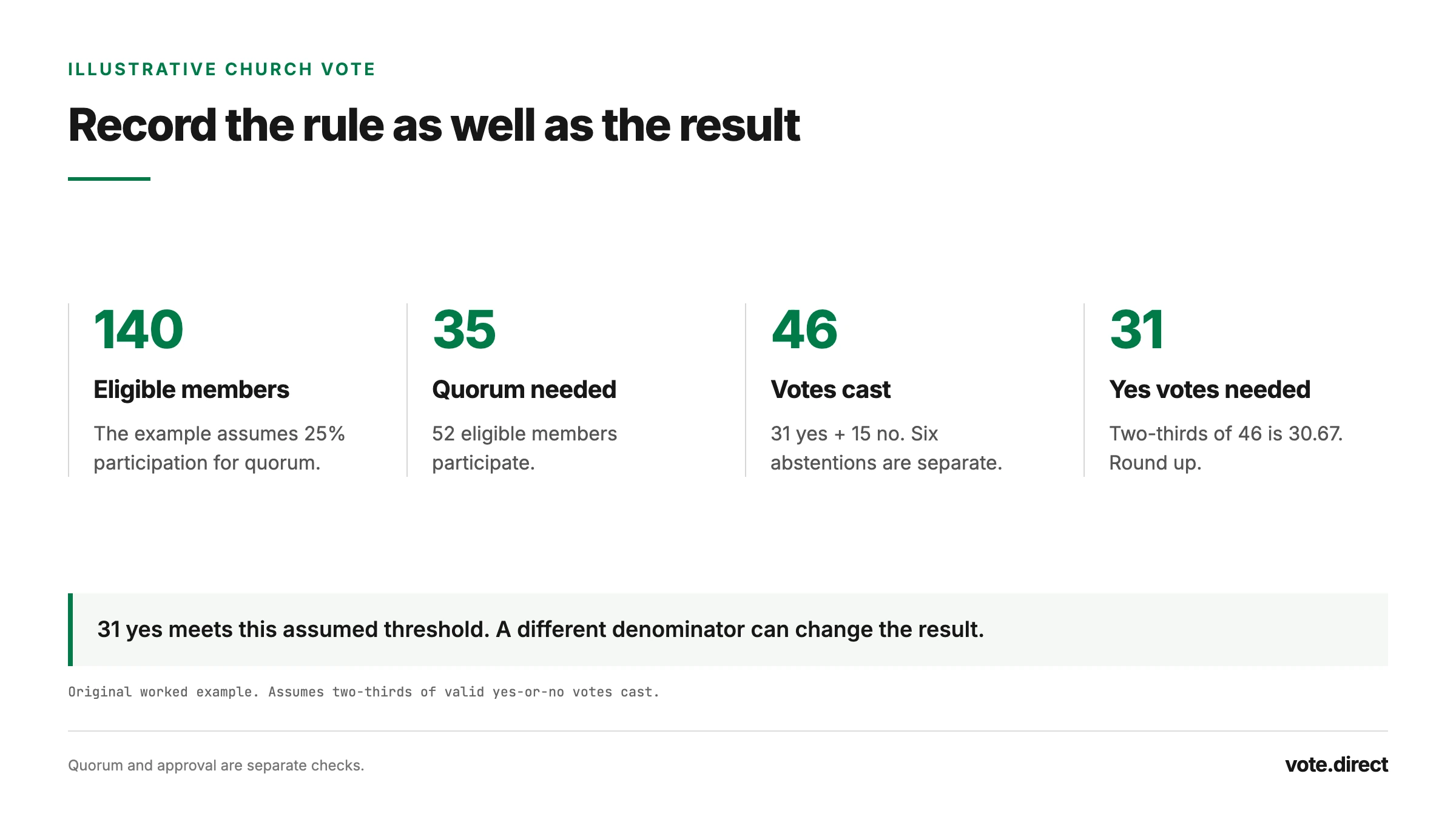
Now assume 12 attend and the relevant motion requires a majority of votes cast. Five vote yes, four vote no and three abstain. There are nine votes cast, so five is a majority. Under an alternative rule requiring a majority of members present, seven affirmative votes would be required. The same attendance and tally cannot be interpreted until the rule is known.
Do not adopt the example's 20 percent without checking legal and affiliate limits. New York's nonprofit member-quorum statute, for example, supplies a default and limits certain lower quorum provisions. N-PCL §608. The number that feels convenient may not be a permitted choice.
“Electronic” is not a complete voting rule
Write down whether the proposal concerns live remote attendance, a ballot submitted before the meeting, a proxy, or action without a meeting. Define how the organization verifies eligibility, allows required participation, handles technical failure and records the result under the authorized method.
A national organization may restrict the choices available to a local club. Toastmasters' club constitution, for example, distinguishes club and executive-committee quorum and prohibits proxy and absentee ballots on club membership matters. Its addendum mechanism also controls local options. Club constitution, Articles V and X.
Use that as a reason to check your actual affiliate's documents, not as language to copy into an unrelated club's bylaws.
Write amendments before writing a ballot
If the review exposes a gap, use the current amendment process. Prepare the existing clause, proposed replacement, explanation, related provisions affected and effective-date proposal. Check whether a constitutional, bylaw or policy amendment is actually needed.
Consider the transition. If officer terms change from one year to two, which elected officers are affected? If membership categories change, who votes on the amendment itself? The answer should come from the existing lawful process and the adopted transition terms, not from an administrator changing a software setting.
Frequently Asked Questions
Can a small club use a generic online constitution template?
It can use a template to identify topics, but should check the legal form, affiliate obligations and intended structure before adoption. A polished document can still supply the wrong voting body or amendment procedure.
Should every decision use the same threshold?
Not necessarily. Elections, ordinary business, amendments and removal can have different rules. Prepare an action-specific threshold table so the chair does not apply an ordinary-motion rule to a different decision.
Who should keep the current bylaws?
Assign custody and version control through the club's actual officer responsibilities. Preserve adopted amendments and make the current version available through the appropriate member-access process. Avoid several competing “current” copies.
Source notes and next steps
Primary sources checked September 5, 2026: New York N-PCL §§602 and 608 and the Toastmasters club constitution. The worksheet and 31-member example are original planning aids, not legal drafting language.
Use the club election guide, association amendment workflow, and club governance library to turn the review into a clear next step.
This article is general information, not legal advice. We recommend you do your own research and confirm anything you plan to act on. Where this article states law, the section is cited so you can read the primary source yourself rather than take our word for it. That is what the citations are for. Election requirements also turn on your own governing documents, which we have not seen, and statutes are amended. For advice about your community, consult a qualified attorney licensed in your state.
We work hard to verify every citation against the primary source, but laws change and errors happen. If you spot an inaccuracy, email support@vote.direct and we will correct it. See our editorial standards for how these pages are researched and checked.